



Plentiful Earth | Spiritual Store
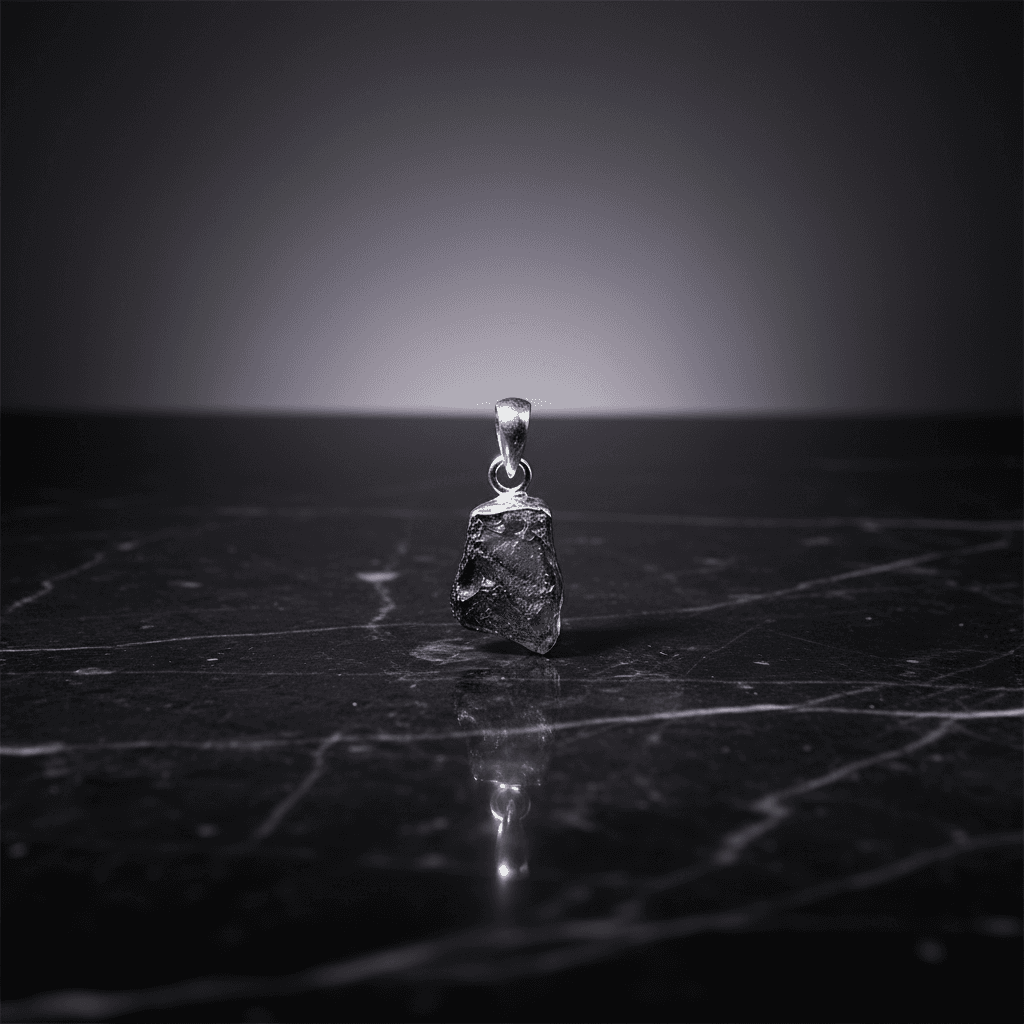
Moldavite Pendant, Natural Tektite Glass
Moldavite Pendant, Natural Tektite Glass- Primary Spiritual Use: Unblocking
- Secondary Spiritual Use: Energy
- Element: Water
- Planet: Moon
- Zodiac: Scorpio
- Chakra: Heart
- Ruling Day: Monday
- Tradition: Modern crystal practice
- Intent: Transformation, Unblocking
Couldn't load pickup availability
Moldavite is not a crystal, and it is not a meteorite. It is a tektite: natural glass, thrown into the sky about fifteen million years ago when an asteroid hit what is now southern Germany hard enough to melt the ground. The molten rock cooled in flight and fell across Bohemia and Moravia, in the modern Czech Republic, where it is still turned up in fields.
This pendant sets a piece of that material for wear, which is a different proposition from keeping it on an altar. A pendant is with you all day, and moldavite has a reputation for being the one stone practitioners advise against wearing casually. Read the FAQ before you put it on.
Key Features
Wearable moldavite. A set pendant rather than a loose stone, for practitioners who want to carry the material rather than visit it.
Every piece is unique. Moldavite is raw natural glass, so no two stones share a shape, a shade, or a surface. Yours will differ from the photograph.
Not a mineral. Amorphous glass, no crystal lattice. The trade calls it a crystal from habit. It isn't one, and we'd rather say so.
Product Details
- Form: Set pendant
- Material: Moldavite tektite, natural silica glass
- Origin: Bohemia and Moravia, Czech Republic
- Each piece varies in shape, tone, and surface
- Sourcing: Sold to us as moldavite by our supplier. Individual pieces are not independently tested. The FAQ below explains how to check a piece yourself.
- SKU: JPMOL
The Spiritual Significance
Moldavite has no folk tradition attached to it. It has no entry in Cunningham, no elemental or planetary attribution in the older sources, and no lineage of practice. Everything said about it is modern, dating to its arrival in the crystal trade in the late twentieth century, where it acquired a rapid reputation as the most intense stone anyone stocks.
What practitioners report is not comfort. Moldavite is associated with acceleration and disruption: change that arrives faster than expected, arrangements that fall apart because they were not working, and the clarity that shows up afterward. That is precisely why worn moldavite is treated with caution in a way that a pocket stone is not. A pendant does not get put down.
The lore of the moldavite flush, a heat or pressure some people describe on first contact, is lore. We report it as something practitioners say, not as a claim about what will happen to you.
How To Use
- Wear it briefly at first. An hour, then off. Build up only if you want to. The standard counsel against sustained early wear is nearly unanimous in the modern literature.
- Keep something grounding nearby. Black tourmaline or hematite. The tradition's own instruction is to anchor before you accelerate.
- Take it off to sleep. This is the one piece of moldavite advice that everyone agrees on, whatever they believe about why.
- Treat it as glass, because it is. It chips and it scratches. Remove it before anything physical.
- Clean it dry. Wipe with a soft cloth. No ultrasonic cleaners, no salt, no soaking.
Pairs Well With
- Moldavite Adjustable Ring. The same material on the hand rather than at the throat, adjustable to fit.
- Moldavite Untumbled Stone, 25.3 g. The raw form, for altar work rather than wear.
- Moldavite Untumbled Stone, 50 g. The larger raw piece, for collectors.
- Black Tourmaline Tumbled Chips, 1 lb. The grounding counterweight, which matters more with worn moldavite than with a stone you can set down.
- Moldavite Incense Sticks by HEM. Named for the stone, containing none of it.
History and Background
The Ries impact struck Bavaria roughly fifteen million years ago, and the crater is still visible, fifteen miles across, with the town of Nordlingen built inside it. The strike melted the surface rock and hurled part of it hundreds of kilometers east, where it cooled into glass in the air.
People have been picking moldavite up ever since. Worked pieces appear in Stone Age sites as amulets, so the impulse to wear this material is considerably older than the modern crystal trade that gave it its current reputation. It was formally described in 1786 and named for the Moldau in 1900.
Frequently Asked Questions
How can I tell if a piece of moldavite is genuine? Specific gravity is the strongest test available at home: real moldavite runs about 2.32 to 2.40, while ordinary green bottle glass sits nearer 2.5, and a kitchen scale plus water displacement gets you close enough to catch a fake. Look at the surface, which should be hackly and deeply etched rather than smooth, with no mold seams. Under magnification, genuine material shows elongated wormlike silica threads and irregular bubbles, where glass fakes show perfectly round ones. And watch the price: moldavite is expensive because it is finite, and anything far under market is telling you something.
Is moldavite a meteorite? No. It is terrestrial rock melted by an impact. Nothing extraterrestrial is in the setting.
Is it safe to wear every day? That is the question the tradition is most emphatic about, and the answer it gives is: not at first. Wear it short, take it off to sleep, and pay attention to how you feel. Many practitioners never move to daily wear at all.
Will each pendant look like the photo? No. The stone is raw natural glass and every piece is different in shape, shade, and texture. That variation is the material, not a flaw.
Is it a crystal? No. It is glass, amorphous, with no lattice at all.

Spend $50 & enjoy guilt-free shopping with our free shipping on all orders. Get your favorite items delivered right to your door at no extra cost.