


-
Intuition

6-Sided Labradorite Pendulum
Regular price $7.95 USDRegular price -
Intuition

Labradorite Polished One Side, 1 lb
Regular price $36.95 USDRegular price -
New Opportunities

New Beginning Crystal Kit
Regular price $5.95 USDRegular price -
Protection

Labradorite Knot Ring, Size 12
Regular price $99.95 USDRegular price -
Protection

Labradorite Knot Ring, Size 11
Regular price $99.95 USDRegular price -
Intuition

Labradorite Free Shape, 1.5 lb
Regular price $81.95 USDRegular price -
Intuition

Labradorite Free Shape, 0.6 Pounds
Regular price $67.95 USDRegular price -
Intuition

Labradorite Beads Strand, 8mm, 52 Beads
Regular price $35.95 USDRegular price -
Intuition

Labradorite Wire Wrapped Point, Set of 5
Regular price $17.95 USDRegular price -
Intuition

Labradorite Rough Wire Cage Pendant
Regular price $5.95 USDRegular price -
Intuition

Enlightenment Buddha Necklace
Regular price $22.95 USDRegular price -
Protection

Larvikite (Black Labradorite) Bracelet, 8mm
Regular price $2.95 USDRegular price -
Blue Labradorite and Black Tourmaline Wolf Bracelet, 8mm
Regular price $10.95 USDRegular price -
Intuition

Labradorite Bracelet, 8mm
Regular price $6.95 USDRegular price -
Black Labradorite, Angelite, Quartz Bracelet, 6mm
Regular price $8.95 USDRegular price -
Intuition

Labradorite Grade A Untumbled, 1 lb
Regular price $17.95 USDRegular price -
Intuition

Labradorite Tumbled Stones, 1 lb, Mixed Sizes
Regular price $33.95 USDRegular price -
Intuition

Labradorite Tumbled Stones, 1 lb, 1-2"
Regular price $46.95 USDRegular price


What You'll Find Here
Raw and Polished Pieces. Grade A untumbled labradorite by the pound and a pound of pieces polished on one face to show the flash, both from Madagascar, plus polished free shapes of about 0.6 and 1.5 pounds.
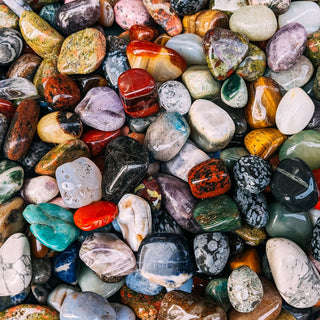
Tumbled Stones. Labradorite tumbled stones by the pound, in mixed sizes or in larger one-to-two-inch stones.
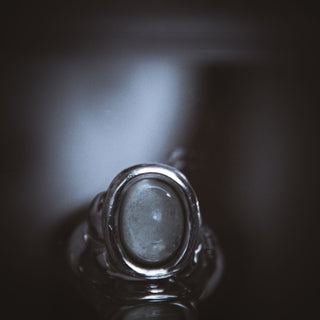
Jewelry. A sterling silver knot ring set with a labradorite cabochon, a rough labradorite pendant in a woven wire cage, wire-wrapped points in a set of five, an 8mm labradorite bracelet, a wolf bracelet with blue labradorite and black tourmaline, black labradorite bracelets, and a Buddha necklace with lapis lazuli and labradorite.
Tools and Sets. A six-sided labradorite pendulum, an 8mm bead strand for your own jewelry, and the New Beginning Crystal Kit with labradorite, larvikite, and hessonite garnet.
How to Choose Labradorite
Start with what you want it for. For intuition and divination, use the pendulum or keep a polished piece beside your cards. For shielding your energy in a crowd or at work, wear a ring or a bracelet. For an altar or a desk, a free shape or a one-side polished piece shows the most flash. For grids and charm bags, a pound of tumbled stones or untumbled chunks gives you plenty.
The flash, called labradorescence, comes from thin layers inside the stone that bend the light, and it only shows from certain angles. Turn a piece slowly under a light to find it. Polished faces show the flash best; untumbled pieces show it in patches.
Labradorite is 6 to 6.5 on the Mohs scale and can chip along its layers, so store it apart from harder stones. A quick rinse is fine; skip soaking and salt water, and wipe it dry with a soft cloth.
For labradorite's meaning, its varieties, and how it got its name, read our full guide, Labradorite Meaning: Spiritual Properties and Uses.
Explore Related Collections
Moonstone carries rainbow moonstone, which is a white labradorite despite its name. Labradorite is one of the stones in Protection Crystals & Stones, and Amethyst Crystals carries the other stone most kept for intuition. Pendulums, Raw Crystals & Rough Stones, and Tumbled Stones carry the same forms in other stones.
Frequently Asked Questions
What is labradorite?
Labradorite is a calcium-rich feldspar, first described in Labrador, Canada, that flashes blue, gold, or green when tilted. Most labradorite sold today comes from Madagascar, and the strongest full-color flash comes from Finland, where it is sold as spectrolite.
What is labradorite good for?
In crystal practice, labradorite is used for intuition, transformation, divination, and shielding the aura, and it is tied to the third eye and throat chakras. Judy Hall's The Crystal Bible lists it for transformation, intuition, and protecting the aura, and modern crystal lore calls it the stone of magic.
Can labradorite get wet?
Briefly. A quick rinse is fine, but do not soak it or leave it in salt water, because water can work into the layers that make the flash. Dry it right away.
Is labradorite expensive?
Ordinary labradorite is affordable, and the price follows the strength of the flash. Here, a bracelet starts at $6.95, a pound of Grade A untumbled labradorite is $17.95, and a polished free shape is $67.95. Finnish spectrolite costs several times more.
What is black labradorite?
Black labradorite is dark labradorite with a silver-blue flash, and much of what is sold under that name is larvikite, a Norwegian rock whose feldspar flashes the same way. Both are used for grounding and protection.
Why doesn't my labradorite flash?
The flash only shows at certain angles. Hold the stone under a single light and tilt it slowly until the color appears. Some pieces, especially untumbled chunks, flash only across part of the stone.