



Plentiful Earth | Spiritual Store
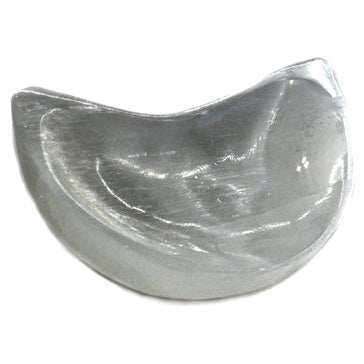
Selenite Half Moon Bowl, 4"
Selenite Half Moon Bowl, 4"- Primary Spiritual Use: Connection
- Secondary Spiritual Use: Enlightenment
- Element: Water
- Planet: Moon
- Zodiac: Cancer
- Chakra: Crown
- Ruling Day: Monday
- Tradition: Wiccan/eclectic
- Intent: Connection, Enlightenment
Couldn't load pickup availability
The 4 inch selenite half moon bowl: the lunar curve of the shop's Moroccan selenite bowl family, the luminous satin-white gypsum carved into the crescent the moon customs recognize on sight. The family's shape for the lunar practice.
Key Features of This Bowl
Moroccan selenite. Satin spar gypsum, honestly named.
Crescent form, 4 in. The lunar shape of the line.
Family of six. Five sibling shapes stand beside it.
Product Details
- Material: selenite (satin spar gypsum), Morocco; natural lines and slight variation piece to piece
- Size: approximately 4 in, half-moon form
- Dry use only: gypsum is water-soluble and soft at Mohs 2; wipe with a dry cloth
- SKU: RBSELHM
The Lunar Dish
Selenite is the moon's own mineral by name, christened for Selene, the Greek moon goddess, because its glow reads as moonlight caught in stone, and the half moon is the shape that says so out loud. Satin spar gypsum, named plainly as everywhere on our shelf, carved into the crescent the lunar practices set out for esbats, moon-phase work, and the charging customs that track the sky. The crystal tradition rests stones in selenite dishes between workings, clearing and recharging by the tradition's reckoning, and the crescent gives that custom its lunar station: the dish for the moon-water bottle's stones, the esbat altar's rest. The bowl charges nothing on its own, as we say plainly; it curves the custom into the moon's own shape.
How To Use This Bowl
- Set it at the lunar station: esbat altars and moon-phase work.
- Keep it dry always; wipe with a dry cloth only, moon water beside it, never in it.
- Pair it with the drop and oval; the shapes divide an altar's stations well.
Pairs Well With
- Selenite Drop Bowl, 4": the pointed sibling.
- Selenite Crystal Bowl, 2": the ring-dish smallest.
- Sea Magick by Rieka Moonsong: the tide's book for the moon's dish.
Frequently Asked Questions
Why is selenite named for the moon?
For Selene, the Greek moon goddess: the stone's glow reads as moonlight caught in mineral, which the crescent shape says out loud.
Does it recharge crystals?
That is the crystal tradition's custom, passed on as tradition: stones rest in selenite dishes between workings.
Can it hold moon water?
Never, ironically: gypsum is water-soluble. The moon water bottle sits beside the dish, not in it.
Spend $50 & enjoy guilt-free shopping with our free shipping on all orders. Get your favorite items delivered right to your door at no extra cost.