



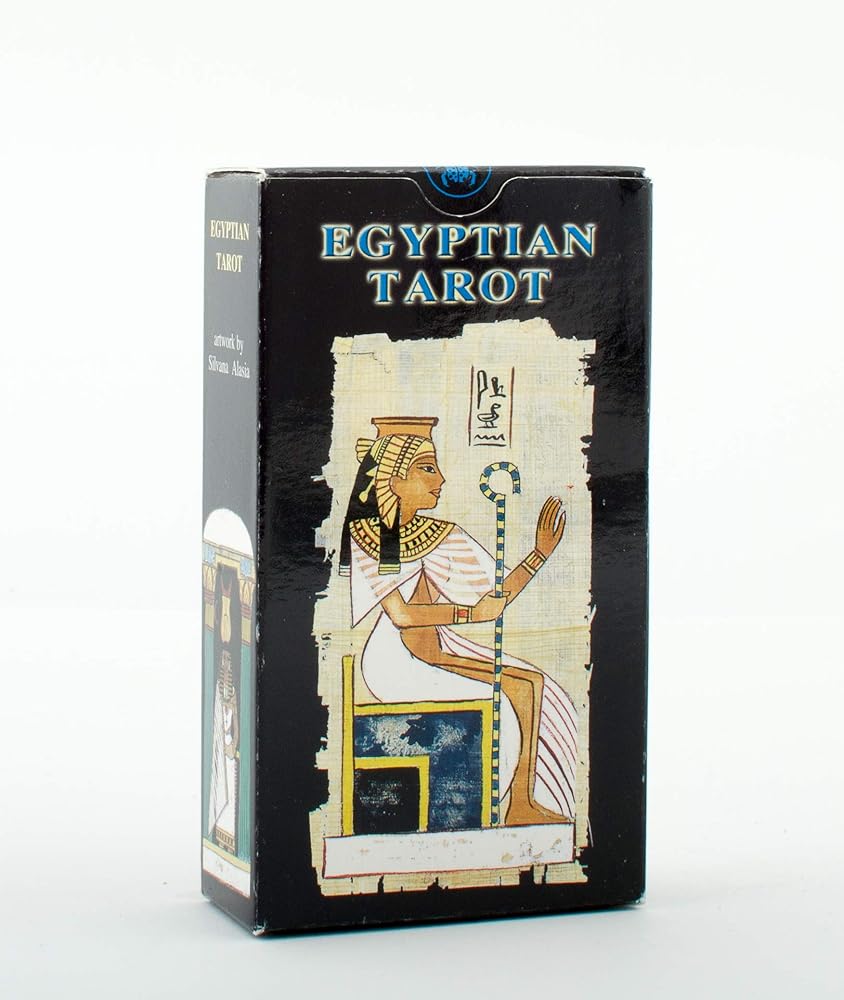
Egyptian Tarot Deck by Silvana Alasia
Egyptian Tarot Deck by Silvana Alasia- Primary Spiritual Use: Intuition
- Secondary Spiritual Use: Transformation
- Material: 78 cards and booklet
- Shipping Weight: 0.6 lb
- Element: Water
- Planet: Moon
- Zodiac: Cancer, Pisces
- Chakra: Third Eye
- Ruling Day: Monday
- Tradition: Egyptian-themed tarot
- Intent: Intuition, Divination, Wisdom
Couldn't load pickup availability
Works Well With


Tarot's love affair with Egypt is older than most decks, and this is its most beautiful monument. The Egyptian Tarot by Silvana Alasia renders all 78 cards in tempera on papyrus-textured ground: pharaonic figures, gods, and hieroglyphic detail painted in the flat, luminous profile style of the tomb walls, published by Lo Scarabeo as the definitive deck of the Egyptian-revival tradition.
The style is authentic Egypt; the tarot connection is authentic nineteenth-century occultism. Both are worth having, and we will not confuse the two.
Key Features of This Egyptian Tarot
Alasia's tempera on papyrus artwork. Each card painted in the tomb-wall idiom: profile figures, mineral color, and hieroglyphic framing on papyrus-textured ground.
Full 78-card tarot structure. Complete majors and minors, readable by any standard tarot method.
The Egyptian-revival lineage. Lo Scarabeo's heir to the esoteric tradition that first dressed tarot in Egypt's iconography.
Product Details
- Contents: 78-card tarot deck
- Artist: Silvana Alasia
- Publisher: Lo Scarabeo, distributed by Llewellyn
- SKU: DEGYTAR1
The Spiritual Significance
We tell the deck's history honestly, because it is a better story told true. Tarot was born in fifteenth-century Italy as a card game; the claim that it descended from ancient Egyptian temple wisdom was the invention of eighteenth-century French esotericists, Court de Gébelin's famous 1781 essay above all, and that romantic error became one of occultism's most productive myths, shaping Etteilla's decks, the Egyptian-styled tarots of the nineteenth century, and a whole revival lineage that treated Egypt as tarot's spiritual homeland. Alasia's deck is that lineage's finest modern flowering: not ancient Egyptian, and never pretending to be, but genuinely faithful to Egyptian art itself.
What the honesty buys the reader is a deck of real power on two legitimate counts. The iconography is deeply researched, the gods, regalia, and painting conventions of the actual tomb tradition rendered with an Italian painter's discipline, and the reading experience carries the revival tradition's particular gravity: solemn, hieratic, and suited to querents who want their readings to feel like consultations in a temple. For students of tarot history, it is also the myth made visible, a working deck and an education in one box.
How To Use This Deck
- Read it by any standard tarot method; the 78-card structure is fully conventional beneath the Egyptian dress.
- Let the profile-style imagery slow the reading; the hieratic idiom rewards deliberate pacing.
- Suit it to solemn questions, threshold moments, and the readings that want ceremony.
- Pair it with study of the revival tradition if the history calls you; the deck is its best textbook.
- Store it with the respect fine card stock earns; tempera-styled printing keeps beautifully in its box.
Candlelight suits it almost embarrassingly well. Some decks have a native lighting; this one's is the oil lamp.
Pairs Well With
- Divination for Beginners by Scott Cunningham: the survey text for situating the revival tradition honestly.
- Easy Tarot: New Edition by Ellershaw & Marchetti: the learning kit whose method reads this deck too.
- Epiphany of Isis Poster, 8.5" x 11": the goddess of the revival's imagination for the reading-room wall.
- Earth Goddess Altar Cloth, 24 x 24 Inches: a worthy spread surface for a ceremonial deck.
- White Sage Smudge Sticks, Set of 6: the cleanse between querents.
Frequently Asked Questions
Is this deck based on real ancient Egyptian tarot?
No ancient Egyptian tarot ever existed: tarot is fifteenth-century Italian, and the Egyptian connection is an eighteenth-century esoteric myth. Alasia's deck honors that revival tradition with genuinely faithful Egyptian artwork, and we present it exactly so.
What is the artwork like?
Tempera paintings in the tomb-wall idiom on papyrus-textured ground: profile figures, mineral palettes, and hieroglyphic detail, rendered by Italian artist Silvana Alasia across all 78 cards.
Is it a standard 78-card deck?
Yes: full majors and minors in conventional structure, readable by any method you already know.
Who publishes it?
Lo Scarabeo of Turin, the great Italian tarot house, with Llewellyn distributing in North America.
Who is the deck for?
Readers drawn to ceremony and gravity, lovers of Egyptian art, and students of tarot history who want the revival lineage's finest modern expression on their table.
Spend $50 & enjoy guilt-free shopping with our free shipping on all orders. Get your favorite items delivered right to your door at no extra cost.