



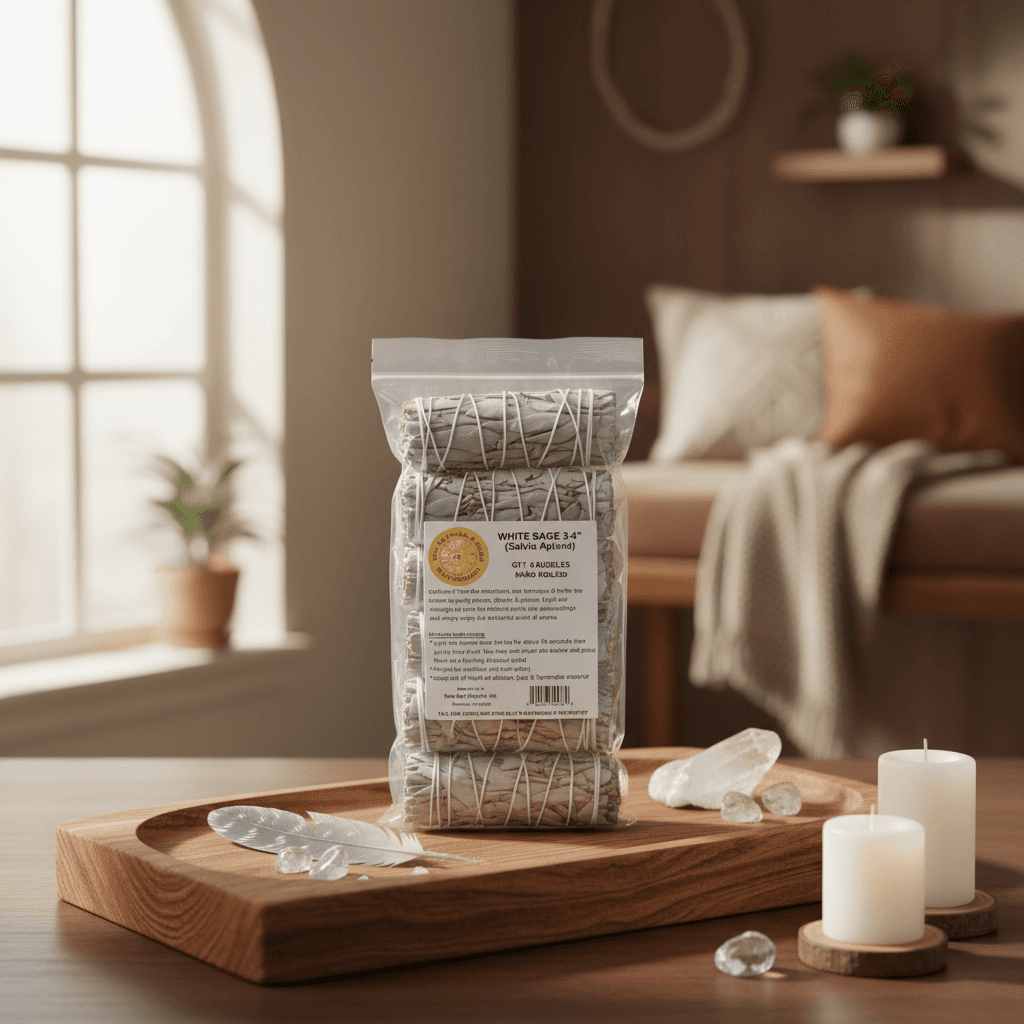
White Sage Smudge Sticks, Set of 6, 3 to 4 Inch | Cleansing Sacred Herb
White Sage Smudge Sticks, Set of 6, 3 to 4 Inch | Cleansing Sacred Herb- Primary Spiritual Use: Purification
- Secondary Spiritual Use: Wisdom
- Element: Air
- Planet: Jupiter
- Zodiac: Sagittarius
- Chakra: Crown
- Ruling Day: Thursday
- Tradition: Wiccan/eclectic
- Intent: Purification, Wisdom
Couldn't load pickup availability
Earthy, medicinal, and sharp at the edges, White Sage smoke does what very few other herbs can. Lit and slowly smoldered, the dried bundles release a dense, clarifying smoke that practitioners across many traditions reach for when a space, a body, or an object needs deeper cleansing than a softer herb can provide. White Sage (Salvia apiana) is native to coastal southern California, where Indigenous peoples, including the Cahuilla, Chumash, Tongva, and Luiseño, have used it in ceremonial cleansing for centuries.
This six-pack of White Sage smudge sticks gives you a steady supply for sustained practice. Each stick is 3 to 4 inches and can be relit many times across many sessions, so six sticks tend to carry an active practitioner through a season of regular ritual cleansing, altar resets, and full home smudging.
Smudging is a specific Indigenous American ceremonial practice that has been widely adopted in modern witchcraft and energy work. That adoption is part of why White Sage matters culturally, and it's part of why sourcing matters. We don't make sustainability claims we can't verify; we'd encourage anyone using White Sage regularly to rotate in other cleansing herbs (mugwort, garden sage, rosemary, cedar) for daily practice so the wild populations of Salvia apiana aren't carrying the weight of a global cleansing trend on their own.
Light it. Walk it through the corners. Let the smoke do what it has always done.
Key Features
Dense, medicinal smoke. White Sage produces a heavier, more clarifying smoke than Palo Santo or other softer herbs. The aroma is sharp and unmistakable, ideal when a space or working calls for thorough cleansing rather than a gentle reset.
Salvia apiana, the ceremonial sage. This is the specific species used in traditional Indigenous Californian cleansing practice, distinct from culinary garden sage (Salvia officinalis). The dense leaves are rich in aromatic oils that drive the smoke's potency.
Six sticks for sustained practice. A single stick relights many times across many sessions. Six is a working supply, not a starter sample, sized for practitioners who include White Sage in regular cleansing rounds: weekly home resets, altar prep, ritual openings, and full-house clearings.
Product Details
- Quantity: 6 sticks per pack
- Stick length: 3 to 4 inches each
- Material: White Sage (Salvia apiana)
The Spiritual Significance
Among Indigenous peoples of coastal California, White Sage holds deep ceremonial significance. Its smoke is used in cleansing rituals to clear unwanted energy from a person, an object, or a space, often as part of larger ceremonial work. The smudging tradition itself, the practice of using sacred herb smoke for purification, comes from this lineage.
Across modern witchcraft, energy work, and broader spiritual practice, White Sage is most often used for cleansing, purification, and protection: clearing stagnant or heavy energy, marking sacred space before ritual, and resetting a home after illness, conflict, or unwanted visitors. Many practitioners pair its sharper smoke with the softer smoke of Palo Santo or another herb for a layered cleansing.
How To Use
- Hold one stick at the base and light the tip with a flame, letting it catch for 20 to 60 seconds before gently blowing it out. White Sage tends to flare up; let the flame burn down to a steady ember rather than smothering it too quickly.
- Walk slowly through the space you want to cleanse, letting the smoke drift into corners, doorways, and any spot that feels stagnant. Speak your intention aloud or hold it silently.
- To cleanse yourself, pass the smoke around your body from feet to crown, paying attention to the chest, hands, and the back of the neck.
- To extinguish, press the smoldering tip firmly into a heatproof dish of sand or salt. White Sage will continue to smolder longer than softer herbs, so press it out fully if you want it cleanly stopped.
- If a stage of the ritual feels unfinished, follow your instincts and continue. The herb meets you where you are.
Pairs Well With
- Palo Santo Smudge Sticks, Set of 6: the sweeter, softer counterpart to White Sage's sharper medicinal smoke. Many practitioners layer the two, leading with sage for deeper cleansing and following with palo santo to settle the space.
- White Sage Kit smudge: the same sage paired with an abalone shell, cobra stand, and feather, for practitioners who want the full traditional smudging setup or are preparing to gift one.
- Florida Water Cologne, 7.5 oz: a centuries-old cleansing cologne that pairs beautifully with sage smoke, sprinkled or sprayed after the smudging to seal the working.
- Cleansing Reiki-Charged Pillar Candle: a sustained-burn altar anchor that holds the cleansing intention long after the smudge stick has gone out.
History & Occult Background
White Sage (Salvia apiana) is an evergreen perennial shrub native to the coastal sage scrub and chaparral of southern California and parts of northern Baja Mexico. Its dense, silver-green leaves are rich in aromatic oils that release the species' distinctive sharp, medicinal scent when burned.
Among the Indigenous peoples of the California coast and inland ranges, White Sage has held ceremonial significance for centuries. Cahuilla, Chumash, Tongva, Luiseño, and other peoples of the region have used the plant in cleansing, prayer, and ritual work, often as part of larger ceremonial practices that have been carried across generations. The smudging tradition itself, the burning of sacred herb smoke for purification, originates in Indigenous American practice.
Beginning in the late twentieth century, White Sage was widely adopted by non-Indigenous practitioners across the New Age, Wiccan, witchcraft, and broader wellness movements. That adoption has driven significant commercial demand, raising serious sustainability concerns for wild populations of Salvia apiana. Conservation organizations including United Plant Savers have placed it on watchlists, and Indigenous-led groups have called for greater respect for the plant's cultural origins and for sustainable, often cultivated, sourcing. Many contemporary witches respond to this conversation by supplementing or rotating their cleansing practice with garden sage, mugwort, cedar, rosemary, or other herbs, reserving White Sage for specific or significant workings rather than daily use.
Frequently Asked Questions
What's the difference between white sage and palo santo smudge sticks?
White Sage produces a heavier, more medicinal smoke favored for deep cleansing and clearing of stubborn energy, while Palo Santo burns sweeter and softer with citrus and resin notes. Many practitioners use both, leading with sage for thorough cleansing and following with palo santo to settle the space afterward.
Is it appropriate to use white sage if I'm not from an Indigenous tradition?
Many non-Indigenous practitioners do, and the question deserves an honest answer rather than a comforting one. Acknowledge the lineage the practice comes from, learn what you can about how Indigenous Californian peoples use the plant, source thoughtfully, and consider rotating in other cleansing herbs so the responsibility is shared.
Is white sage threatened, and how can I source it ethically?
Wild populations of Salvia apiana are under real pressure from commercial overharvesting, and conservation groups including United Plant Savers monitor it as at-risk. Look for sage cultivated on farms rather than wild-harvested, buy in modest quantities, and consider Indigenous-owned suppliers when you can find them.
What are good alternatives if I want to use white sage less often?
Garden sage (Salvia officinalis), mugwort, rosemary, cedar, and lavender are all traditional cleansing herbs with their own deep folk magic histories. Many practitioners rotate between them, reserving White Sage for specific workings and using more local or cultivated herbs for daily and weekly cleansing rounds.
How long will six sticks last me?
Each stick can be relit many times before it is fully spent. For a practitioner who cleanses their space weekly and runs the occasional fuller home clearing, a six-pack typically lasts several months. For daily smudging, expect a few weeks of steady use.
Is it safe to burn white sage indoors?
Yes, with normal incense-level care. White Sage smoke is denser than palo santo, so use a heatproof dish, work in a ventilated room, keep it away from drafts and flammable surfaces, and never leave it smoldering unattended. Those with asthma or smoke sensitivity may want to step out briefly.


Spend $50 & enjoy guilt-free shopping with our free shipping on all orders. Get your favorite items delivered right to your door at no extra cost.