



Plentiful Earth | Spiritual Store
Druidic Boline with Leather Sheath, 10 Inches
Druidic Boline with Leather Sheath, 10 Inches- Primary Spiritual Use: Intention
- Secondary Spiritual Use: Connection
- Element: Fire
- Planet: Mars
- Zodiac: Aries, Scorpio
- Chakra: Root
- Ruling Day: Tuesday
- Tradition: Wiccan
- Intent: Intention, Connection, Grounding
Couldn't load pickup availability
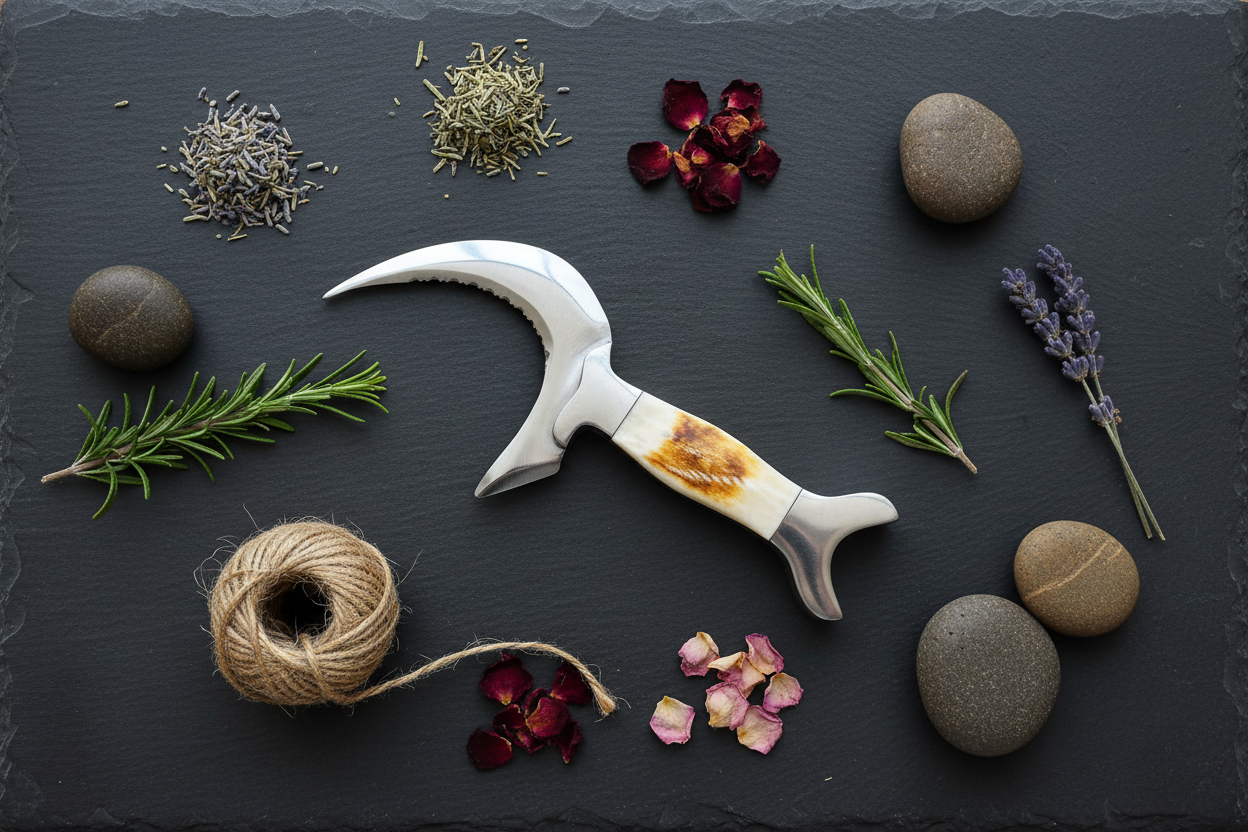
Every altar keeps one blade that never touches the physical world, and one that does nothing else. The druidic boline is the second kind: a 10 inch working knife with a stainless steel blade and bone handle, sheathed in leather, made for the craft's hands-on jobs of harvesting herbs, cutting cords, carving candles, and preparing offerings. The athame directs; the boline does the chores, and the chores are half the practice.
A garden, a candle, a cord, a loaf of ritual bread. Somebody has to actually cut things, and this is the knife the tradition assigned.
Key Features of This Druidic Boline
The working blade. Where the athame is reserved for energy work, the boline is the craft's practical knife, built for harvesting, trimming, carving, and cutting in ritual service.
Bone handle. The boline descends from the tradition's white-handled knife, and the bone grip keeps that lineage in hand, pale, natural, and distinct from the black-handled athame at a glance.
Leather sheath included. The blade travels to garden and grove safely sheathed, and stores respectfully between workings.
Product Details
- Overall length: 10 inches
- Blade: stainless steel
- Handle: bone
- Includes: leather sheath
- SKU: RBOL
Safety note: WARNING: This product can expose you to chemicals which are known to the State of California to cause cancer or other reproductive harm. For more information go to www.P65Warnings.ca.gov.
The Spiritual Significance
The boline carries two old threads. In Wiccan practice it is the white-handled knife, the working partner to the athame in a division of labor inherited from the ceremonial grimoires: one blade for directing energy and casting, one for the physical cutting that ritual actually requires. Herbs are harvested with it, candles carved, cords cut, wands trimmed; whatever the working needs severed or shaped in the material world is the boline's jurisdiction, which makes it, quietly, the most-used blade on many altars.
The druidic name reaches further back, to Pliny's famous account of druids harvesting mistletoe with a golden sickle, the image from which the curved harvest blade of modern practice descends. Whether or not history's druids would recognize the modern tool, the gesture survives intact: the herb cut with a dedicated blade, at the right time, with intention, is already halfway to being an offering. A boline is honest steel and bone, and its consecration is the oldest kind, use.
How To Use This Boline
- Cleanse it on arrival with smoke, and dedicate it to its working role if your practice keeps the two-blade division.
- Harvest herbs with intention, cutting cleanly and thanking the plant, the gesture the tool was named for.
- Use it for ritual's practical cutting: carving symbols into candles, trimming wicks and wands, cutting cords and bread.
- Wipe the blade clean and dry after use, especially after green plant material, and return it to the sheath.
- Treat it with knife sense: it is a genuinely sharp working tool, stored away from children and handled accordingly.
An occasional edge touch-up keeps the harvest clean. Dull blades tear; the tradition prefers a courteous cut.
Pairs Well With
- Dragon Chalice, 7.5 Inches: the receiving vessel to the boline's harvesting edge on a fully equipped altar.
- Four Winds Herbal Smoking Blend: worked herbs for the practitioner whose garden is still growing.
- Black Chime Candle Pack: candles sized for the carving work bolines do between harvests.
- Charge of the Dark God Poster, 8.5" x 11": liturgy for the wall above the working bench.
- White Sage Smudge Sticks, Set of 6: the standing cleanse for blade and space alike.
Frequently Asked Questions
What is the difference between a boline and an athame?
Division of labor: the athame is the energy blade, traditionally black-handled and never used for physical cutting, while the boline is the white-handled working knife that does all the actual harvesting, carving, and cord work. Many practitioners keep both; the boline is the one that gets sharpened.
Why is it called druidic?
The name honors the harvest-blade lineage traced to Pliny's account of druids cutting mistletoe with a golden sickle, the classical image behind the modern herb knife. It is a nod to that gesture rather than a claim of ancient manufacture.
Is it actually sharp?
Yes, it is a genuine stainless steel working knife, sharp enough for herbs, cords, and candle carving. Store it sheathed, keep it from children, and handle it with the same respect as any kitchen or garden blade.
How do I care for the blade and handle?
Wipe the steel clean and dry after use, particularly after cutting green plant material; give bone and leather an occasional conditioning and keep both away from long soaks. A dry sheath and a dry blade age gracefully together.
Does a boline need consecrating?
Traditions vary: some dedicate it formally beside the athame, others hold that a working tool is consecrated by working. Cleansing it on arrival and cutting with intention covers both schools honorably.


Spend $50 & enjoy guilt-free shopping with our free shipping on all orders. Get your favorite items delivered right to your door at no extra cost.