



Plentiful Earth | Spiritual Store
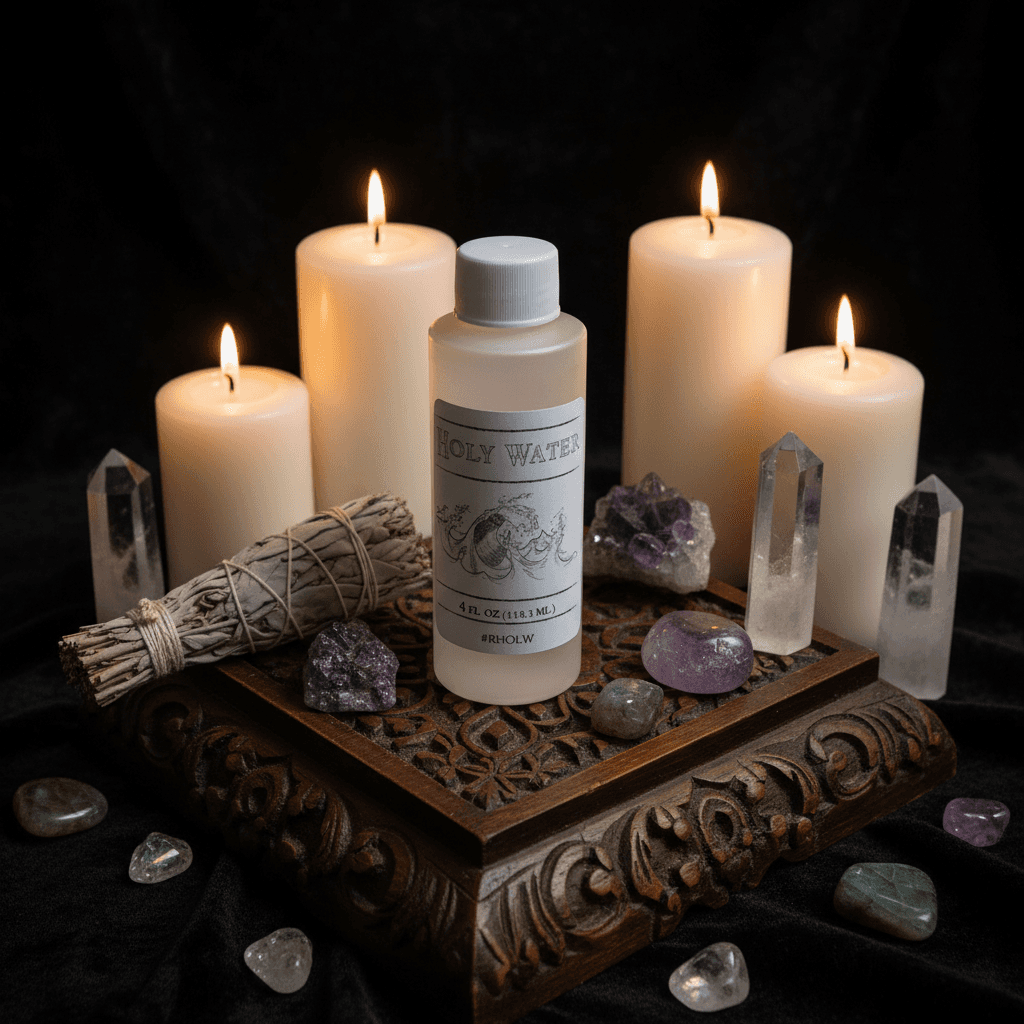
Blessed Holy Water, 4 Ounces
Blessed Holy Water, 4 OuncesOrders over $50 ship free in the U.S.Other rates are calculated at checkout.
Couldn't load pickup availability
- Primary Spiritual Use: Cleansing
- Secondary Spiritual Use: Protection
- Size: 4 oz
- Element: Water
- Planet: Moon
- Zodiac: Cancer, Pisces
- Chakra: Crown
- Ruling Day: Monday
- Tradition: Christian devotional
- Intent: Cleansing, Protection
Water that has been set apart by blessing appears in a great many practices at once. Blessed holy water is a Catholic sacramental first and foremost, and it also turns up throughout folk Catholicism, in Hoodoo and conjure work, in Espiritismo, and on plenty of eclectic altars besides. Four ounces is enough to last a long time, since almost every use calls for drops rather than pours.
We would rather be straightforward with you than sell you a story. This water is supplied to us already blessed. We cannot document which rite was used or who performed it, and we will not pretend otherwise.
Key Features of the Blessed Holy Water
Honest about what we can verify. It reaches us as blessed water. If your tradition requires water blessed by your own priest, elder, or godparent, that is not something a bottle from a shop can replace, and you should get it from them.
A practical working size. Four ounces in a bottle you can keep on the altar or carry in a working bag. Most uses call for a sprinkle, a fingertip, or a few drops added to something else.
Broadly useful across practices. Cleansing a space, dressing a threshold, adding to a floor wash, or marking a tool are all common uses, and none of them require you to belong to any particular tradition.
Product Details
- Volume: 4 fluid ounces
- Supplied to Plentiful Earth as blessed water. We cannot verify the specific rite or the officiant.
- External use only. Do not drink it and do not add it to food or beverages.
- Not suitable for sacramental purposes such as baptism, which is a rite performed by clergy and not something a purchased bottle can stand in for.
- Not a replacement for water obtained through your own parish, house, or lineage where your practice requires that.
- Store the bottle closed and out of direct sunlight.
The Spiritual Significance
In Catholic practice, holy water is a sacramental: water blessed by a priest, kept at the font, used for the sign of the cross on entering a church, and taken home for blessing rooms and people. That is a living tradition with its own authorities, and we are not in a position to speak for it. If you are Catholic, your parish is the right source and the right guide.
Holy water also traveled. It appears throughout folk Catholicism across Latin America, the Caribbean, and southern Europe, and from there into Hoodoo and conjure practice, where it commonly turns up in cleansing washes and in work at doors and thresholds. Several of those traditions are initiatory, and where that is the case the proper use of blessed water is something taught within the house rather than learned from a product page.
What we can say without overstepping: this is one of the oldest and simplest tools in cleansing work, it is used in small amounts, and it is treated with care by nearly everyone who uses it.
How To Use the Blessed Holy Water
- For a space, dip your fingers and flick a light sprinkle into the corners of a room, working through the house in whatever order your practice prefers. A little goes a long way.
- For a threshold, wipe a small amount across the doorframe or the doorstep, often paired with a spoken petition or prayer.
- To dress a tool or an object, apply a drop and let it dry rather than wiping it in. Take care with anything porous, unsealed, or water-sensitive.
- To add to a floor wash or a cleansing bath, pour a small measure into the bucket or the water rather than using it neat.
- When a bottle is finished, many practitioners pour any remainder onto bare earth or into a plant rather than down a drain. Traditions differ; follow your own.
Pairs Well With
- Spiritual Cleansings and Psychic Defenses by Robert Laremy: a practical text on cleansing work if you want grounding in method rather than improvisation.
- Full Moon Water Spray, 8 oz: a different charged water for practitioners who keep several on hand for different purposes.
- 13 Herbs Aromatic Bath Herb: a traditional bath preparation that pairs with water work.
- Hex Breaker (Rompe Zaraguey) Bath Herb: widely used in the same folk Catholic and conjure contexts.
- Black Brass Cone Incense Burner: for practitioners who work smoke and water together.
Frequently Asked Questions
Was this blessed by a priest?
We cannot tell you that with confidence. It is supplied to us as blessed water, but we have no documentation of the rite or the officiant, so we will not make the claim. If priestly blessing specifically is what your practice requires, obtain it from your own parish.
Can I drink it?
No. This is sold for external ritual use only. Do not drink it, do not add it to food or drink, and keep it out of reach of children and pets. If you need water for consumption in a devotional context, that is a question for your own tradition.
Can I use it for a baptism?
No. Baptism is a sacrament performed by clergy within a church, and no purchased bottle can substitute for that. Using this water in that way would not be valid in any tradition we are aware of, and we would rather say so clearly.
Does holy water expire?
It does not spoil in a devotional sense, but water in an opened bottle can go cloudy or develop growth over time, particularly if fingers are dipped into it. Keep it closed, keep it out of sunlight, and retire it respectfully if it changes.
How should I dispose of it?
Most traditions ask that blessed water be returned to the earth rather than poured down a drain. Pouring the remainder onto bare ground or into a potted plant is the common practice. Follow whatever your own tradition specifies if it differs.
Do I need to be Catholic to use it?
No, and a great many people who use it are not. That said, some of the traditions this tool travels through are initiatory, and in those contexts correct use is taught within the house. Working respectfully within what you have actually been taught is the sensible approach.

Spend $50 & enjoy guilt-free shopping with our free shipping on all orders. Get your favorite items delivered right to your door at no extra cost.