



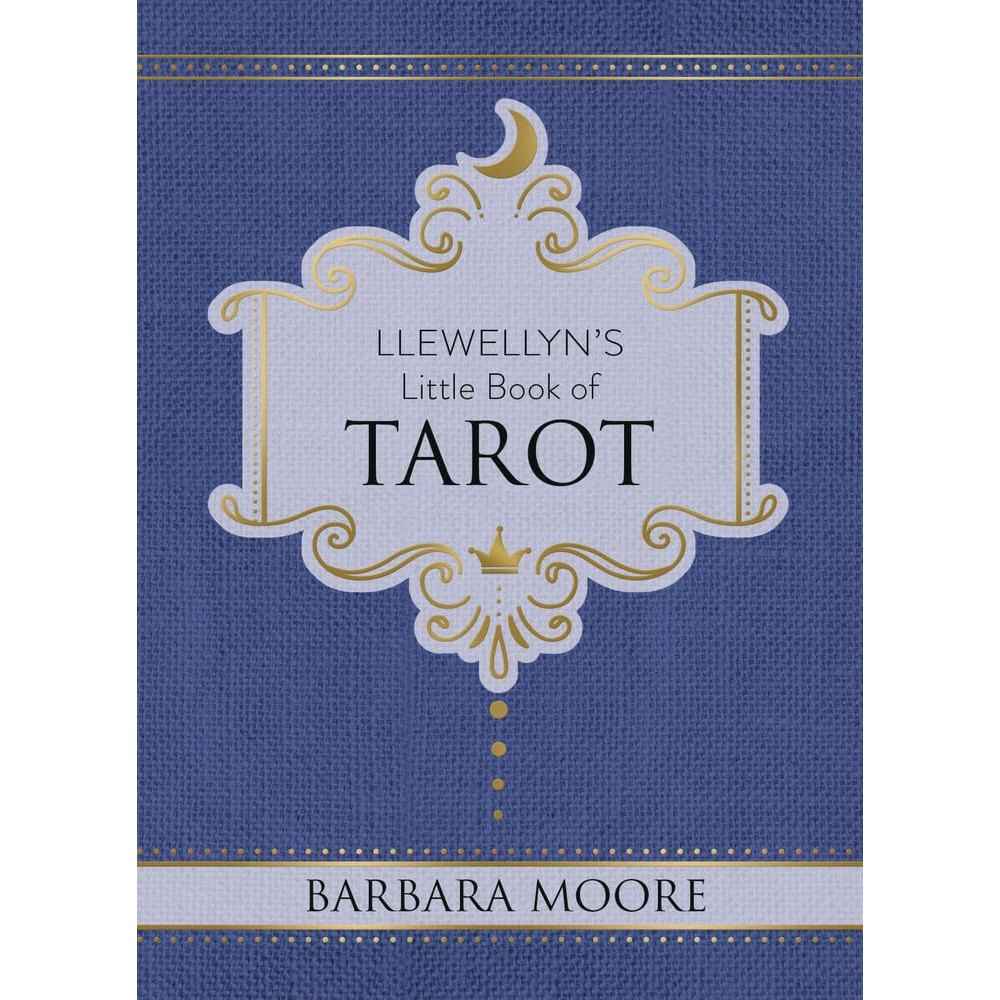
Llewellyn's Little Book of Tarot by Barbara Moore
Llewellyn's Little Book of Tarot by Barbara MooreOrders over $50 ship free in the U.S.Other rates are calculated at checkout.
Couldn't load pickup availability
- Primary Spiritual Use: Psychic
- Secondary Spiritual Use: Wisdom
- Element: Air
- Planet: Mercury
- Zodiac: Gemini, Virgo
- Chakra: Third Eye
- Ruling Day: Wednesday
- Tradition: Modern eclectic
- Intent: Psychic, Intuition, Wisdom
A pocket-sized introduction to tarot from Barbara Moore, covering all 78 cards with an emphasis on building a practice you will actually keep up rather than memorizing meanings you will forget.
Hardcover, full color, and genuinely small.
Key Features of Llewellyn's Little Book of Tarot
All 78 cards interpreted. Moore works through the major and minor arcana with the important elements of each.
Sample cards from many decks. A useful thing: it shows how the same card looks across different artists' work, which is how you learn to read symbols rather than pictures.
Beyond the cards. Bibliomancy, meditation, and other divination techniques, for readers who want the wider practice.
Product Details
- Author: Barbara Moore
- Publisher: Llewellyn Publications
- Format: pocket-sized full-color hardcover, part of the Little Book series
- SKU: BLLELITT
The Spiritual Significance
Tarot's history is worth knowing and often gets embroidered. The cards began as a fifteenth-century Italian card game, tarocchi, and were not used for divination until the eighteenth century, when French occultists took them up and attached Egyptian and kabbalistic frameworks that the original decks never carried. That does not make the practice less useful; it makes the claims about ancient Egyptian origins false, which is a different thing.
What tarot does well is give you seventy-eight structured images to think against. Moore's approach is practical and unfussy: read the card, notice what it raises, and let the practice build from there. The comparison across decks is the most valuable feature here, because it teaches you the difference between a card's meaning and one artist's rendering of it.
How To Use Llewellyn's Little Book of Tarot
- Work through the cards a few at a time rather than trying to memorize the deck.
- Compare the sample images and notice what stays constant across them.
- Draw a card a day and write down what you made of it, before you know how the day goes.
- Try the non-card techniques, which are a genuine part of the book.
- Carry it, which is what the format is for.
Pairs Well With
- Llewellyn's Little Book of Psychic Development: another in the same pocket series.
- Aged Leather Journal with Latch: for the daily draw, which is the part that teaches you.
- Llewellyn's Complete Book of Correspondences: the reference behind the symbols.
- Les Vampires by Lucy Cavendish: an oracle deck, for a different kind of reading.
- Lemongrass Incense Sticks: the clear-headed register, before a reading.
Frequently Asked Questions
Is it for beginners?
Yes. It assumes nothing and is built as a first tarot book.
Does it cover all the cards?
Yes, all 78, with the key elements of each.
Why does it show cards from different decks?
Because it teaches you to read the symbol rather than the picture. Seeing how several artists render the same card is one of the fastest ways to learn what the card actually means.
Are the cards really ancient Egyptian?
No. Tarot began as a fifteenth-century Italian card game and was not used for divination until the eighteenth century, when French occultists attached the Egyptian story to it. The practice is real; the ancient origin is not.
Does it include a deck?
No, the book is sold on its own.

Spend $50 & enjoy guilt-free shopping with our free shipping on all orders. Get your favorite items delivered right to your door at no extra cost.