



Plentiful Earth | Spiritual Store
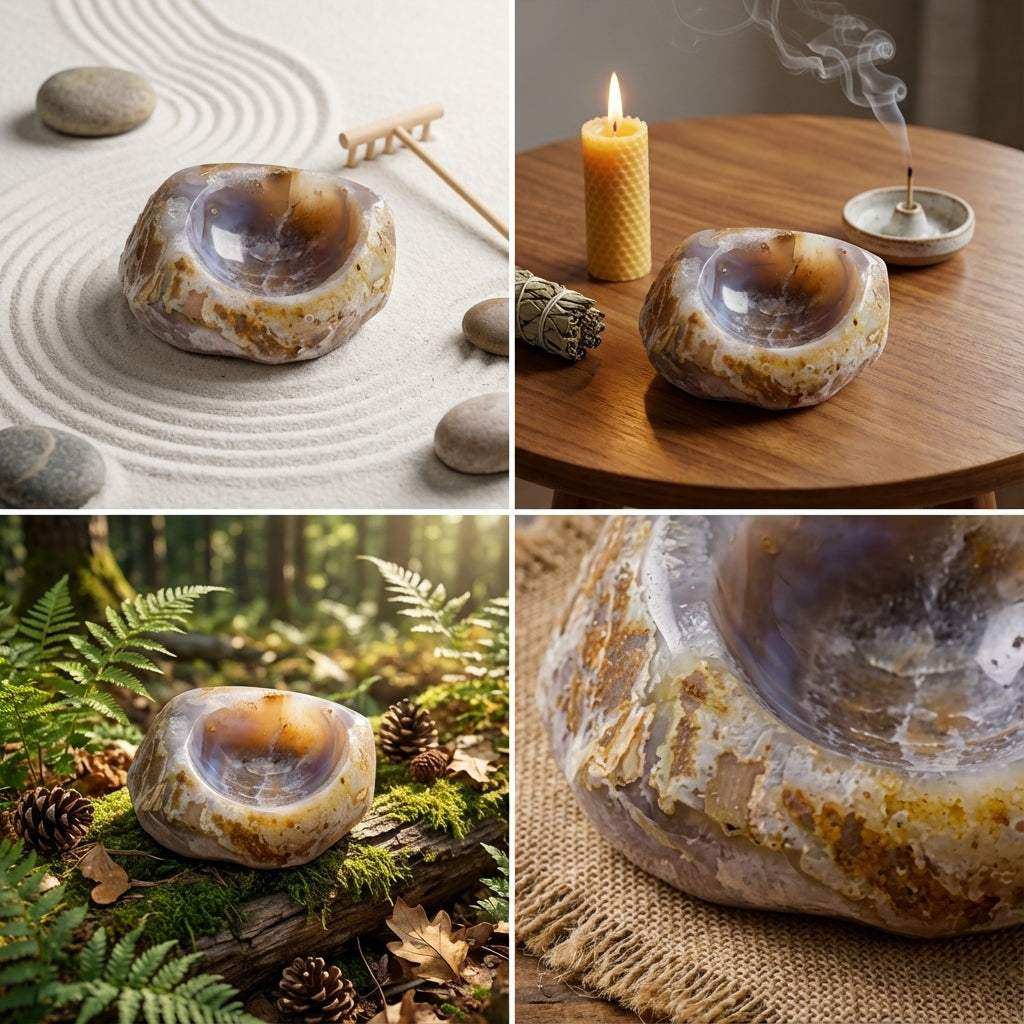
Agate Natural Offering Bowl, 4 to 6 Inch, Brazilian Agate
Agate Natural Offering Bowl, 4 to 6 Inch, Brazilian Agate- Primary Spiritual Use: Grounding
- Secondary Spiritual Use: Stability
- Element: Earth
- Planet: Mercury
- Zodiac: Gemini
- Chakra: Root
- Ruling Day: Wednesday
- Tradition: Wiccan/eclectic
- Intent: Grounding, Stability
Couldn't load pickup availability
An offering bowl is the one altar piece that does the same job in every tradition: it holds what you give. This one is a natural Brazilian agate, polished so the banding shows in warm earth tones, and cut so that the stone itself forms the bowl. Sizes run 4 to 6 inches, and every piece is different.
Fill it with water for the ancestors, salt for the circle, grain for the harvest, or the day's small offering of flowers and coins. Agate is a grounding stone in Cunningham's correspondences, which makes this bowl feel like it belongs on an altar built for steadiness.
Key Features of This Agate Offering Bowl
Natural agate, polished. The bowl is cut from a single piece of agate and polished so the bands and earthy colors show. Because it is natural stone, the shape, banding, and exact color vary from bowl to bowl.
Sourced from Brazil. Brazil produces some of the most richly banded agate in the world, and this bowl comes from there. At around 4 pounds, the weight and coolness of real stone set it apart from a ceramic dish.
A working altar bowl. At 4 to 6 inches it is large enough for a proper offering of water, salt, herbs, fruit, or coins, and small enough to sit beside candles and statues without crowding the altar.
Product Details
- Size: approximately 4 to 6 inches; each bowl varies
- Material: natural agate, polished
- Origin: Brazil
- Weight: about 4 lb; varies by piece
- Color: earthy tones with natural banding; varies by piece
The Spiritual Significance
An offering bowl is used to hold gifts to spirits, ancestors, deities, and the land in nearly every tradition that keeps an altar. In Hoodoo and Espiritismo, a bowl of fresh water sits on the ancestor altar and is changed weekly. In Wicca, a bowl of salt represents Earth on the altar, and a bowl of water represents its element. In Hindu and Buddhist home shrines, offering bowls hold water, rice, flowers, and fruit each morning. A stone bowl suits all of these because it is durable, easy to clean, and carries its own quiet presence.
Agate adds a specific note. Cunningham's Encyclopedia of Crystal, Gem and Metal Magic lists agate for strength, courage, and protection, and it has been carried as a protective amulet since antiquity. An offering placed in agate is an offering placed in a grounding stone, which makes this bowl a natural fit for earth-centered work, ancestor altars, and any practice built around steadiness.
Give what you have. The bowl will hold it.
How To Use This Agate Offering Bowl
- Wash the bowl in warm water and dry it, then cleanse it with incense smoke or a night in moonlight before its first use on the altar.
- Dedicate it by holding it and saying what it will hold: water for the ancestors, salt for the circle, offerings for the land, or whatever your practice calls for.
- Fill it with the day's offering. Fresh water changed weekly, a pinch of salt renewed at the new moon, or flowers and fruit replaced before they fade.
- When you remove an old offering, thank whoever received it, and return the water or food to the earth outdoors if you can.
- Rinse the bowl between offerings and let it dry fully. Agate is sturdy, but avoid harsh cleaners that could dull the polish.
An offering bowl works best when it is never empty. Even a coin and a kind word is enough. Our list of traditional Samhain offerings is a good place to start when you are not sure what to give.
Pairs Well With
- Wooden Hand Offering Bowl, 7 Inches: a second offering vessel in wood for altars that keep one bowl for water and one for dry gifts.
- Pentagram Brass Altar Bell, 4 Inches: ring it when you set the offering down to mark the moment.
- Pink Rose Petals, 1 oz: dried petals for the bowl when fresh flowers are out of season.
- Agate Natural Tumbled Stones, 1 lb: matching tumbled agate to fill the bowl on days it holds stones instead of water.
- Kananga Water Cologne: a splash in the water offering for the ancestors, as in Hoodoo and Espiritismo custom.
Frequently Asked Questions
What do you put in an offering bowl?
You put whatever your tradition gives to spirit in an offering bowl: fresh water for the ancestors, salt for the altar's Earth element, grain or fruit for the harvest, flowers, coins, honey, or a small portion of a meal. Change perishable offerings before they spoil and return them to the earth outdoors when you can.
Is this agate bowl safe to hold water?
Yes, this agate bowl is safe to hold water. Agate is a hard, dense form of chalcedony that does not absorb liquid or dissolve, so water, oil, and salt offerings are all fine. Rinse it between offerings and dry it, and avoid harsh chemical cleaners, which can dull the polished surface over time.
Why use a stone offering bowl instead of ceramic?
A stone offering bowl brings its own correspondence to the altar; agate is listed by Cunningham for strength, courage, and protection, so the vessel supports the gift. Stone is also heavier, cooler, and more durable than ceramic, and a natural agate bowl is one of a kind, with banding no two pieces share.
Will my bowl look like the photo?
Your bowl will be similar to the photo but not identical. Each offering bowl is cut from a natural piece of Brazilian agate, so the size falls anywhere in the 4 to 6 inch range and the banding, color, and shape vary from piece to piece. Take the photo as a representative example rather than the exact bowl.
Can I use an agate bowl for ancestor offerings?
Yes, an agate bowl suits ancestor offerings well. In Hoodoo and Espiritismo the ancestor altar keeps a bowl of fresh water, changed weekly, sometimes with a splash of Kananga or Florida Water. Agate's grounding association fits ancestor work, and the stone cleans easily between changes, which matters for a bowl used every week.


Spend $50 & enjoy guilt-free shopping with our free shipping on all orders. Get your favorite items delivered right to your door at no extra cost.