



Plentiful Earth | Spiritual Store
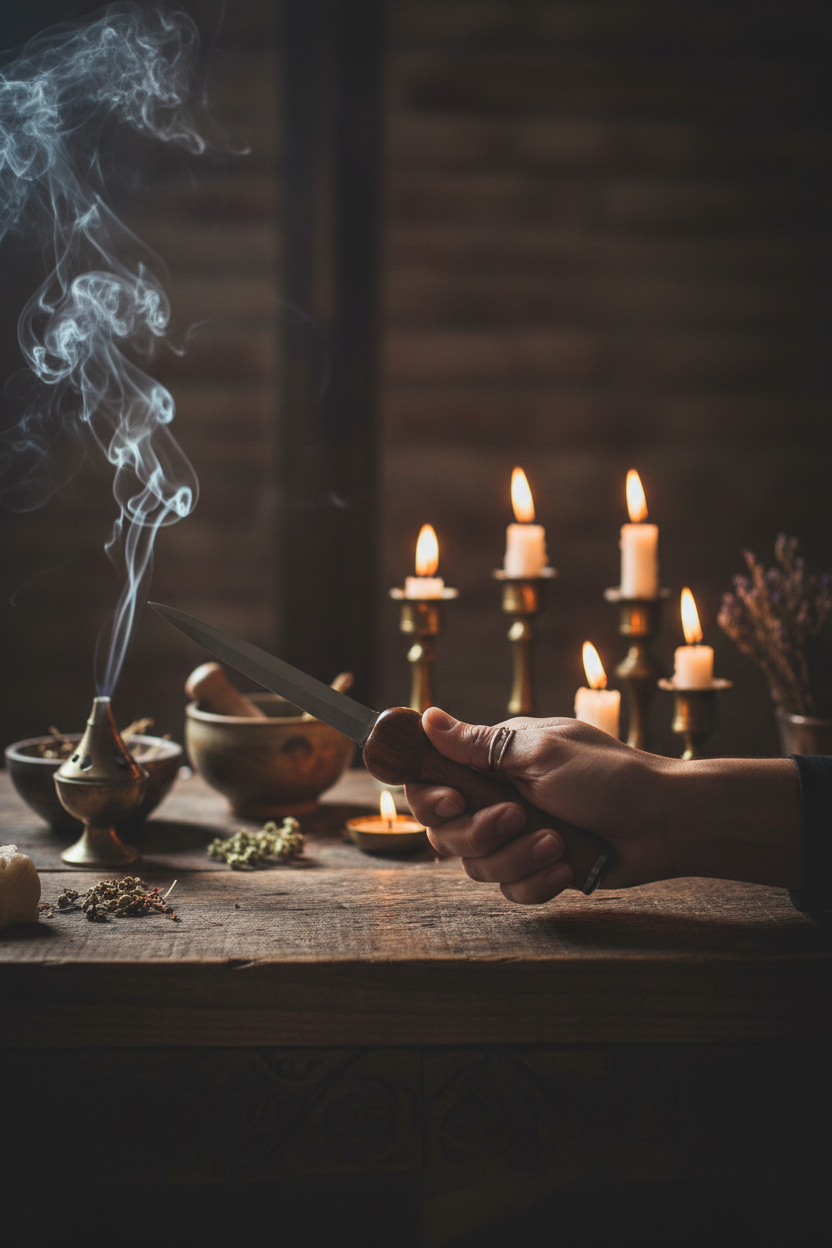
Bollock Athame with Wood Handle, 12 Inches
Bollock Athame with Wood Handle, 12 Inches- Primary Spiritual Use: Intention
- Secondary Spiritual Use: Transformation
- Element: Fire
- Planet: Mars
- Zodiac: Aries, Scorpio
- Chakra: Solar Plexus
- Ruling Day: Tuesday
- Tradition: Wiccan
- Intent: Intention, Transformation
Couldn't load pickup availability
History has a way of making itself felt in the hand. The bollock dagger is one of the most enduring blade designs in European history, carried by everyone from London merchants and Border Reivers to the sailors aboard Henry VIII's warship the Mary Rose, where dozens of these blades were found when the wreck was excavated in the 1980s. This 12" athame brings that lineage to your altar in a form that is unmistakable: the distinctive twin-lobed guard, shaped from one piece with the wooden grip, that gives this dagger both its name and its centuries of presence.
The form speaks immediately to practitioners drawn to medieval history, British and Northern European folk traditions, or simply the look and feel of a blade with genuine historical roots. At 12 inches overall, it sits at a satisfying ritual length, substantial enough to cast a circle with authority and direct energy with clarity. The all-wood construction of the hilt, guard and grip flowing together from a single form, gives this blade a warmth and organic weight that metal-heavy athames often lack.
What draws many practitioners to the bollock dagger specifically is that it was not a warrior's weapon or a knight's blade. It was a civilian dagger, carried daily by ordinary people across Scotland, England, Flanders, Scandinavia, and Wales for over four centuries. There is something genuinely grounding about working with a form that was part of everyday life in the medieval world, not just ceremony and court. It carries the energy of the common person, the craftsman, the traveler, the witch who kept a blade because a blade was useful, and whose descendants are still doing so.
Key Features
Authentic bollock dagger form with one-piece wood guard and grip. The defining feature of the bollock dagger is its hilt: the two oval lobes of the guard are carved from the same piece of wood as the grip, forming a continuous, unified handle that is both comfortable in the hand and historically accurate to the design that made this blade ubiquitous across Northern Europe from the 13th through the 17th centuries. No separate crossguard, no metal fittings interrupting the grip; just wood, shaped into one of the most recognizable silhouettes in medieval blademaking.
Full 12" overall length for confident ritual work. Twelve inches gives you real presence and reach in circle casting. The extended length means the arc of your energy-directing motion is broader and more deliberate, which many practitioners find helpful for maintaining focus during the casting. It also means the blade reads clearly at the altar as a dedicated ritual tool, not a utility knife.
A blade form with genuine historical weight. The bollock dagger appears in more medieval illuminated manuscripts than any other dagger type and was found in greater numbers than any other blade aboard the Mary Rose. It is the ancestor of the Scottish dirk, it was carried by the Border Reivers, and it is documented in continuous use from approximately 1300 to 1650 across the British Isles and Northern Europe. Working with this form connects your practice to that long lineage of everyday carried blades.
Product Details
- Total Length: 12 inches
- Hilt style: Bollock dagger (twin-lobed guard in one piece with grip)
- Handle material: Wood
- Historical period represented: 13th to 17th centuries; Tudor and medieval Northern European
- Also known as: Kidney dagger, ballock knife, dudgeon dagger (when hilted in box-root)
- Shipping restriction: Cannot ship to Massachusetts or California
- Prop 65 Warning: This product can expose you to chemicals known to the State of California to cause cancer or other reproductive harm. For more information go to www.P65Warnings.ca.gov.
The Spiritual Significance
The bollock dagger's long history as an everyday carried blade, worn at the belt by people across all walks of life in medieval Britain and Northern Europe, gives it a particular resonance for practitioners who work in folk magic and hedge-witch traditions, where the magical tool is not set apart from ordinary life but woven into it. You can use this athame in the traditional Wiccan practice of circle casting, pointing the blade outward and walking deosil around your space to draw the boundary between sacred and mundane, letting the full 12-inch length amplify the deliberateness of each step and gesture. The all-wood hilt warms quickly in the hand, which many practitioners find supports presence and groundedness throughout the working.
The twin-lobed hilt form carries its own symbolic dimension for practitioners who choose to engage with it. The paired lobes at the guard represent duality and balance, a design principle echoed across many magical traditions: the meeting of opposing forces, masculine and feminine, seen and unseen, within and without. You can work with this symbolism intentionally in workings centered on polarity, partnership, or the balancing of energies in your practice or life, holding the bollock hilt in both hands and speaking your intention for integration before moving into the active working.
How To Use
Working with a new athame of this historical form invites a few specific considerations alongside the standard approach to ritual blades:
Cleanse and consecrate before first use. Wood and metal both respond well to smoke cleansing; pass the blade through the smoke of frankincense, copal, or a cleansing herb blend of your choice. Leave it overnight on your altar or under moonlight to allow any residual energy from its making and handling to clear. You might then perform a formal consecration, presenting the blade to each of the four elements and speaking your intention for it aloud.
Use it for circle casting and energy direction. Hold the athame in your dominant hand with a firm, natural grip around the wooden hilt. The twin lobes of the guard will seat naturally against your palm. Walk your circle clockwise, extending the blade outward, focusing your will on drawing the energetic boundary of your sacred space. Some practitioners chant or speak their quarter-callings with the blade raised at each direction; others work in focused silence.
Consider its everyday lineage. Unlike ceremonial swords or highly ornamented blades, the bollock dagger was part of daily life for centuries. You might choose to carry or keep it close as a protective companion in ways beyond formal ritual: on your desk, in your bag, at your bedside. For practitioners who work with folk magic traditions or who prefer a grounded, unfussy approach to their tools, this suits the form particularly well.
Mark it as your own. The plain wooden hilt of this blade is an invitation. You might choose to carve or burn runes, sigils, or elemental symbols into the wood; to anoint it with oil meaningful to your practice; or simply to allow it to develop its own patina through regular use and handling. The blade will develop a relationship with you over time in proportion to what you bring to it.
Your intuition about how to work with this blade is as valid as any tradition's guidelines. The bollock dagger has been used by many thousands of people across many centuries; it is well accustomed to serving the needs of whoever carries it.
History & Occult Background
The bollock dagger takes its name from the distinctive twin-lobed shape of its guard, which in the vocabulary of the period was straightforwardly anatomical. Victorian weapon historians, preferring to avoid the reference, introduced the term "kidney dagger" in the 19th century, but contemporary scholars and reenactors have largely returned to the original name. The form first appeared on continental effigies around 1300 to 1350, making it one of the longer-lived of the five principal medieval dagger types, in continuous use for roughly 350 years before it began to give way to successor forms in the late 17th century.
Its geographic reach was broad. The bollock dagger was popular across Scandinavia, Flanders, Wales, Scotland, and England, and it appears in more medieval illuminated manuscripts than any other dagger type, which speaks to how common and how visible it was in everyday life. It was not a prestige weapon, though it was certainly carried by those of high status; it was the sidearm of merchants, sailors, farmers, and craftspeople, worn at the belt as a practical tool for cutting, eating, and self-defense. Many specimens were found aboard the Mary Rose, the warship of Henry VIII that sank in 1545 and was raised in 1982, providing one of the richest and most precisely dated collections of Tudor-era material culture ever recovered.
In Scotland, the bollock dagger is historically significant as the direct ancestor of the Scottish dirk, which emerged as the bollock form evolved through the 17th and into the 18th century, becoming one of the defining items of Highland dress. The bollock was also the standard backup blade of the Border Reivers, the cattle-raiding clans who operated along the Anglo-Scottish border from the 13th through the early 17th centuries, a culture whose folk magic and cunning craft traditions have influenced contemporary Northern folk and hedge-witch practices. The hilt was sometimes made from box-root, a dense hardwood also known as dudgeon, giving rise to the period term "dudgeon dagger" or "dudgeon-hafted" for this form; the word "dudgeon," meaning resentment or anger, is widely thought to derive from this material, since a blade drawn in anger was often a dudgeon dagger.
For contemporary practitioners, the bollock athame sits at an intersection that is genuinely uncommon in the ritual blade marketplace: it is a form with deep, documented historical roots in the everyday material culture of Northern Europe, with particular resonance for those working in Scottish, Welsh, English, or Norse-influenced Pagan, folk magic, or eclectic traditions. It is also simply an excellent shape for a working ritual blade: comfortable in hand, clearly recognizable as intentional, and carrying the quiet authority of something that has been trusted by people for a very long time.
Pairs Well With
- Cast Iron Cauldron with Lid, 8 Inches — Cauldron and athame are the central complementary pairing on a Wiccan altar; the bollock dagger's Northern European folk lineage sits particularly well alongside the cauldron's deep roots in Celtic and medieval British magical tradition.
- Dirk Wod Damascus Athame, 13 3/4" — The Dirk Wod is historically the direct descendant of the bollock dagger, as the Scottish dirk evolved from this exact form; owning both means you can trace the lineage of one of the most important blade traditions in British history across two dedicated ritual tools.
- Altar Tiles & Pentacle Plates — A pentacle tile provides the Earth element on your altar and a proper resting place for your athame between workings; the organic warmth of the bollock's wood hilt pairs naturally with a stone or wooden pentacle plate.
- Black Tourmaline Crystals — Place black tourmaline at the four quarters of your circle during workings with this athame to reinforce the protective warding energy; the combination is particularly effective for practitioners working in protection and boundary-setting traditions.
- Manta Athame Ritual Dagger, 13" — If you work in multiple traditions or dedicate individual blades to specific types of workings, the Manta Athame's carved wooden hilt and the bollock's all-wood construction make them natural companions in a collection built around natural materials and organic forms.
Frequently Asked Questions
What is a bollock dagger, and why is it called that? The bollock dagger is a medieval blade form defined by its distinctive hilt: two oval lobes at the guard, shaped from one piece with the wooden grip, that give the handle a recognizable silhouette. The name is straightforwardly anatomical, referring to the shape of the lobes. Victorian-era weapons historians introduced the term "kidney dagger" as a more polite alternative, but the original name has been largely reinstated by contemporary historians and reenactors. It was one of the most common everyday carried blades in Northern Europe from roughly 1300 to 1650.
How does this differ from other athames in the Plentiful Earth collection? The bollock athame is unique in the PE collection for its historically specific form. Where most athames are designed with ceremony and aesthetics in mind, the bollock replicates a blade that was genuinely ubiquitous in medieval daily life. Its all-wood hilt, with guard and grip carved as a single piece, is a direct nod to period construction. Practitioners drawn to Northern European folk traditions, British history, or a grounded and historically rooted tool will find it distinctive in a way other athames in the collection are not.
Can I ship this to any state? This athame cannot ship to Massachusetts or California due to blade regulations in those states. Please contact Plentiful Earth before ordering if you are located in either state.
How do I care for the wooden hilt? Wood benefits from periodic conditioning with a small amount of natural oil, such as linseed, tung, or food-safe mineral oil, to prevent drying and cracking over time. Keep the hilt away from prolonged moisture and store the blade in a dry space. Avoid submerging in water or salt during cleansing; smoke or moonlight are better choices for a wood-hilted athame.
Can I carve or engrave symbols into the wooden hilt? Yes, and many practitioners do. The plain wood hilt of this athame is a natural surface for personalization: runes, elemental symbols, sigils, ogham characters, or any marking meaningful to your practice can be carved, burned, or painted onto the wood. Personalizing your ritual tools in this way is a long-standing tradition in both folk magic and ceremonial practice, and the all-wood construction of this hilt makes it more workable than a metal-fitted handle.
Is this appropriate for a practitioner working in Scottish or Northern European folk traditions? It is exceptionally well-suited to it. The bollock dagger is historically specific to exactly the geographic and cultural context of Scottish, English, Welsh, and Scandinavian folk traditions, and it is the direct ancestor of the Scottish dirk, which remains one of the defining symbols of Highland identity. For practitioners whose path draws on any of these lineages, working with this blade form is an act of genuine historical connection rather than approximation.
Should this athame be sharp? In Wiccan practice, the athame is used for directing energy, not for physical cutting, and is traditionally kept unsharpened. Janet and Stewart Farrar, in A Witches' Bible, specifically recommended dulling the point of an athame to prevent unintended harm during ritual. Please confirm the sharpness of this specific blade with your supplier, and handle it with appropriate care regardless.


Spend $50 & enjoy guilt-free shopping with our free shipping on all orders. Get your favorite items delivered right to your door at no extra cost.