



Plentiful Earth | Spiritual Store
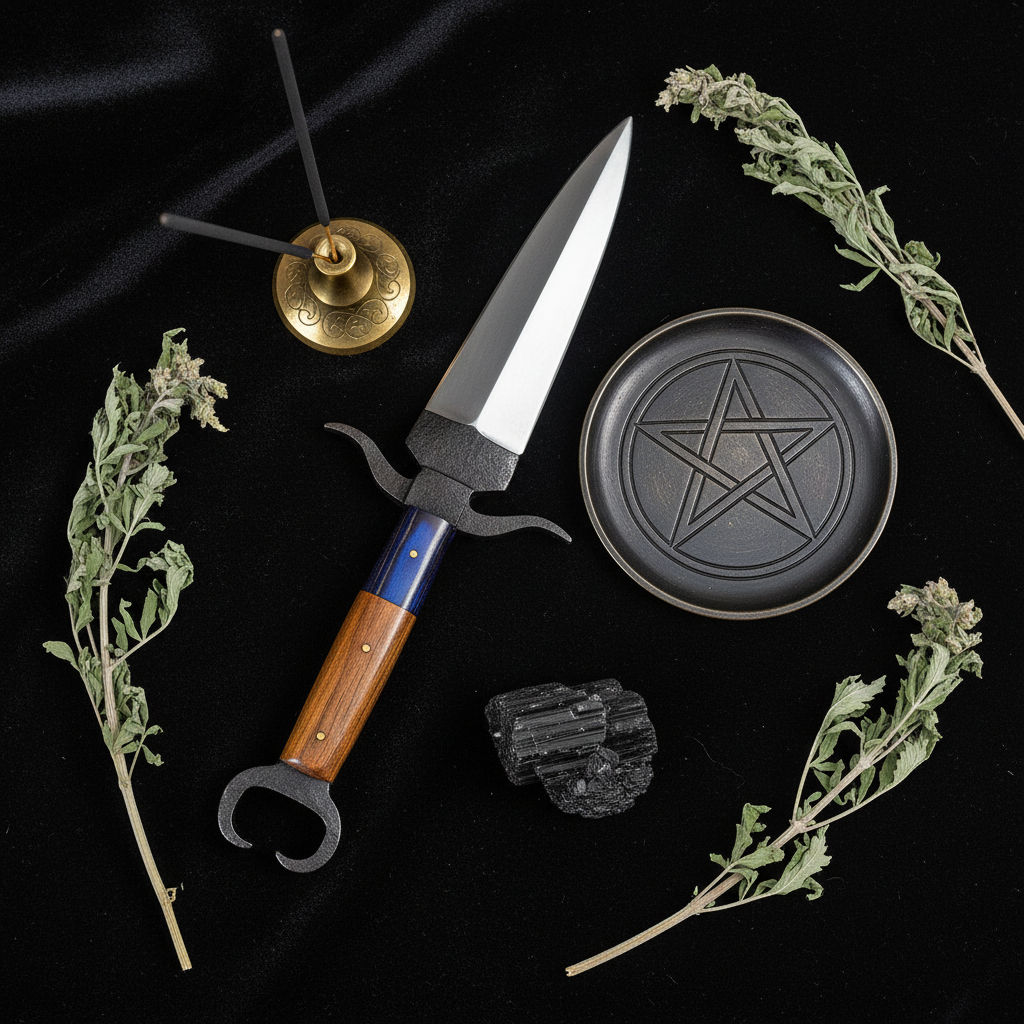
Manta Athame Ritual Dagger, 13"
Manta Athame Ritual Dagger, 13"- Primary Spiritual Use: Intention
- Secondary Spiritual Use: Energy
- Size: 13 in
- Material: Metal blade, iron guard and pommel, wood hilt, leather sheath
- Shipping Weight: 1.2 lb
- Element: Fire
- Planet: Mars
- Zodiac: Aries, Scorpio
- Chakra: Solar Plexus
- Ruling Day: Tuesday
- Tradition: Wiccan
- Intent: Intention, Energy, Protection
Couldn't load pickup availability
Works Well With


Every witch reaches a moment when they feel the need for a blade, not for cutting, but for clarity. The athame is one of the most revered tools in Wiccan and broader ceremonial practice, a ritual dagger that exists to direct will, cast sacred boundaries, and carry the sharp edge of intention into your magical work. This 13" Manta Athame is built for that work: substantial in hand, distinctive in form, and quietly commanding in the way that good ritual tools tend to be.
What makes this athame stand apart is in the details. The hilt is carved wood; each one unique in natural grain and color variation, earthy and tactile in a way that synthetic handles simply aren't. The iron guard and pommel lend balance and durability, and the whole piece has been treated with oil, giving it a finish that's both authentic and easy to maintain. At 13 inches, it carries the presence you want for circle casting and ceremonial use without feeling unwieldy in the hand.
The athame belongs to the realm of Air in many Wiccan and eclectic traditions; it is the mind made manifest, the will given edge. It does not cut in the physical world; it cuts through energy, through density, through the veil between what is and what you're calling into being. Whether you're establishing a ritual circle, invoking the quarters, or directing energy in spellwork, this blade becomes an extension of your focused intention.
Bring this athame to your altar and feel the shift in your practice. The moment a tool fits right in your hand, something in you knows this is where the work begins.
Key Features
Carved wooden hilt, unique to each piece. The natural grain and blended colors of the wooden handle mean no two Manta Athames are exactly alike. For practitioners who believe that tools carry and develop their own energy, this individuality matters; you're working with something singular, not mass-produced.
Iron guard and pommel for balance and durability. The sleek iron hardware keeps this athame balanced in the hand during extended ritual work, and ensures it will remain a reliable part of your practice for years to come. A well-balanced blade means less fatigue and more focused presence during ceremony.
Oil-treated blade and hilt for easy care. The treatment makes cleaning straightforward without compromising the athame's handcrafted character. A well-maintained ritual blade retains the energy you've invested in it, and this one is built to hold up to consistent, intentional use.
Product Details
- Total Length: 13 inches
- Blade Material: Stainless steel
- Guard & Pommel: Iron
- Hilt: Carved wood (natural grain; color and pattern vary by piece)
- Finish: Oil-treated
- Comes with: Sheath/scabbard
- Note: As a handcrafted item with natural wood components, each athame will vary slightly in appearance. This is intentional and part of the character of the piece.
(Please confirm exact blade steel grade, country of origin, and UPC with your vendor if needed for product records.)
The Spiritual Significance
In Wiccan and Wiccan-influenced eclectic practice, the athame is the primary tool of the element of Air; the element of thought, will, intellect, and directed intention. You can use this athame to cast your ritual circle at the beginning of ceremony by pointing the blade outward and moving clockwise around your space while visualizing a ring of light or protective energy forming around you. This practice, rooted in Gardnerian and Alexandrian Wicca and carried forward into many eclectic traditions, establishes the boundary between sacred and mundane space that gives your ritual its container and power.
Beyond circle casting, the athame is a traditional tool for calling and dismissing the elemental quarters during Wiccan ceremony. As you face each directional quarter of your circle, east for Air, south for Fire, west for Water, north for Earth, you can raise your athame to gesture in invitation or farewell, channeling your intention through the blade as a focal point and conduit for the energy you're raising and releasing throughout your working.
How To Use
Working with a new ritual athame is about relationship as much as technique. Here are a few approaches to begin that relationship with intention:
Cleanse first. Before your athame ever enters a ritual circle, cleanse it thoroughly. You might pass it through the smoke of consecrating herbs like frankincense, mugwort, or sage, or leave it on your altar beneath the light of a full moon overnight. Visualization works well too; hold it in your hands and imagine any residual energy from its creation and handling flowing out and away.
Consecrate it to your practice. Many Wiccan practitioners formally dedicate their athame in a ritual of consecration, presenting it to the elements and declaring its purpose aloud. You might hold it to the east and breathe on the blade, to the south and pass it briefly above a flame, to the west and anoint it with a drop of water, and to the north and rest it momentarily on your pentacle or earth. This is your invitation for the tool to serve your magic.
Use it for circle casting. Holding the athame in your dominant hand, extend the blade outward and walk your circle clockwise (deosil), focusing your intention on creating a boundary of protective, sacred space. Some practitioners chant or speak their intention aloud as they walk; others prefer the focused silence of visualization alone. Trust what feels right to you.
Direct energy in spellwork. During rituals, you can use the athame to direct energy toward a candle, a sigil, a spell component, or a specific point of intention. Think of it as an extension of your pointer finger; your focused will made visible and physical.
Store it with intention. When not in use, keep your athame in a dedicated space: on your altar, in its sheath on a cloth, or wrapped and tucked away. Many practitioners keep their ritual blade separate from mundane objects, allowing it to hold the energetic charge of their workings over time.
Your intuition about how to use your athame is as valid as any tradition's guidelines. These are doorways, not rules.
History & Occult Background
The word "athame" as a ritual term is most commonly associated with Gerald Gardner, the founder of Gardnerian Wicca, whose Book of Shadows in the mid-twentieth century codified the tool's role in Wiccan practice. However, the precedent for ritual daggers in ceremonial and magical traditions runs far deeper and wider. The ceremonial magical tradition descending through the Key of Solomon, one of the foundational grimoires of Western occultism, describes the use of ritual knives (the "arthame" or "arthana") consecrated for magical direction and the casting of protective circles. It is widely believed that Gardner's terminology drew in part from this older ceremonial lineage.
In Wicca, the athame is generally paired with the chalice as complementary elemental symbols; the blade representing the masculine principle, Fire or Air (this varies by tradition), and the chalice representing the feminine principle and Water. Together they enact the Great Rite symbolically, the union of polarities that underlies much of Wiccan theological understanding. Gardnerian and Alexandrian Wicca most commonly assign the athame to the element of Air, while other traditions, including some ceremonial magic lineages, associate it with Fire.
Ritual blades appear across magical and spiritual traditions worldwide, from the phurba (or kīla) of Tibetan Buddhist and Bon ritual, a three-sided peg-dagger used to pin down demonic forces and transform obstacles, to the machete held by orishas such as Ogún in the Yorùbá and Lucumí (Santería) religious systems. While these traditions are distinct from Wicca and should not be conflated, they speak to something deep and cross-cultural in the human relationship between the blade, the sacred, and the act of defining and defending spiritual space.
Today, the athame remains central to Wiccan practice and is widely used across eclectic witchcraft, ceremonial magic, and many forms of contemporary Paganism. For most practitioners, it is never used to cut physical materials (that work belongs to the bolline, a white-handled knife used for practical craft tasks). The athame lives in the realm of energy, intention, and sacred boundary; a line drawn between the practitioner's will and the world they're working to shape.
Pairs Well With
- Cast Iron Cauldron with Lid, 8 Inches — A complete Wiccan altar traditionally includes both blade and cauldron: the athame directs and divides, while the cauldron holds and transforms. Together they represent complementary elemental forces at the heart of ceremonial practice.
- Celtic Athame — If you're drawn to Celtic-influenced Paganism and want to compare styles, this interwoven pentacle athame offers a distinct aesthetic and energy, and having two athames allows you to dedicate each to specific traditions or types of workings.
- Altar Tiles & Pentacle Plates — A pentacle plate on your altar provides the perfect place to lay your consecrated athame when not in active use, and serves as the "Earth" element representative during your consecration ritual.
- Black Tourmaline Crystals — Pairing a protective crystal with your athame amplifies the warding and boundary-setting energy of your circle casting work. Place black tourmaline at the four quarters of your circle alongside your athame ritual.
- Protection Travel Altar — When you take your practice outdoors or on the road, this compact travel altar provides the supporting tools, black salt, obsidian, incense, and candle, that work harmoniously with the protective intention of your athame.
Frequently Asked Questions
Is the Manta Athame sharp? Is it safe to handle? Ritual athames are ceremonial tools, not weapons. While this one has a blade edge, its purpose in Wiccan and Pagan practice is exclusively the direction of energy; it is never used for cutting physical materials. Please handle it with the same thoughtful care you'd give any bladed object, and store it safely in the included sheath when not in use. It is not intended for children.
Do I need to be an experienced practitioner to use an athame? Not at all. Many beginners are drawn to the athame as one of their first altar tools, and that instinct is worth honoring. The most important things to know when starting out are the basic ritual functions of the athame (circle casting and energy direction) and how to cleanse and consecrate it before use. Beyond that, your practice with it will develop naturally over time.
How do I cleanse and consecrate this athame before first use? A simple and effective approach: pass the blade through the smoke of frankincense or consecrating herbs, then hold it under moonlight overnight. If you observe a ritual of consecration, present the athame to each of the four elements, Air (breath), Fire (candleflame), Water (a few drops), and Earth (your pentacle or a pinch of salt), and speak aloud your intention for this tool. Trust your own tradition and intuition; there is no single correct method.
Is this athame appropriate for Gardnerian or Alexandrian Wicca? The Manta Athame's form, a double-edged blade, wooden hilt, and overall ceremonial aesthetic, is consistent with the athame as described in Wiccan practice. Whether it is appropriate for a specific initiatory tradition is something to discuss with your coven and High Priestess or High Priest, as some traditional covens have specific requirements for ritual tools. For eclectic and solitary practitioners, it is well-suited to Wiccan and Wiccan-influenced work.
How should I care for the blade and hilt over time? The blade has been oil-treated, making it relatively easy to wipe clean. Avoid extended exposure to moisture or damp conditions, which can affect both the blade and the wooden hilt over time. Periodically re-oiling the wooden hilt with a food-safe or natural oil will keep it from drying out. When not in active use, store it in its sheath in a dry place.
Can I use this athame to cut herbs or candles? In most Wiccan traditions, the athame is not used for physical cutting; that task belongs to the bolline, typically a knife with a white handle used for practical craft work like cutting herbs, carving candles, or harvesting plants. Keeping the athame's purpose solely in the energetic and ceremonial realm preserves its charge as a sacred and focused tool.
The hilt looks different from the product photo. Is that normal? Yes, and it's a feature, not a flaw. The carved wooden hilt is made from natural wood, and each piece will vary in grain pattern, tone, and color. No two Manta Athames are identical. This natural variation is part of what makes a wooden-hilted athame feel like a living, individual tool rather than a mass-produced object.


Spend $50 & enjoy guilt-free shopping with our free shipping on all orders. Get your favorite items delivered right to your door at no extra cost.