



Heart Chakra Votive Candle | Anahata Love & Compassion
Heart Chakra Votive Candle | Anahata Love & Compassion- Primary Spiritual Use: Love
- Secondary Spiritual Use: Healing
- Element: Earth
- Planet: Venus
- Zodiac: Taurus
- Chakra: Heart
- Ruling Day: Friday
- Tradition: Wiccan/eclectic
- Intent: Prosperity, Growth, Luck, Abundance
Couldn't load pickup availability
The Heart Chakra is the chakra people meet when love has gone painful. After the breakup, after the loss, after the long stretch of being unable to feel love for yourself or let love in from anywhere else. When the chest feels heavy or hollow, when grief refuses to move, when you've protected your heart so well it can't open even when you want it to, this is the chakra asking for attention. Anahata, the Sanskrit name, translates to "unstruck," the sound that does not require two things hitting against each other, the love that does not depend on something being given to you first.
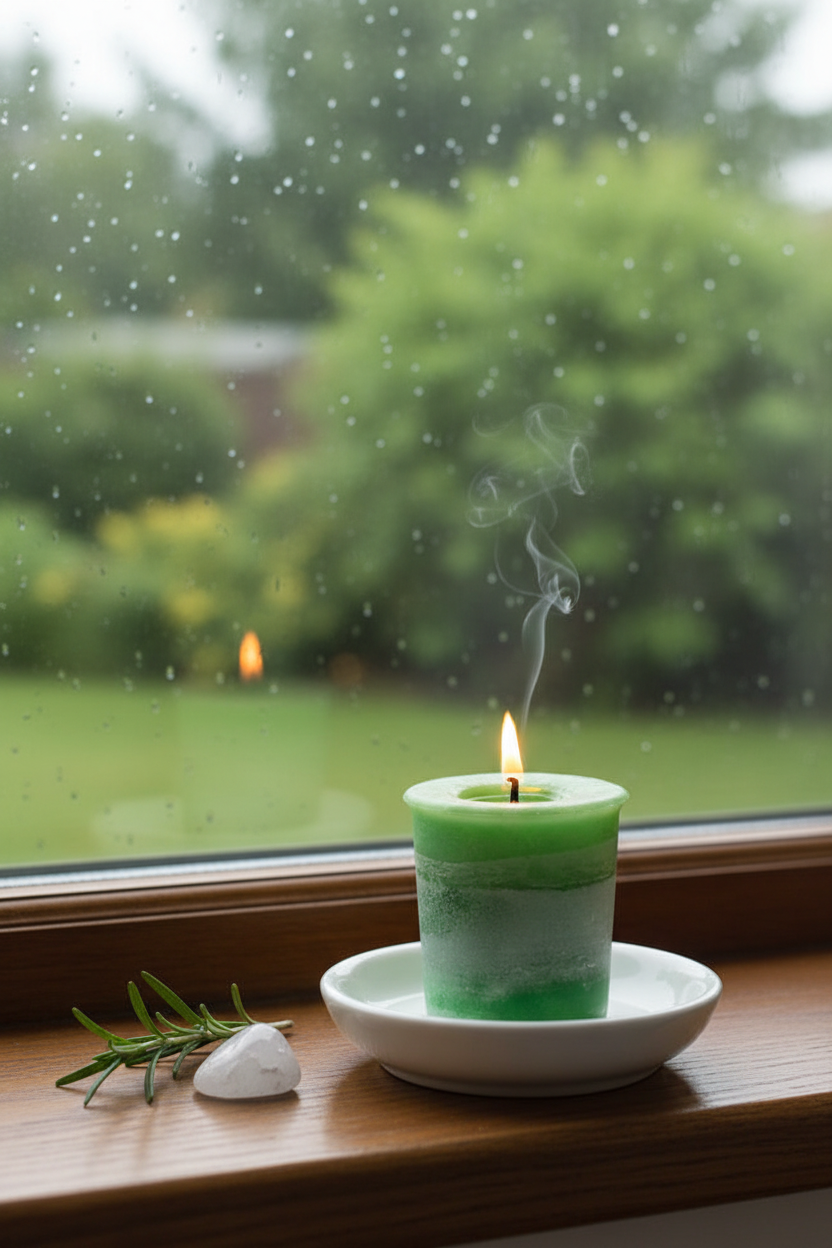
This Crystal Journey votive carries deep green for Anahata energy: love, compassion, the slow work of letting the heart open again. Light it during grief work, post-breakup ritual, self-love practice, or any practice that asks the heart to soften. The flame gives you a focal point; the color and intention do the rest.
Anahata is the bridge between the lower three chakras and the upper three: Root, Sacral, and Solar Plexus, the chakras of the personal self in the material world, and Throat, Third Eye, and Crown, the chakras of self in connection to spirit. When the heart is closed, energy gets stuck below the diaphragm or trapped in the head. When it opens, the whole system flows. The candle isn't the opening. The candle is the patience while the opening happens.
Key Features
Green wax for Anahata energy. The Heart Chakra's traditional color in both Vedic and modern Western chakra systems is deep green, the wavelength associated with growth, renewal, and the steady aliveness of the natural world. The wax color is the working, not decoration. Some Western traditions also associate Anahata with pink, especially for self-love work; the green wax of this candle holds the broader love and compassion frame.
Votive size for focused, single-session ritual. A votive burns for around fifteen hours, the right scale for one grief session, one self-love meditation, or one ritual of forgiveness. Long enough to do real work; short enough to come back to as often as the heart asks for it.
Crystal Journey ritual candle with informational paper label. Every Crystal Journey chakra candle ships with a paper label wrapped around it that carries detailed Heart Chakra information, useful as a reference card and as a small ritual study tool before you light. Remove the label fully before lighting.
Product Details
- Format: votive candle
- Color: green (Anahata/Heart Chakra correspondence)
- Maker: Crystal Journey Candles
- Includes: removable paper label with Heart Chakra information
- Burn time: approximately 15 hours
- Total weight: 0.25 lb (about 4 oz)
The Spiritual Significance
The Heart Chakra (Sanskrit: Anahata, अनाहत, "unstruck") is the fourth of the seven main chakras, located at the center of the chest behind the sternum. Its element is air, its bija (seed) mantra is YAM (pronounced "yahm"), and its lotus is depicted with twelve smoky-green petals. Functionally, it governs love, compassion, empathy, forgiveness, the capacity to give and receive love freely, and the felt sense of self-acceptance from which other relational health flows.
When Anahata is balanced, you tend to feel open without losing yourself in others, capable of giving love without depleting yourself, and capable of receiving it without flinching. Self-acceptance is steady. Compassion is available without becoming codependence. Boundaries are warm rather than walled. When the chakra is wounded or armored, through grief that has not been allowed to move, betrayal that has not been processed, chronic relational disappointment, family-of-origin patterns of conditional love, or simply too long without the experience of being met, the felt sense tends to be familiar: chest heaviness or constriction, difficulty trusting, isolation even in relationships, codependency or avoidance as protection, harsh inner self-talk, the inability to receive a compliment, the inability to grieve, jealousy or resentment that won't let go.
Lighting a Heart Chakra candle is one small, repeatable way to bring intentional attention to this layer. The candle is not magic that opens the heart for you; it is a tool that focuses your own opening work. Pair it with breath into the chest, with practiced self-compassion, with the small daily work of letting yourself be seen, and the working takes hold.
How To Use
- Remove the paper label from the candle completely before lighting. Do not skip this step; the label is paper and will catch fire.
- Cleanse the candle in your usual way: pass it through smoke from a smudge stick or palo santo, leave it in moonlight overnight, or sprinkle a light pass of salt around the base.
- Sit somewhere comfortable. Place a hand on the center of your chest, over the sternum, where the heart center sits. Breathe slowly into that hand. Place the candle in front of you on a heatproof surface.
- Light the wick and set your intention out loud or silently. Common Heart Chakra intentions: "I let love in," "I forgive what I am ready to forgive," "I am worthy of being loved," or anything specific to the grief, the closure, or the opening you are working with.
- Sit with the flame for as long as the practice asks. You can journal a letter to a person you have loved or lost, write yourself a love letter, breathe slowly into the chest, or simply watch the flame. Many practitioners chant YAM, the Heart Chakra's seed mantra, on a slow exhale.
- When you are finished or the candle has burned to its base, snuff it out (don't blow it out, traditionally) and offer thanks. Drink water afterwards. If the practice surfaced grief, let yourself feel it. If it surfaced softness, let yourself stay there for a while.
Pairs Well With
- Solar Plexus Chakra Votive Candle: the chakra below Heart in the system, governing confidence and personal power. Self-love is hard to access without a steady sense of self; Manipura's work makes Anahata's work hold.
- Throat Chakra Votive Candle: the next chakra up the system, governing communication and authentic expression. Once Anahata's love is steady, Vishuddha is the natural next layer of work, the chakra that lets the love speak.
- Heart Chakra Pillar Candle, 3" x 6": the same Anahata energy in a longer-burning pillar form, for sustained grief work, week-long self-love containers, or relationship rituals where one votive burn isn't enough.
- 7 Chakra Tumbled Stones, Set of 7: a set of seven traditionally chakra-aligned tumbled stones, including the rose quartz, green aventurine, or rhodonite that pair specifically with Anahata love and healing work.
- Love Reiki-Charged Pillar Candle: a Reiki-infused pillar specifically charged for love work, the most thematically aligned non-chakra candle for sustained Heart Chakra rituals or long self-love and relational containers.
- Healing Reiki-Charged Pillar Candle: a Reiki-infused pillar that anchors longer chakra-balancing or full-body healing rituals, while the Heart votive handles the specific Anahata focus within them.
History & Occult Background
The chakra system as we know it in modern Western spiritual practice traces back to Hindu tantric texts, particularly the Sat-Cakra-Nirupana, a sixteenth-century Sanskrit work that codified the seven-chakra model along the central channel of the subtle body. Earlier mentions of energy centers appear in the Upanishads and in tantric Buddhist sources, but the seven-chakra model that became dominant in Western contexts is largely the one this text codified.
Anahata, the Heart Chakra, is the fourth of those seven, sitting at the center of the system, the bridge between the three lower chakras of personal life in the material world and the three upper chakras of self in connection to spirit. Traditional iconography depicts it as a twelve-petaled smoky-green lotus, with the seed mantra YAM at its center. The chakra's vehicle animal is the black antelope, reflecting Anahata's air element and the swift, light, joyful quality of an open heart. The deity Ishana, a form of Shiva, presides over this center in many tantric texts; in others, it is the goddess Kakini Devi.
The Sanskrit name itself, "unstruck," carries a specific teaching. In acoustic terms, ordinary sound requires two things to strike against each other; the unstruck sound is the divine vibration that does not depend on collision. Applied to the heart, this points to a love that does not require something being given to you first, the felt sense of love as a state rather than as a transaction. The system was carried into Western esoteric thought through nineteenth-century Theosophy and twentieth-century New Age writing, and was popularized in modern English-language spiritual practice through writers like Anodea Judith, Caroline Myss, and Caroline Shola Arewa. As with any tradition adopted across cultures, respect for the source matters: the chakra system is a Hindu tantric inheritance, and using it well includes acknowledging where it comes from.
Frequently Asked Questions
What's the difference between the Heart Chakra and Solar Plexus Chakra candles?
The Solar Plexus Chakra (yellow) governs confidence, willpower, and personal power, work it when you feel powerless, indecisive, or unable to set boundaries. The Heart Chakra (green) governs love, compassion, empathy, and forgiveness, work it when you feel grief, heartbreak, isolation, difficulty receiving love, or harshness toward yourself. Most practitioners stabilize Manipura's confidence first, since self-love is hard to access without a steady sense of self.
How do I know if my Heart Chakra needs work?
Common signs of an unbalanced Heart Chakra include grief or heartbreak that won't move, chronic isolation even in relationships, difficulty trusting, codependency or avoidance as protective patterns, harsh inner self-talk, the inability to receive a compliment, jealousy or resentment that won't release, or a sense of constriction or heaviness in the chest that has no medical cause. If two or three of those describe your current state, this is the candle to start with.
Can this candle help me process grief or heartbreak?
Anahata work is traditionally connected to the slow movement of grief and the rebuilding of the heart after loss. The candle is not a substitute for therapy or grief counseling, especially in cases of recent or severe loss, but it can be a meaningful ritual companion alongside that work. Many practitioners use the Heart Chakra candle for evening grief sessions, anniversary rituals, or the slow daily practice of writing letters to those they have lost or left behind.
Why is the Heart Chakra associated with both green and pink?
Traditional Vedic iconography depicts Anahata as a smoky-green lotus, and green is the canonical color across both classical and modern Western chakra systems. Some Western traditions added pink as a secondary color specifically for self-love or romantic-love work, since pink carries softer, more receptive associations in Western color symbolism. Both are valid; this candle uses traditional green, which holds the broader love-and-compassion frame.
What's the YAM mantra and do I have to chant it?
YAM (pronounced "yahm," with a soft m) is the bija (seed) mantra traditionally associated with Anahata in Vedic tantric practice. Chanting it on a slow exhale, especially with a hand on the center of the chest, is one technique for activating Heart Chakra energy, but it is optional. The candle works with or without mantra; the intention is the active ingredient.
Can I use this candle for spell work as well as chakra meditation?
Yes. Green candles are traditional in many folk magic practices for love, healing, fertility, growth, and harmony. The candle's chakra dedication does not preclude spell-craft use; if anything, the focused Anahata energy reinforces love-aligned and healing-aligned spell work.
How long does a Heart Chakra votive candle burn?
Crystal Journey votives typically burn for around 15 hours, depending on draft and burn conditions. That's enough for a full session of Heart meditation, several shorter self-love rituals, or a single sustained grief-work container.
Is it safe to leave the candle burning unattended?
No. As with any open flame, never leave a burning candle unattended. Keep it on a heatproof surface, away from drafts, fabric, and flammable materials. Snuff it out before sleep or leaving the room.


Spend $50 & enjoy guilt-free shopping with our free shipping on all orders. Get your favorite items delivered right to your door at no extra cost.