

Plentiful Earth | Spiritual Store
Orula Orisha Elekes, Set of 12
Orula Orisha Elekes, Set of 12Couldn't load pickup availability
-
Ships In 1-2 Days
-
180 Day Returns
-
Trusted By 1,000+ Spiritualists
Some colors carry a whole theology inside them. Green and yellow, worn together in alternating beads around the neck, announce something that any practitioner of the Regla de Osha-Ifá will recognize immediately: this person walks with Orunmila. These are the sacred colors of Orula, also called Orunmila, the Orisha of divination, wisdom, and destiny in the Lucumí religion of Cuba, rooted in the Yoruba spiritual tradition of West Africa. The eleke, or sacred beaded necklace, is one of the most meaningful spiritual markers a person can wear, and the eleke of Orula is among the most recognized in all of Santería practice.
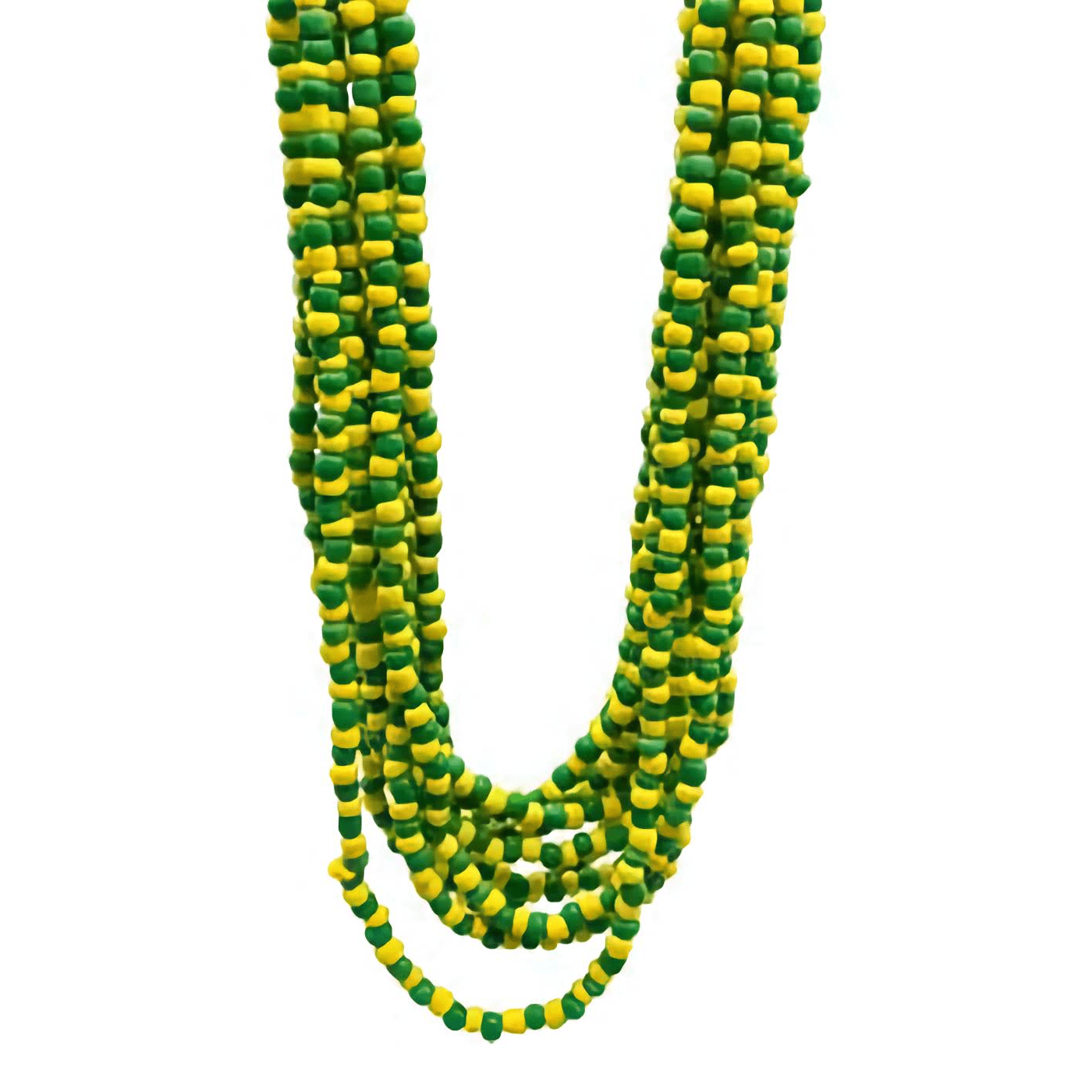
This set of 12 Orula Orisha Elekes gives you a tangible point of connection to one of the most important Orishas in the Yoruba pantheon; the one who was present at the creation of the world, who knows the destiny of every soul on earth, and who made a pact with Ikú (death) itself so that his children would never be taken before their time. Each necklace is strung with alternating green and yellow beads, the traditional color pattern of Orula's eleke, and measures approximately 30 inches in length.
Whether you're a practitioner looking to maintain a connection to Orunmila in your daily devotional life, a godparent equipping your ilé, or a botanica or spiritual store stocking elekes for your community, this set of 12 offers flexibility, value, and a reliable supply of these foundational spiritual tools. These necklaces ship unconsecrated, in keeping with proper tradition; the act of consecration belongs to the hands of a Babalawo or your religious house, not the postal system.
Key Features
Traditional alternating green and yellow bead pattern. Orula's eleke is made with one green and one yellow bead alternating continuously, not blocks of color, not random arrangement. This specific pattern is the recognized, traditional form of the Orula collar within the Regla de Osha-Ifá system, and wearing it correctly honors the integrity of the tradition.
Set of 12 for community, practice, or resale. Twelve necklaces give you enough to stock your altar room for ceremonial use, equip godchildren in your ilé, offer a consistent supply at your botanica, or simply ensure you have elekes on hand when the work calls for them. Having the right tool available matters in spiritual practice, and this set makes that possible.
Ships unconsecrated, ready for proper blessing. In the Lucumí tradition, the spiritual efficacy of an eleke comes from consecration by a qualified priest or priestess in the context of your own religious house. These necklaces arrive clean and ready to receive that blessing according to the customs of your lineage, preserving the integrity of the consecration process.
Product Details
- Quantity: Set of 12 necklaces
- Length: Approximately 30 inches each
- Bead colors: Alternating green and yellow (traditional Orula pattern)
- Bead material: Glass seed beads
- Ships unconsecrated
The Spiritual Significance
In the Regla de Osha-Ifá, the eleke of Orula is closely associated with the ceremony known as La Mano de Orula (or Ikofá for women, Isefa for men); the initiation through which a person comes under the direct guidance of Orunmila and receives knowledge of their personal Odù. Following that ceremony, both the ildé (bracelet) and the eleke are placed on the initiate's body by the Babalawos. You can use this necklace as part of your ongoing devotional relationship with Orunmila following your own Mano de Orula, wearing it as a sign of your covenant with the Orisha and your commitment to walking in alignment with your destiny (Iwa Pele).
Orula's pact with Ikú is one of the most sacred narratives in the Ifá corpus. The tradition teaches that Orunmila negotiated with death so that those who carry his markers would not be claimed before their appointed time. You can meditate with this eleke when you feel uncertainty about your path, or when you are working through divination and seeking clarity on a question of destiny or protection, holding it as a reminder that Orunmila sees what you cannot yet see, and that wisdom is always available to those who seek it properly.
How To Use
Working with an eleke of Orula is not something that happens in isolation; it lives within relationship. Here are some ways you might engage with this necklace respectfully within the context of your practice:
If you have received your Mano de Orula, this eleke should ideally be consecrated by your Babalawo or within your religious house before you begin wearing it regularly. Reach out to your godparent or the Babalawos of your lineage to arrange the proper blessing and imposition.
Once consecrated, the eleke of Orula is traditionally worn close to the body as a spiritual marker and a source of protection. Many practitioners wear it under their clothing during the day and remove it before sleeping, bathing, or intimate contact; though your house's specific customs should guide you.
If an eleke breaks, treat this with care rather than alarm. In the tradition, a spontaneously broken eleke is often understood as the Orisha absorbing something negative on your behalf. Collect the beads respectfully, inform your godparent, and arrange to receive a replacement eleke in keeping with your lineage's protocol.
For those using these necklaces in a more devotional or altar context, rather than as personally consecrated elekes, you might place one near your Orula-related spiritual work, meditations on wisdom and clarity, or offerings made with the intent of seeking guidance.
Trust the customs and guidance of your own religious house above all. Your godparent and ilé are your most important spiritual resources.
History & Occult Background
Orunmila, known in Cuba as Orula, is one of the primary Orishas of the Yoruba religious tradition, which developed among the Yoruba people of what is now Nigeria and Benin in West Africa. According to oral tradition and the Ifá literary corpus, Orunmila was present at the creation of the universe by Olodumare (the Supreme Being), bearing witness as the world and its inhabitants were brought into being. This position gave him unique knowledge: he knows the destiny of every soul, the path each person's life is meant to take, and the forces that can support or obstruct that path. Olodumare gave Orunmila the gift of prophecy and the tools of divination, including the opón Ifá (divination tray), the ekuele (divination chain), and the irofa (divination tapper), with which he communicates his wisdom through babalawos, the initiated priests of Ifá.
The Yoruba religion survived the Middle Passage through the resilience of enslaved Africans transported to Cuba, where it evolved into what became known as the Regla de Osha or Lucumí religion, commonly called Santería, though many practitioners prefer Regla de Osha-Ifá or simply Lucumí. Within this tradition, the veneration of the Orishas, the use of sacred beads, and the practice of Ifá divination have been maintained across generations with remarkable continuity. The eleke system, sacred beaded necklaces consecrated and given during initiatory ceremony, is one of the tradition's most visible and meaningful spiritual technologies.
The specific pairing of green and yellow for Orula has deep roots in the theology of Ifá. Green is associated with nature, growth, the earth, and the living world; yellow with the sun, vitality, wisdom, and the divine light of knowledge. Together they represent the two essential aspects of Orunmila's domain: understanding the natural order of things (green, earthly) and seeing beyond the visible into the realm of destiny (yellow, luminous). The ildé and eleke in these colors mark a person as someone who has formally entered into relationship with Orunmila and is living under his protection and guidance.
The tradition of wearing beaded elekes as spiritual markers is widespread across Afro-Cuban, Afro-Brazilian (Candomblé), and other diaspora traditions rooted in Yoruba religion. In each context, the bead necklace is far more than decoration; it is a living spiritual bond, an extension of the Orisha's ashé (divine energy) into the material world, and a visible declaration of one's religious lineage and commitment.
Pairs Well With
Oshun Orisha Elekes, Set of 12 — Oshun is a deeply beloved Orisha whose relationships with Orunmila in the patakís (sacred stories) of Ifá are numerous and tender. Stocking both elekes together supports practitioners who honor multiple Orishas, and the yellow of Oshun's necklace resonates beautifully with the yellow in Orula's.
Shango Orisha Elekes, Set of 12 — Shango is Orula's brother in the Yoruba theological family, and devotees who work with both Orishas will want access to both elekes. Red and white beside green and yellow creates a powerful altar presence honoring two of the most prominent Orishas in the Lucumí tradition.
Yemaya Orisha Elekes, Set of 12 — Yemaya, the great mother of the sea, is a foundational Orisha in Regla de Osha-Ifá, and her eleke, blue and crystal, pairs well with Orula's for practitioners honoring the full breadth of their tradition. Together these sets support an ilé or botanica in keeping multiple foundational elekes on hand.
Obatala Orisha Elekes, Set of 12 — Obatala is Orula's father in Yoruba theology, the Orisha of purity, peace, and clarity of thought. Keeping both sets together honors the relationship between these two Orishas and supports practitioners who have relationships with both Orula and the father of all Orishas.
Elegua Santeria Hat — Elegua, the Orisha of the crossroads and all beginnings, must be acknowledged before any ceremony in the Regla de Osha-Ifá, including those involving Orula. Pairing this eleke set with ritual items honoring Elegua supports the proper order of the tradition.
Frequently Asked Questions
Do these necklaces come consecrated and ready to wear as spiritual elekes? No, and this is by design. In the Regla de Osha-Ifá, the consecration of an eleke is a ceremony performed by a Babalawo or initiated santero/a within your religious house. The spiritual power of the eleke comes from that ceremony, not from the bead itself. These necklaces are unconsecrated and should be given to your godparent or religious house for proper blessing before being worn as initiated elekes. If you are wearing one in a more devotional or meditative context without formal initiation, that is your personal practice; but please do not present an unconsecrated bead as a consecrated eleke in a ceremonial context.
Can someone who hasn't received their Mano de Orula wear an Orula eleke? This is a question best answered by your own godparent or spiritual elder, as customs vary somewhat by lineage and house. In general, within the Regla de Osha-Ifá, the eleke of Orula is most properly received as part of or following the Mano de Orula ceremony. That said, many people wear Orula's colors in a devotional, non-initiated context as a form of spiritual connection or aspiration. If you are outside the tradition and drawn to Orunmila's wisdom, explore his teachings through study and seek out a reputable Babalawo if you wish to enter the religion formally.
What do green and yellow represent in the context of Orula's eleke? Green and yellow are Orula's sacred colors in the Regla de Osha-Ifá. Green is associated with the natural world, growth, and the living earth, qualities connected to Orunmila's deep knowledge of nature and the forces that move through it. Yellow is associated with the sun, wisdom, intelligence, and divine light, reflecting Orunmila's gift of prophecy and his ability to illuminate destiny. Together, the alternating colors represent the wholeness of his domain: earthly wisdom and cosmic foresight united in a single vision.
What should I do if one of the necklaces breaks? If an eleke breaks spontaneously, the tradition holds that the Orisha may have absorbed something negative on your behalf; it is often understood as a sign of protection rather than misfortune. Collect the beads carefully and respectfully. Contact your godparent or Babalawo as soon as possible and explain the circumstances. They will advise you whether a consultation (consulta) is warranted and how to proceed with replacing the eleke within your religious house.
How do I store or care for these elekes when not in use? Elekes are sacred objects and should be treated accordingly. When not being worn, many practitioners hang elekes on their Orisha receptacles, keep them in a cloth pouch or dedicated box, or place them on the altar near their Orula-related spiritual work. Avoid dropping them on the floor, mixing them carelessly with mundane items, or exposing them to environments that feel spiritually heavy or chaotic. If you wish to clean them, gentle wiping with a clean cloth is generally appropriate; check with your godparent before using any liquids.
Is this set appropriate for botanicas or spiritual stores to resell? Yes. A set of 12 is a practical quantity for a botanica, ilé, or spiritual supply store to keep on hand. Many practitioners and godparents come to botanicas to purchase elekes for their godchildren, for ceremonial preparation, or as devotional items. Selling them unconsecrated is both appropriate and standard; the consecration is always the responsibility of the practitioner's religious house.
Is Orula the same as Orunmila? Yes. Orula and Orunmila (also spelled Orunla) are different names for the same Orisha. Orunmila is the name most commonly used in the Yoruba tradition of West Africa and in Ifá practice more broadly. Orula is the name most commonly used in the Afro-Cuban Lucumí or Regla de Osha-Ifá tradition. Both refer to the Orisha of divination, wisdom, and destiny; the one who knows every soul's path and communicates it through Ifá and the Babalawos who serve him.
Spend $100 & enjoy guilt-free shopping with our free shipping on all orders. Get your favorite items delivered right to your door at no extra cost.