



Plentiful Earth | Spiritual Store
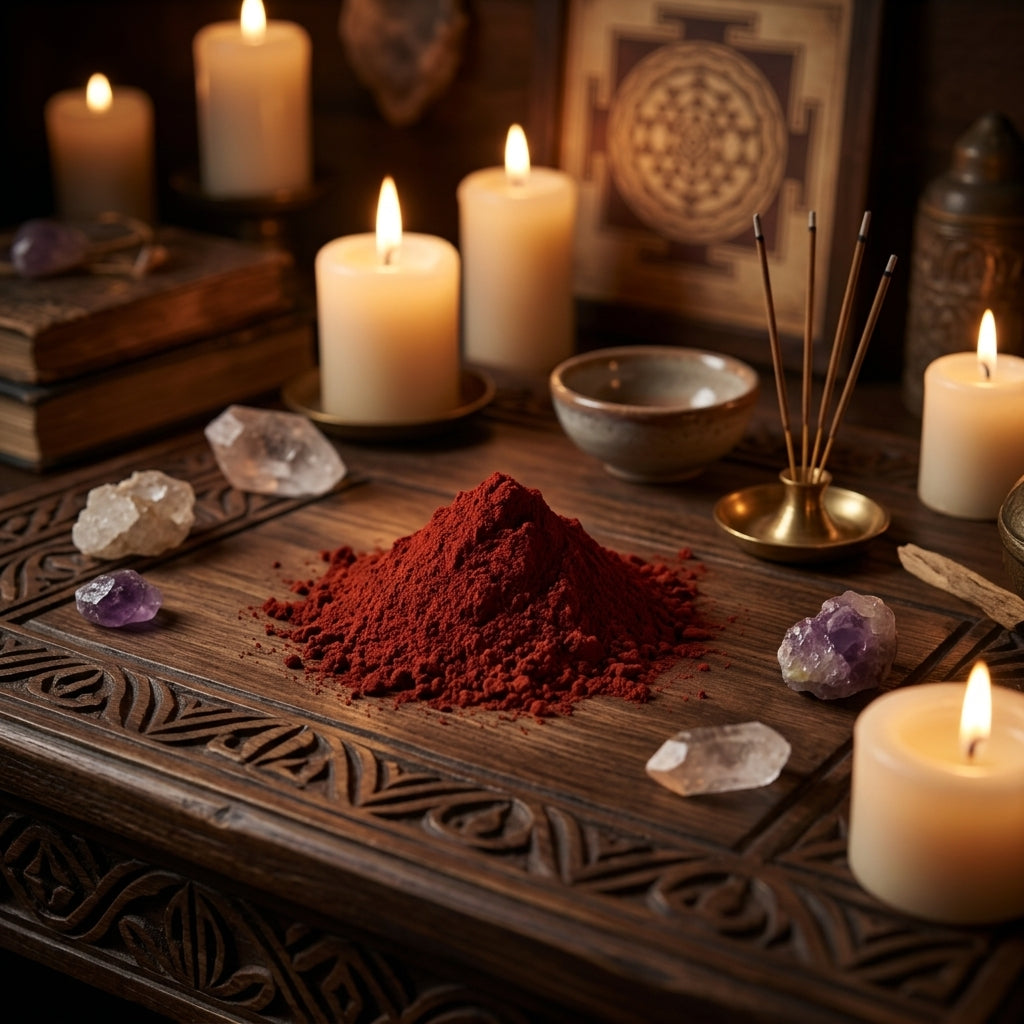
Red Sandalwood Powder, 1oz (Pterocarpus santalinus) | Ritual Herb for Protection & Incense Blending
Red Sandalwood Powder, 1oz (Pterocarpus santalinus) | Ritual Herb for Protection & Incense BlendingCouldn't load pickup availability
-
Ships In 1-2 Days
-
180 Day Returns
-
Trusted By 1,000+ Spiritualists
Red sandalwood and white sandalwood share a name and very little else. White sandalwood (Santalum album) is the famous fragrant heartwood: slow-growing, coveted, deeply aromatic, with a creamy warm scent that has shaped temple incense from India to Japan for millennia. Red sandalwood (Pterocarpus santalinus), native to the southern Eastern Ghats of India, is its own entirely different species: dense, slow-growing, almost scentless, and valued not for its fragrance but for its extraordinary deep red color and its grounding, stabilizing spiritual properties.
This distinction matters practically. If you are burning this powder as an incense ingredient and expecting the famous sandalwood fragrance, you will be disappointed: red sandalwood's scent is subtle and woody at most. What you get instead is its color and its energetic quality: a rich brick-red pigment that has been used to color natural incense blends, ritual preparations, and traditional cosmetics for centuries, and a grounding, protective, boundary-setting spiritual presence that complements rather than competes with other ritual materials. It is the anchor ingredient in a blend, not the lead voice.
This 1oz packet provides a genuine working supply for blending into incense, preparing ritual powders, incorporating into mojo bags, and using as a natural colorant in ritual preparations.
Key Features
A distinct species from white sandalwood with its own properties. Red sandalwood (Pterocarpus santalinus) and white sandalwood (Santalum album) are different plants from different families with different appearances, scent profiles, and spiritual associations. This is red sandalwood: dense, dark crimson wood powder with minimal fragrance, associated with protection, grounding, and stability rather than the purification and spiritual elevation associated with white sandalwood.
Natural deep red colorant for incense and ritual blends. Red sandalwood's heartwood contains santalin, a natural pigment that produces a rich brick-red to orange-red color when applied to natural materials. This makes it a traditional colorant for incense powders, ritual preparations, and sachets where visual correspondence to protection, Mars, fire, or blood is relevant.
Versatile in spiritual applications across traditions. In Ayurvedic and Hindu ritual practice, red sandalwood (Rakta Chandana) is used in tilak preparations, ritual offerings, and protective preparations. In Western magical practice and Hoodoo, it carries associations with protection, love, grounding, and the cleansing of negative energy from spaces. In incense blending, it serves as a stabilizing base note and color agent.
Product Details
- Common name: Red sandalwood; Red sanders; Rakta Chandana
- Scientific name: Pterocarpus santalinus
- Form: Fine powder
- Weight: 1 oz
- Origin: Southern India (Eastern Ghats region)
- Scent: Minimal; subtle woody note (not the aromatic scent of white sandalwood)
- Color: Deep crimson red
- Primary uses: Incense blending, ritual powder, natural colorant, spiritual protection work
The Spiritual Significance
In Ayurvedic and Hindu practice, Rakta Chandana (red sandalwood) occupies a distinct place from Shveta Chandana (white sandalwood). Where white sandalwood is cooling, purifying, and associated with spiritual elevation and the third eye, red sandalwood is associated with the earth, with blood, with the protective and grounding qualities of deeply rooted things. It is used in some tilak preparations (the sacred mark applied to the forehead or body in Hindu worship), in offerings, and in protective preparations for the body and home.
In Western magical practice, red sandalwood's correspondences with Venus, protection, love, and cleansing reflect its cross-cultural associations with warmth, stability, and the kind of protection that comes from being genuinely rooted rather than defensively armored. It is a soft protector rather than an aggressive one. Burn it in a blend with frankincense for a grounding sacred space preparation, add it to a protection sachet for its earthy stabilizing quality, or use it to add grounding Venus energy to love workings without the intensity of more aggressive love herbs.
Its deep red color, which carries the visual vocabulary of blood, fire, and the life force, makes it a natural colorant for workings related to strength, vitality, protection, and the assertion of personal power.
How To Use
- Incense blending: Red sandalwood powder is a traditional base and colorant in natural incense blends. Add a small amount to a loose incense mixture of resins, herbs, and wood powders and burn on a charcoal disc. It adds earthy body to the blend and gives it a warm red-brown color.
- Ritual powder preparation: Blend with other protective herbs (frankincense, myrrh, angelica, rue) to create a custom protection powder. Use as a candle dusting, sprinkle at thresholds, or incorporate into a mojo bag.
- Mojo bag ingredient: Add a small amount to protection, love, or grounding mojo bags. Its Venus correspondence and protective associations make it versatile across multiple working types.
- Tilak and devotional use: In Hindu-inspired practice, red sandalwood powder can be used to make a paste (mixed with small amounts of water or rosewater) for devotional tilak marks applied to the forehead or body during worship or meditation.
- Natural colorant: The rich red pigment makes this powder useful for creating colored ritual preparations: dusting powders, colored salts, or marking materials where a deep red correspondence is spiritually relevant.
Storage: Keep in a sealed container away from moisture and direct light. The powder's color is stable; its mild scent will dissipate over time but does not affect its ritual utility.
Pairs Well With
- Consecrated Sulfur Powder — Red sandalwood's grounding protection pairs with sulfur's hex-breaking fire for a two-material protection blend that addresses both stabilizing (sandalwood) and banishing (sulfur) aspects of a working.
- Dead Sea Salt, 2 Pounds — Blend red sandalwood powder with Dead Sea salt to create a naturally colored, Venus-associated protective salt for threshold work and altar use.
- Sonavi 7 Chakra Incense Sticks, 25g — For practitioners who burn loose incense alongside stick incense, red sandalwood is a natural base component; use it in a charcoal burner alongside stick incense for layered aromatic and energetic effect.
- Enhance Your Love Life Ritual Kit — Red sandalwood's Venus correspondence and gentle love energy makes it a grounding complement to love ritual work; add it to a prepared sachet or scatter around a love candle working.
- Proteccion Protection Oil, 1oz — Use red sandalwood powder in a protection ritual preparation alongside Proteccion oil; anoint a candle with the oil and dust it with the powder for a combined aromatic and energetic protection working.
History & Occult Background
Pterocarpus santalinus is endemic to a small mountainous region in the southern Eastern Ghats of India, particularly the Nallamalai range in Andhra Pradesh. It is a protected species under Indian law due to centuries of over-harvesting: the demand for its dense, beautifully colored heartwood for furniture, carving, Ayurvedic medicine, and dye has made it one of the most commercially exploited trees in the region. Sustainable and ethically sourced red sandalwood is available, but consumers and practitioners should be aware of the conservation context when purchasing.
The wood has been valued in India since antiquity. In Ayurvedic medicine, Rakta Chandana is used as an anti-inflammatory, for skin conditions, and for preparations affecting the blood and circulatory system; its red color is associated sympathetically with blood and vitality. In Hindu ritual, it appears in temple preparations, offerings to certain deities (including Lakshmi in some traditions), and in cosmetic and devotional pastes. The Sanskrit name Rakta Chandana means "red sandalwood" or "blood sandalwood," directly referencing its color.
In Chinese imperial history, Pterocarpus santalinus (known as Zitan) was among the most prized materials for royal furniture, jewelry, and sacred objects during the Ming and Qing dynasties; its extreme density and deep red-purple color made it the preferred material for thrones and ceremonial objects. Its use was restricted to the Emperor and royal household, which reflects both its rarity and its association with authority, power, and spiritual significance.
In Western magical herbalism, red sandalwood's primary entry is through the shared name with white sandalwood and the traditional associations that name carries: love, protection, healing, and spiritual purification. The scent differential between the two species is important to understand: what magical herbalism literature says about "sandalwood" typically refers to fragrant white sandalwood (Santalum album); red sandalwood's practically scentless quality means it works through physical preparation and visual correspondence rather than through aromatic spiritual influence.
Frequently Asked Questions
Why doesn't red sandalwood smell like sandalwood incense? Because red sandalwood (Pterocarpus santalinus) and white sandalwood (Santalum album) are entirely different plants. The famous sandalwood fragrance comes from white sandalwood; red sandalwood has minimal scent, typically a faint woody note. When magical herbalism references describe "sandalwood" as an incense with a rich, warming aroma, they are referring to white sandalwood. Red sandalwood is valued for its color, its Ayurvedic and devotional uses, and its stabilizing energetic properties rather than its fragrance.
Can I use this to make sandalwood incense that smells like traditional sandalwood incense? Not effectively. For a fragrant sandalwood incense, you would need white sandalwood powder or essential oil. Red sandalwood can add color and earthy body to a loose incense blend, but it will not produce the characteristic aromatic quality associated with sandalwood incense.
Is red sandalwood ethically sourced? Pterocarpus santalinus is a protected species in India due to habitat loss and over-harvesting. Look for suppliers who source from certified sustainable operations or from legally obtained plantation-grown stock. If ethical sourcing is important to your practice, contact Plentiful Earth to confirm the sourcing of this product.
What color does this powder produce in ritual preparations? A deep brick red to reddish-orange, depending on the concentration and the material it is mixed into. This is the natural santalin pigment from the heartwood; it is a strong, stable dye when used to color natural materials.
Can I mix this with water to make a paste for tilak? Yes. Small amounts of red sandalwood powder mixed with a few drops of water or rosewater create a smooth paste suitable for tilak application. This is a traditional preparation in some Hindu devotional practices.

Spend $100 & enjoy guilt-free shopping with our free shipping on all orders. Get your favorite items delivered right to your door at no extra cost.