



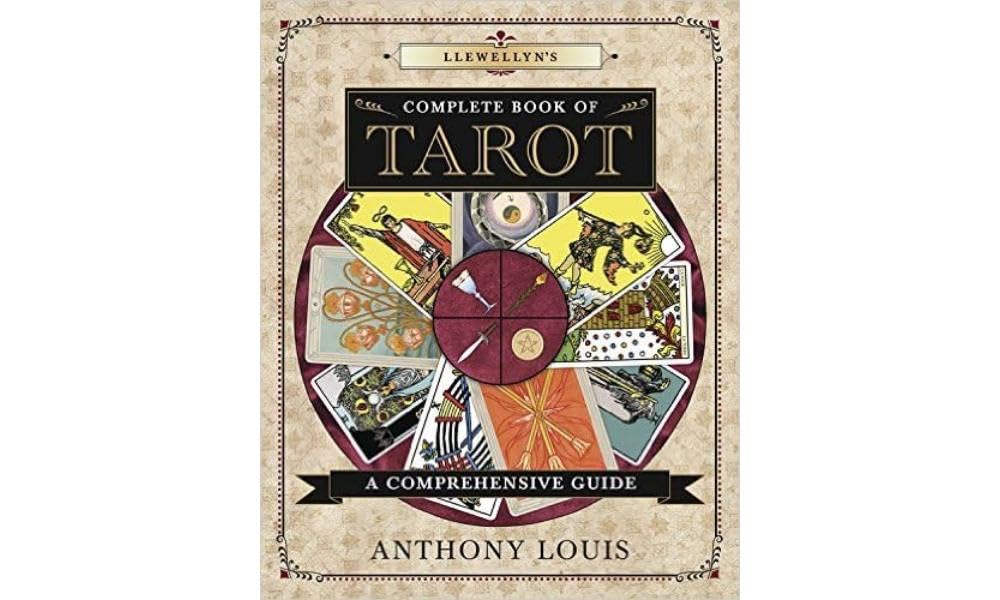
Llewellyn's Complete Book of Tarot: A Comprehensive Guide (Llewellyn's Complete Book Series, 8) by Anthony Louis
Llewellyn's Complete Book of Tarot: A Comprehensive Guide (Llewellyn's Complete Book Series, 8) by Anthony Louis- Primary Spiritual Use: Psychic
- Tradition: Western esoteric
- Intent: Psychic, Wisdom, Intuition
Couldn't load pickup availability
Anthony Louis's Complete Book of Tarot is the reference the serious reader eventually buys: card meanings, spreads, and history, but also the material most books skip, including reversals, dignities, and how tarot interacts with astrology, Kabbalah, numerology, and Jungian psychology.
It covers the three main deck traditions rather than assuming one.
Key Features of the Complete Book of Tarot
Three deck systems covered. Marseille, Rider-Waite-Smith, and Thoth, which is rarer than it should be.
The technical material. Reversals, dignities, correspondences, and card selection, treated properly rather than glossed.
Tarot ethics. A chapter most books omit entirely, and one that matters if you read for other people.
Product Details
- Author: Anthony Louis
- Publisher: Llewellyn Publications, Complete Book Series
- Covers Marseille, Rider-Waite-Smith, and Thoth traditions
- SKU: BLLECOMT
The Spiritual Significance
Tarot's history is worth knowing and often gets embroidered. The cards began as a fifteenth-century Italian card game, tarocchi, and were not used for divination until the eighteenth century, when French occultists took them up and attached Egyptian and kabbalistic frameworks the original decks never carried. Louis covers this properly, which is one of the book's virtues: it treats the history as history rather than as a sales pitch.
The chapter on ethics deserves a mention on its own. Reading for other people carries real responsibility, and the temptation to tell someone what they want to hear, or to claim more certainty than you have, is constant. A book that takes that seriously is worth more than one that does not.
How To Use the Complete Book of Tarot
- Use it as a reference alongside a beginner's course rather than instead of one.
- Read the history chapter before the meanings; it changes how you read the rest.
- Work through reversals and dignities properly, which is where most readers stall.
- Take the ethics chapter seriously if you read for other people.
- Keep it on the shelf. It is the sort of book you return to for years.
Pairs Well With
- Learning the Tarot by Joan Bunning: the beginner's course this complements.
- Llewellyn's Little Book of Tarot: the pocket companion.
- Llewellyn's Complete Book of Correspondences: the reference behind the symbols.
- Blank Journal: for the daily draw.
- Left Hand Path of Tarot by Cherry Parra: a different philosophy of reading.
Frequently Asked Questions
Is it for beginners?
It is usable from the start, but it is a reference rather than a course. Pair it with a beginner's book and it will serve you for years.
Which decks does it cover?
Marseille, Rider-Waite-Smith, and Thoth, which is unusually thorough.
What are reversals and dignities?
Reversals are cards drawn upside down; dignities are how a card's meaning shifts depending on its neighbours. Both are covered properly here, which is not always the case.
Are the cards really ancient Egyptian?
No. Tarot began as a fifteenth-century Italian card game and was not used for divination until the eighteenth century. Louis covers the real history.
Does it include a deck?
No, the book is sold on its own.

Spend $50 & enjoy guilt-free shopping with our free shipping on all orders. Get your favorite items delivered right to your door at no extra cost.