



Plentiful Earth | Spiritual Store
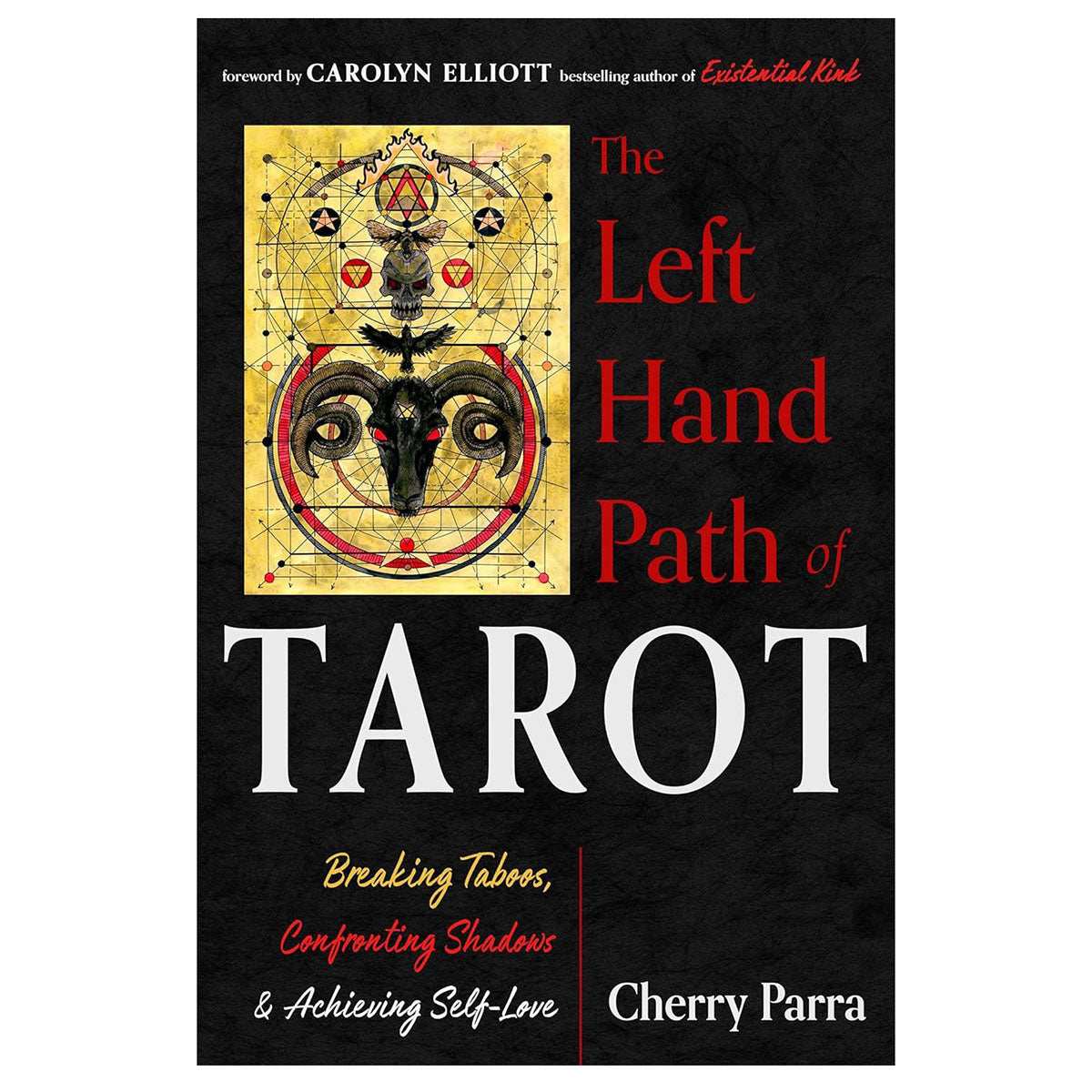
Left Hand Path of Tarot by Cherry Parra
Left Hand Path of Tarot by Cherry Parra- Primary Spiritual Use: Intuition
- Secondary Spiritual Use: Power
- Tradition: Modern occult
- Intent: Psychic, Power, Transformation
Couldn't load pickup availability
Most tarot books teach you to read the cards; this one asks who you are reading for, and on whose terms. The Left Hand Path of Tarot by Cherry Parra approaches the cards through a left-hand-path lens, emphasizing self-sovereignty, shadow work, and autonomous practice over inherited rules. It is a book for readers ready to make tarot genuinely their own.
Rather than handing down fixed meanings, it offers spreads, journaling prompts, and frameworks for reading with clear boundaries and personal power. Reach for it if you want to deepen your shadow work, build a self-directed practice, and engage the cards as a tool for transformation rather than prediction alone.
Key Features of the Left Hand Path of Tarot
A self-directed approach. The book frames tarot as a tool for personal sovereignty and autonomous practice rather than rote, inherited interpretation.
Shadow work and spreads. It includes spreads and journaling prompts built for shadow work, boundary-setting, and honest self-inquiry.
Left-hand-path perspective. Cherry Parra reads the Major Arcana and the wider deck through left-hand-path symbolism, an angle rarely centered in mainstream tarot books.
Product Details
- Paperback book by Cherry Parra
- A guide to tarot through a left-hand-path lens
- Includes spreads, frameworks, and journaling prompts
- Focused on shadow work, autonomy, and self-sovereignty
The Spiritual Significance
The terms left-hand path and right-hand path describe two broad orientations in Western esotericism. The right-hand path tends to emphasize devotion, tradition, and union with the divine; the left-hand path emphasizes individual sovereignty, self-determination, and the deliberate development of personal power. Neither is a synonym for good or evil, despite popular misconceptions; they are different philosophies of how a person relates to spirit and self.
Applied to tarot, the left-hand path reframes a reading as an act of self-authorship. Instead of asking only what fate suggests, it asks what you will choose, what shadow you are ready to face, and where your own authority lies. This book treats the cards as instruments of transformation and honest self-confrontation, with an emphasis on ethics, discipline, and boundaries. Approach it as one philosophy of practice among many, and take from it what strengthens your own work.
How To Use This Book
- Read through the framework chapters first to understand the left-hand-path approach the author takes.
- Choose a spread suited to your question, whether for shadow work, decision-making, or self-inquiry.
- Work the spread with your own deck, using the book's prompts to interpret rather than to dictate.
- Use the journaling prompts to record what surfaces and to track your practice over time.
- Return to the chapters as your reading deepens, letting the approach mature alongside you.
Pairs Well With
- Seventy-Eight Degrees of Wisdom by Rachel Pollack offers a classic, complementary depth study of tarot.
- How to Read Tarot by Jessica Wiggan provides a modern reading foundation.
- Tarot for Beginners by Barbara Moore covers the fundamentals if you are newer to the cards.
- Ultimate Guide to the Rider Waite Tarot is a thorough card-meaning reference.
- The Tarot Deck Mess by Sarah Beck is an approachable intro to the Major Arcana.
Frequently Asked Questions
Does this book come with a deck?
No. It is a book about reading tarot, not a deck, so you will use it with a tarot deck you already own or choose separately. Its approach works with most standard 78-card decks, since it focuses on method and philosophy rather than one specific set of cards.
What does left-hand path mean here?
It refers to an esoteric orientation centered on individual sovereignty, self-determination, and the cultivation of personal power, as distinct from the more devotional right-hand path. It is not a synonym for harmful magic; the book frames it as a philosophy of self-authorship and honest inner work.
Is this suitable for beginners?
It is most rewarding once you know the basics of tarot, since it builds on a working familiarity with the cards. A newer reader can absolutely use it alongside a foundational guide, treating this book as the deeper, more philosophical layer of their study.
What is shadow work?
Shadow work is the practice of facing the parts of yourself you tend to hide or deny, in order to understand and integrate them. The book offers spreads and prompts designed for that honest self-confrontation, using the cards as a structured, compassionate mirror.
Who is it best for?
It suits readers who want a self-directed, autonomous practice and an alternative to rule-bound tarot books, especially those drawn to shadow work and personal sovereignty. If you like tarot that challenges as much as it comforts, this perspective will likely resonate.
Spend $50 & enjoy guilt-free shopping with our free shipping on all orders. Get your favorite items delivered right to your door at no extra cost.