



Plentiful Earth | Spiritual Store
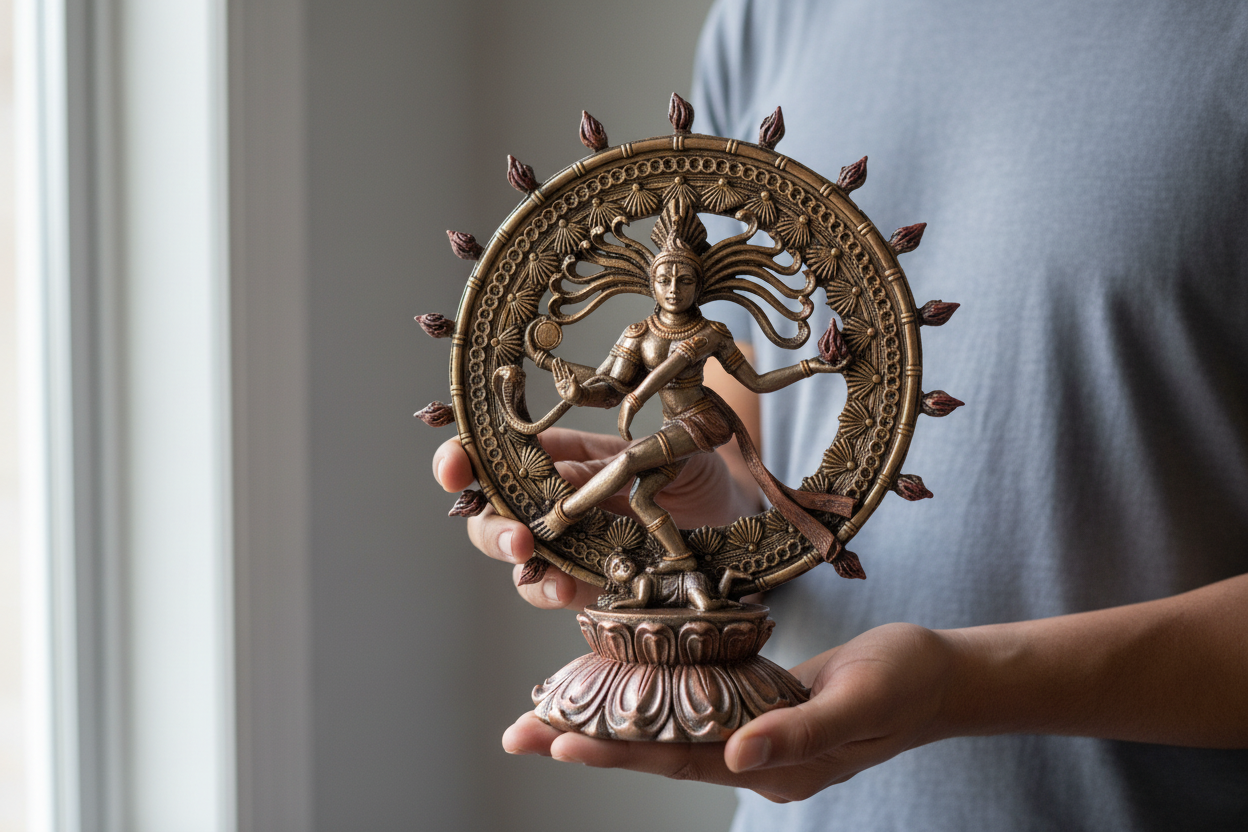
Shiva Nataraja Statue, 9 Inches
Shiva Nataraja Statue, 9 Inches- Primary Spiritual Use: Transformation
- Secondary Spiritual Use: Energy
Couldn't load pickup availability
The Shiva Nataraja is one of the most profound images in all of Hindu art: Shiva as the Lord of the Dance, dancing the universe into being and out again within a ring of cosmic fire. Each element carries meaning, the drum that beats out creation, the flame of dissolution, the raised hand that says fear not, the lifted foot that promises release, and beneath his feet the small figure of ignorance he subdues. In one still pose it holds the entire cycle of creation, preservation, and destruction.
This 9-inch statue brings that cosmic dance to the altar as a focal point for transformation, for the steady rhythm beneath all change, and for the release of what no longer serves.
Key Features
Shiva as the cosmic dancer. The Nataraja form, Shiva dancing within the ring of fire.
Painted resin, 9 inches. A dynamic, detailed altar figure.
A devotional focal point. A modern devotional sculpture, not an archaeological reproduction.
Product Details
- Height: about 9 inches
- Material: painted resin
- Form: Shiva Nataraja within the ring of fire
- Use: deity statue, altar focal point, transformation and release work
- SKU: SS069
- Sold by Plentiful Earth
The Spiritual Significance
In the Nataraja, Shiva performs the Ananda Tandava, the dance of bliss that drives the cosmos. Every part of the image speaks: the ring of flames is the universe itself and the cycle of birth and death; the small drum in his upper right hand beats out creation and the rhythm of time; the fire in his upper left hand is dissolution; his lower right hand makes the gesture of fearlessness, abhaya mudra, and his lower left points to his raised foot, the promise of liberation. Beneath his other foot he treads the dwarf Apasmara, the figure of ignorance and forgetfulness. Motion and perfect stillness held together, the whole turning of the universe balanced in one serene face.
On a modern altar, the Nataraja is honored for transformation, for embracing change, for releasing what is finished, and for the steadiness that underlies all upheaval. Shiva, one of the great Trimurti alongside Brahma and Vishnu, is the destroyer and transformer, and his dance is a reminder that destruction and creation are one continuous movement. Honor him as the specific deity he is, with respect for the living tradition he comes from.
How To Use
- Place him on an altar or a space dedicated to transformation and meditation.
- Welcome him by cleaning the statue, then offer water, bel (bilva) leaves if you have them, incense, or a lit lamp.
- Call on him in times of change, ending, or release, sitting with the image and letting the dance remind you that destruction and renewal are one movement.
- The mantra Om Namah Shivaya is traditionally chanted in his honor.
- Keep offerings fresh and dust the statue gently with a soft cloth.
Pairs Well With
- Gold Ganesha Statue, 5.75 Inches Shiva's son, the remover of obstacles.
- Lakshmi Statue, 10 Inches the goddess of abundance, for a fuller Hindu altar.
- Ganesh Supari Brass Statue, Set of 3 tiny brass Ganesha figures for puja.
- Frankincense Incense Sticks a fragrant offering for his altar.
- White Sage Smudge Sticks to cleanse the space and the statue.
History & Occult Background
The Nataraja form was brought to its highest expression in the bronze sculpture of the Chola dynasty of South India, between roughly the 10th and 12th centuries, whose Nataraja bronzes are considered masterpieces of world art. The cosmic dance is celebrated at the great temple of Chidambaram, traditionally regarded as the place where Shiva dances. The image has become one of the most recognized symbols of Hindu thought worldwide, a visual summary of a universe in constant creation and dissolution, motion held within stillness.
Frequently Asked Questions
What is the Shiva Nataraja?
It is Shiva in his form as Nataraja, the Lord of the Dance, performing the cosmic dance that creates, sustains, and dissolves the universe within a ring of fire. It is one of the most important images in Hindu art.
What do the gestures mean?
The drum is creation and time, the fire is dissolution, the raised hand says fear not, and the hand pointing to the lifted foot promises liberation. Together they hold the whole cycle of existence in a single pose.
Who is the figure under his foot?
It is Apasmara, the dwarf who represents ignorance and forgetfulness. Shiva treads him down, showing the subduing of ignorance, but does not destroy him, since knowledge needs ignorance to have meaning.
How do I honor Shiva?
Offer water, bel leaves, incense, or a lamp, and chant Om Namah Shivaya. He is honored especially for transformation, release, and meditation. Approach him with respect for his living tradition.
How do I care for the statue?
Dust it with a soft dry cloth and keep it out of prolonged direct sunlight to protect the painted finish. Avoid soaking the resin; a barely damp cloth is enough for occasional cleaning.


Spend $50 & enjoy guilt-free shopping with our free shipping on all orders. Get your favorite items delivered right to your door at no extra cost.