



Plentiful Earth | Spiritual Store
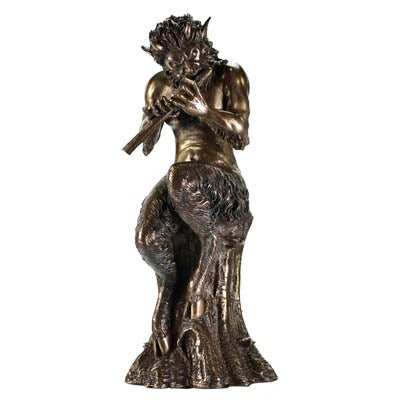
Satyr Statue Playing Pipes, 9.5 Inch Cold-Cast Resin
Satyr Statue Playing Pipes, 9.5 Inch Cold-Cast ResinThis item ships free in the U.S.Other rates are calculated at checkout.
Couldn't load pickup availability
- Primary Spiritual Use: Grounding
- Secondary Spiritual Use: Creativity
- Size: 9.5 in
- Material: Cold-cast resin
- Element: Earth
- Planet: Sun
- Zodiac: Leo
- Chakra: Sacral
- Ruling Day: Sunday
- Tradition: Wiccan
- Intent: Grounding, Creativity
The satyr is the wild spirit of the Greek countryside, and at his greatest he is Pan himself, the goat-legged god of the wild, of shepherds and flocks, of untamed nature and rustic music. This statue shows him with his pipes, the syrinx whose sweet, eerie music drifts through the woods. He is nature unbound, the green and goaty heart of the wilderness.
Hand-painted in antiqued bronze and standing 9 1/2 inches tall, he makes a lively focal point for nature work, grounding, creativity, and the celebration of the wild within and without.
Key Features
The wild piping spirit of nature. The satyr, kin to the god Pan, shown playing his pipes.
Antiqued bronze finish. Cold-cast resin, hand-painted in antiqued bronze, about 9 1/2 inches tall.
A focal point for the wild. A modern devotional sculpture for nature work and grounding.
Product Details
- Height: about 9 1/2 inches
- Material: cold-cast resin
- Finish: hand-painted antiqued bronze
- Form: satyr playing the pipes
- Use: deity or nature-spirit statue, altar focal point, nature and grounding work
- SKU: SS305
- Sold by Plentiful Earth
The Spiritual Significance
Satyrs are the nature spirits of Greek myth, half-human and half-goat, companions of the wine god Dionysus and embodiments of the untamed life of the wild. Their god and greatest is Pan, lord of shepherds and flocks, of woods and mountain places, of fertility and rustic music, who plays the syrinx, the panpipes named for the nymph he loved. Pan is the green, primal vitality of nature itself, joyful, earthy, and a little dangerous, the source of the sudden fear called panic that can seize travelers in lonely places.
On a modern altar, the satyr or Pan is honored for connection to nature and the wild, for grounding and primal vitality, for music and creativity, and for embracing the instinctive, untamed self. Practitioners drawn to him tend to want a more earthy, embodied, joyful spirituality. He also stands behind the Horned God of much modern Pagan practice, the lord of the wild woods.
How To Use
- Place him on an altar, a garden shrine, or an outdoor space where his wild presence is at home.
- Welcome him by cleaning the statue, holding it, and speaking your hopes; a first offering of wine, milk, honey, or music is fitting.
- Call on him for nature work, grounding, or creative vitality by lighting a candle and stating your intention.
- Honor him with music, especially pipes or flute, and with time spent in wild or green places.
- Dust the statue gently with a soft cloth and keep it out of prolonged direct sunlight.
Pairs Well With
- Gaia Statue, 8.5 Inches the Earth Mother, a natural companion for nature work.
- Apollo Riding Swan Statue, 10.5 Inches the Olympian god of music, a counterpoint to Pan's rustic pipes.
- Green Man Poster: the leafy face of the wild green world.
- Horned God Statue the lord of the wild woods in modern Pagan practice.
- White Sage Smudge Sticks to cleanse the space and the statue.
History & Occult Background
In Greek myth satyrs are spirits of the wild, attendants of Dionysus, and their leader Pan, often called the son of Hermes, is the god of the wild places, shepherds, and flocks. The panpipes, or syrinx, come from the myth in which the nymph Syrinx is changed into reeds to escape him, which he then cuts into his instrument. The word panic derives from the irrational fear Pan was said to inspire in the wilderness. The Romans knew a similar god as Faunus. From the Renaissance onward Pan became a beloved figure of Romantic and esoteric imagination, and his image strongly informs the Horned God of modern Wicca and Paganism, the masculine lord of nature.
Frequently Asked Questions
Is this a satyr or the god Pan?
The figure is a satyr, the goat-legged nature spirit of Greek myth, and carries the same wild, piping spirit as their god Pan. Many practitioners work with such an image as Pan himself or as the nature-spirit current he leads.
What is he worked with for?
Connection to nature and the wild, grounding and primal vitality, music and creativity, fertility, and embracing the instinctive, joyful self.
What are the pipes he plays?
The syrinx, or panpipes, his signature instrument. In myth Pan made them from reeds, and their music is the sound of the wild countryside.
How is he connected to the Horned God?
Pan's image as the goat-horned lord of the wild strongly shaped the Horned God of modern Wicca and Paganism, the masculine nature deity, though the two are not identical.
How do I care for the statue?
Dust it with a soft dry cloth and keep it out of prolonged direct sunlight to protect the finish. If displayed outdoors, bring it in from harsh weather, as cold-cast resin is not made for long exposure.
Spend $50 & enjoy guilt-free shopping with our free shipping on all orders. Get your favorite items delivered right to your door at no extra cost.