



Plentiful Earth | Spiritual Store
Lapis Lazuli Obelisk, 6+ Inches
Lapis Lazuli Obelisk, 6+ Inches- Primary Spiritual Use: Wisdom
- Secondary Spiritual Use: Power
- Element: Water
- Planet: Venus
- Zodiac: Sagittarius
- Chakra: Third Eye
- Ruling Day: Friday
- Tradition: Wiccan/eclectic
- Intent: Wisdom, Power, Psychic
Couldn't load pickup availability
Egypt gave the world two blue reverences, and this piece carries both. The obelisk is the tekhenu, the sun-needle raised at temple gates to hold a ray of Ra in stone; lapis lazuli is chesbet, the night-sky rock the pharaohs ranked among their most sacred materials. A six-inch lapis obelisk is those two reverences in one carving: the sun's form cut from the sky's stone.
On a modern altar the obelisk is the standing director: the tall point that lifts a working's intention upward and holds the room's vertical line. In lapis, it directs the wisdom current, truth raised like a monument.
Key Features of This Lapis Lazuli Obelisk
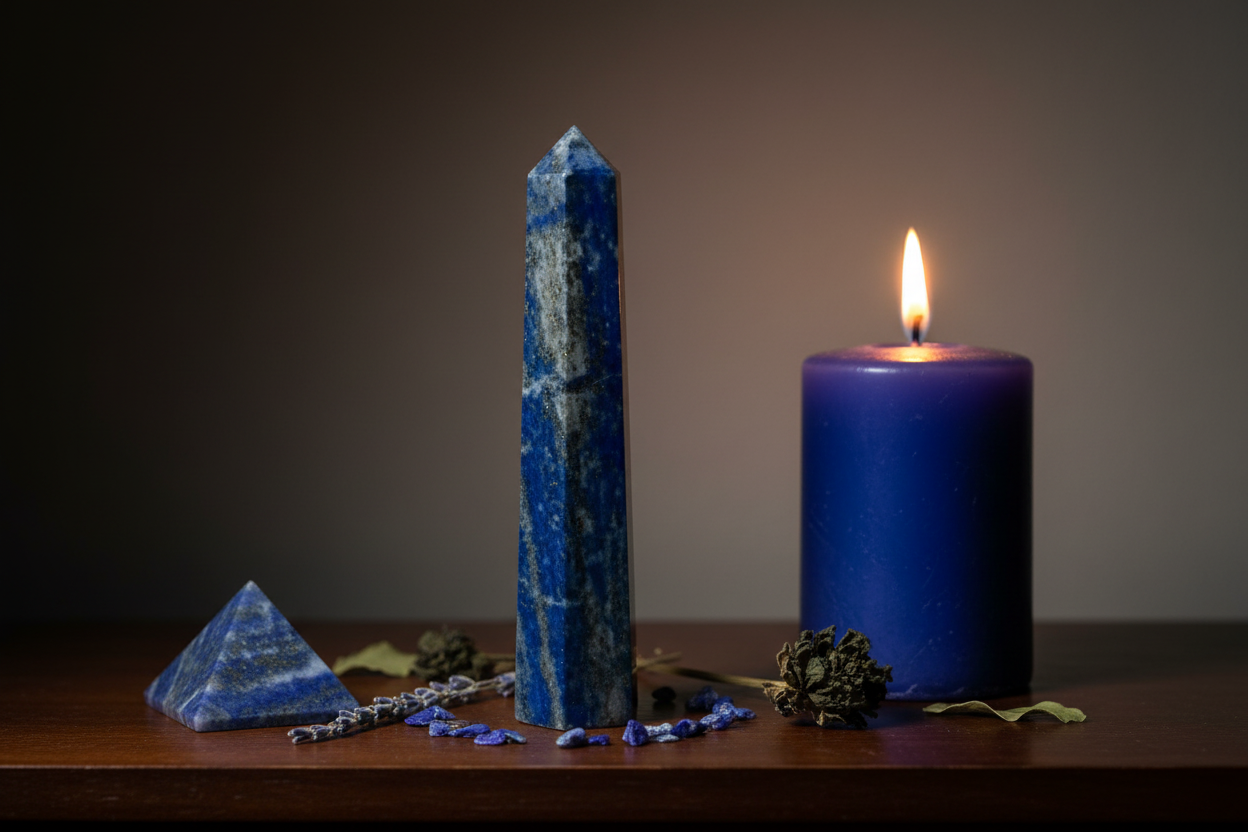
Genuine lapis lazuli from Pakistan. Six or more inches of polished, four-sided obelisk crowned with the classic pyramidion tip, in deep blue lazurite veined with white calcite and flecked with gold pyrite.
The tekhenu lineage. Obelisks stood in pairs at Egyptian temple gates as monuments to the sun, their tips once sheathed in metal to catch the first light; the form has meant raised reverence ever since.
The standing director. Altar centerpiece, grid tower, or study-desk monument: the obelisk's job is to hold a working's vertical line and keep its intention pointed up.
Product Details
- Size: approximately 6+ inches tall
- Material: genuine lapis lazuli, sourced from Pakistan
- Form: polished four-sided obelisk with pyramidion tip
- Natural variation: blue depth, calcite veining, and pyrite flecking vary piece to piece
- Offered as a spiritual tool for ritual, altar, and intention work
The Spiritual Significance
The obelisk is Egypt's most enduring signature after the pyramid itself. Raised in pairs before temple gates, the tekhenu were monuments to the sun: a single tall shaft crowned with a small pyramid, the pyramidion, often sheathed in fine metal so the rising light struck it first. The form said permanence and praise at once, which is why empires have been carrying obelisks home ever since, and why the shape still reads, even at altar scale, as something raised on purpose.
Lapis was Egypt's other blue devotion: chesbet, the imported night-sky stone ground for royal eye paint and inlaid into the regalia of gods and pharaohs. The two never met at monument scale, lapis was far too precious to quarry obelisks from, which makes the altar version a small luxury the ancients could not afford. Modern practice puts it to work accordingly: dedicate the obelisk to a standing truth, a long project, or a season's central aim, set it at the altar's heart or the grid's tower position, and let it do what monuments do: keep the intention raised when your attention is elsewhere.
How To Use This Lapis Lazuli Obelisk
- Cleanse it first. Incense smoke, sound, or an overnight bath of moonlight; skip long soaks, which wear the calcite and pyrite.
- Dedicate the monument. Hold it and name the standing truth or long aim it will be raised to: the degree, the venture, the year's word.
- Set the vertical line. Center it on the altar or place it at a grid's tower position, the tall point the rest of the working organizes around.
- Post it where the work happens. A study desk or workbench gains a standing reminder of the dedicated aim.
- Rededicate at the turning points. Solstices, new years, and new chapters are the natural hours to cleanse and re-name the monument.
Pairs Well With
- Lapis Lazuli Pyramid, 25-30mm: Egypt's two sacred geometries in the same stone; the pyramid concentrates while the obelisk raises.
- Sunstone Crystal Obelisk: the sun-needle in the sun's own stone, beside the night-sky version.
- Amethyst Obelisk, 1" - 1.5": the pocket member of the obelisk family, calm where the lapis carries truth.
- Lapis Tumbled Chips, 1 lb: ring the monument's base in the same stone for a full lapis working.
- Third Eye Chakra Pillar Candle, 3 x 6 Inch: the inner-sight flame beside the raised truth.
Frequently Asked Questions
What is an obelisk, historically?
Egypt's tekhenu: tall four-sided shafts crowned with a pyramidion, raised in pairs at temple gates as monuments to the sun. The form has meant deliberate, standing reverence for four thousand years, which is the energy the altar version borrows.
Why does lapis suit the form?
Lapis was Egypt's own sacred blue, the chesbet of royal regalia, though far too precious for the ancients to carve at monument scale. A lapis obelisk unites the country's two blue devotions in a way only the modern altar gets to enjoy.
How is an obelisk different from a pyramid in practice?
By gesture: modern practice works the pyramid as a concentrator, focusing energy on what sits beneath and around it, and the obelisk as a raiser, lifting and holding an intention's vertical line. Many altars keep one of each for the two motions.
How do I cleanse and care for it?
Smoke, sound, or overnight moonlight, with long water soaks and salt avoided for the sake of the calcite and pyrite. Stand it where it will not be knocked, and dust it as part of the altar's keeping.
Will mine match the photo?
Each obelisk is cut from natural lapis, so blue depth, white veining, and gold pyrite vary piece to piece. The variation is the genuine stone's signature and each monument's character.
What should I dedicate it to?
The long things: a degree, a business, a year's central truth, a household's standing aim. Monuments suit intentions measured in seasons rather than days, and the obelisk keeps them raised while daily life carries on below.


Spend $50 & enjoy guilt-free shopping with our free shipping on all orders. Get your favorite items delivered right to your door at no extra cost.