



Plentiful Earth | Spiritual Store
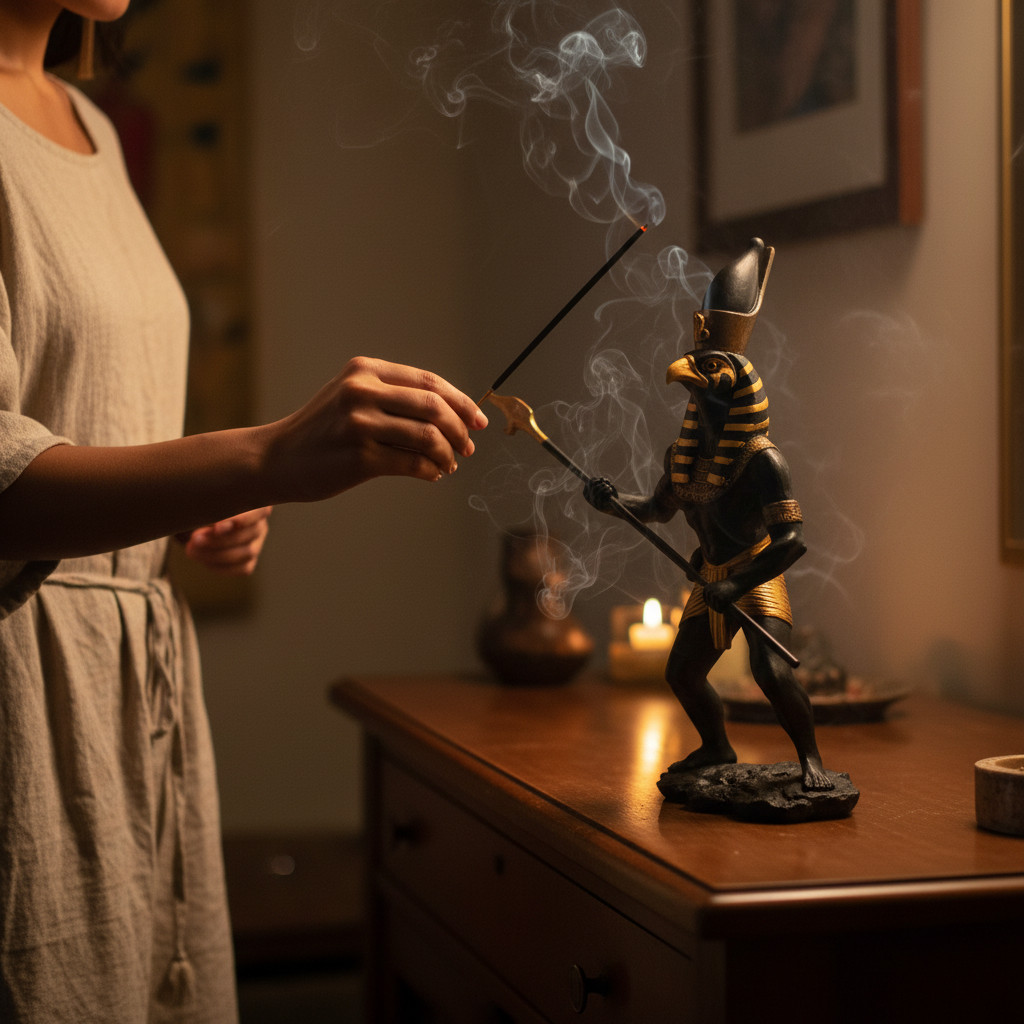
Horus Egyptian God Statue, 14 Inches
Horus Egyptian God Statue, 14 InchesThis item ships free in the U.S.Other rates are calculated at checkout.
Couldn't load pickup availability
- Primary Spiritual Use: Protection
- Secondary Spiritual Use: Strength
- Size: 14 in
- Material: Cold-cast resin
- Element: Fire
- Planet: Sun
- Zodiac: Leo
- Chakra: Third Eye
- Ruling Day: Sunday
- Tradition: Egyptian revival
- Intent: Protection, Strength
Horus is the falcon-headed sky god of ancient Egypt, the divine son of Isis and Osiris who avenged his father and won the throne, becoming the god of kingship, the sky, and victory. His eye, the Eye of Horus, became one of Egypt's most enduring symbols of protection and wholeness. To honor Horus is to call on a god of rightful power, justice, and the protection that comes from standing in your own authority.
This 14-inch statue gives that sky-god presence a place on the altar, a focal point for protection, leadership, and victory over what stands in your way.
Key Features
The falcon-headed sky god. Depicted in Horus's classic form, the falcon head crowned in the regalia of Egyptian kingship.
A tall 14 inches. A commanding altar figure in cold-cast resin.
A devotional focal point. A modern devotional sculpture for protection, victory, and leadership work.
Product Details
- Height: about 14 inches
- Material: cold-cast resin
- Finish: detailed, in the black-and-gold palette of Egyptian devotional art
- Form: falcon-headed Horus in royal crown
- Use: deity statue, altar focal point, protection and victory work
- SKU: SH541
- Sold by Plentiful Earth
The Spiritual Significance
Horus is the great sky god of Egypt and the divine model of kingship. In the central myth, he is the son of Isis and the murdered Osiris, raised in secret by his mother and grown to challenge his uncle Set for the throne. After a long struggle Horus prevails and takes his rightful place, which is why every living pharaoh was considered the earthly Horus. His eyes were said to be the sun and the moon, and the Eye of Horus, the wedjat, became one of the most powerful protective symbols in Egypt, standing for protection, healing, and wholeness restored.
On a modern altar, Horus is honored as a god of protection, victory, justice, and rightful authority. Practitioners call on him before a challenge or confrontation, for the courage to claim what is rightfully theirs, for leadership and clear sight, and for the steady protection of the Eye. His energy is upright and triumphant, the strength of standing firmly in your own power.
How To Use
- Place him on an altar or a workspace where you want his upright, protective authority present.
- Welcome him by cleaning the statue, holding it, and speaking his name and your hopes; a first offering of water, incense, or a candle is traditional.
- Call on him before a challenge, a confrontation, or a bid for what is rightfully yours, lighting a candle and stating your aim clearly.
- Work with the Eye of Horus as a protective symbol alongside the statue, drawn, worn, or placed on the altar for protection and wholeness.
- Keep the space clean and offerings fresh, and dust the statue gently with a soft cloth.
Pairs Well With
- Egyptian Goddess Isis Statue, 13 Inch Isis is the mother of Horus; the two belong together on an Egyptian altar.
- Anubis Egyptian God Statue, 12 Inches the guardian of the dead, to round out a devotional shelf.
- Solid Brass Ankh, 3.5" x 6.5" the Egyptian symbol of life for the altar.
- Frankincense Incense Sticks a sacred Egyptian offering scent to burn before him.
- Ancient Egyptian Magic by Eleanor L. Harris a practical guide to Egyptian devotion and ritual.
History & Occult Background
Horus is among the oldest of all Egyptian gods, worshipped as a falcon deity from the predynastic period at sites such as Nekhen. Several distinct Horus figures merged over time, including Horus the Elder, a primeval sky god, and Horus son of Isis, the avenger of Osiris, the form most familiar today. The pharaoh ruled as the living Horus, his royal titulary beginning with a Horus name. The wedjat, or Eye of Horus, was among the most common protective amulets in Egypt, placed on the living and the dead alike. Horus entered the modern Western imagination through Egyptomania and now appears in Kemetic reconstruction and eclectic practice as a god of protection, victory, and rightful power.
Frequently Asked Questions
Who is Horus?
He is the falcon-headed Egyptian sky god, son of Isis and Osiris and the divine model of kingship. He won the throne from Set to avenge his father, and every pharaoh was considered the living Horus.
What is the Eye of Horus?
The wedjat, or Eye of Horus, is one of Egypt's most enduring symbols, standing for protection, healing, and wholeness restored. It comes from the myth in which Horus's eye is injured by Set and then made whole again.
Why is he falcon-headed?
Horus was worshipped as a falcon from the earliest times, the soaring bird embodying the sky and the far-seeing watchfulness of a sky god. His eyes were said to be the sun and the moon.
What offerings suit Horus?
Water, incense (frankincense is historically appropriate), candles, and bread are all traditional. Offerings made before a challenge or a bid for rightful authority suit his triumphant, protective character.
How do I care for the statue?
Dust it with a soft dry cloth and keep it out of prolonged direct sunlight so the finish and gold detail do not fade. Avoid soaking the resin; a barely damp cloth is enough for occasional cleaning.


Spend $50 & enjoy guilt-free shopping with our free shipping on all orders. Get your favorite items delivered right to your door at no extra cost.