



Plentiful Earth | Spiritual Store
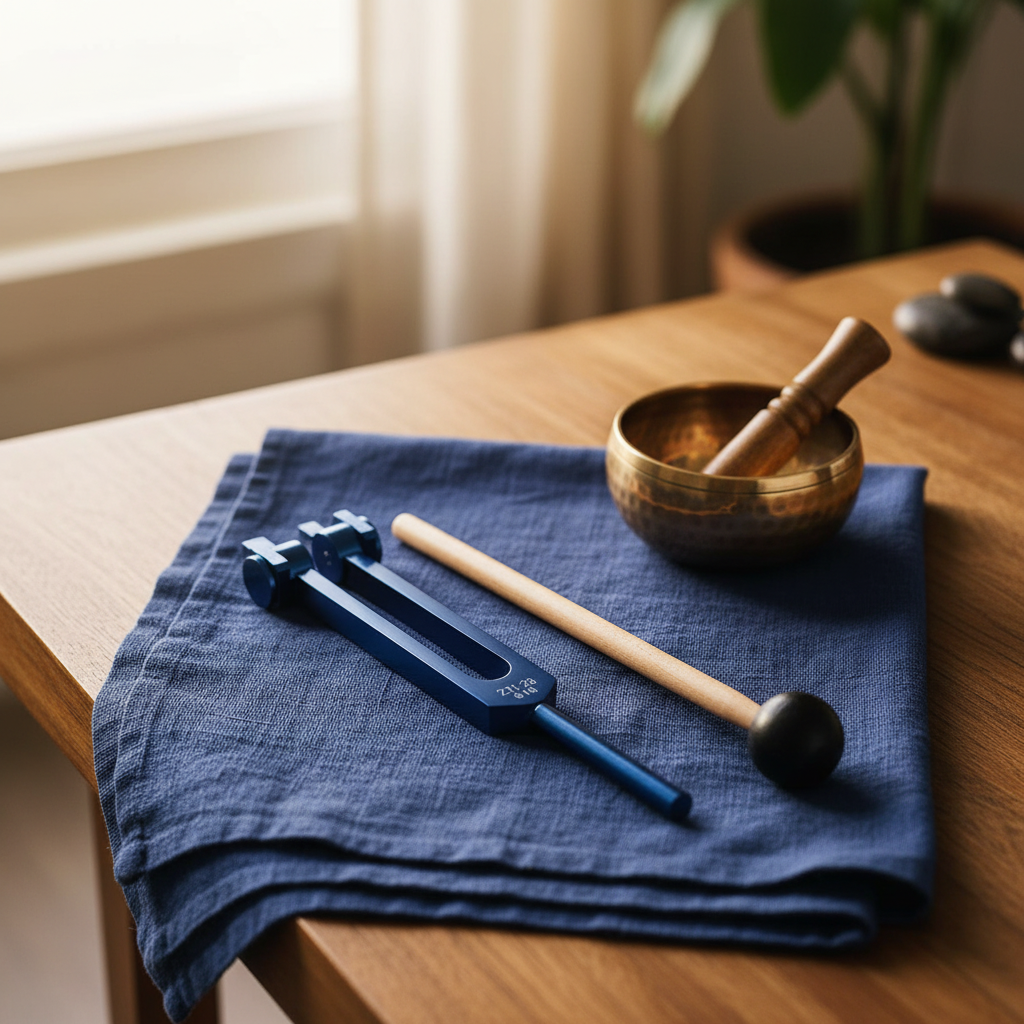
Third Eye Chakra Tuning Fork, Dark Blue, 8.5 Inch
Third Eye Chakra Tuning Fork, Dark Blue, 8.5 InchOrders over $50 ship free in the U.S.Other rates are calculated at checkout.
Couldn't load pickup availability
- Primary Spiritual Use: Psychic
- Secondary Spiritual Use: Intuition
- Size: 8.5 in
- Element: Water
- Planet: Moon
- Zodiac: Cancer
- Chakra: Third Eye
- Ruling Day: Monday
- Tradition: Modern metaphysical
- Intent: Psychic, Intuition
Sound has a way of clearing a room that nothing else matches. One clean strike, one long tone, and the air seems to reorganize around it. This third eye chakra tuning fork brings that moment to your practice: an 8.5 inch dark blue fork pitched at 221.23 Hz, the frequency assigned to the brow center in the planetary tuning system most chakra fork sets follow, with a 7 inch mallet included to sound it.
Strike it at the opening of meditation, sweep it slowly through your space, or hold it near the brow during inner work. The tone fades, but the attention it gathers stays. That gathered attention is the whole practice.
Key Features of This Third Eye Chakra Tuning Fork
Pitched at 221.23 Hz. Chakra fork sets assign this tone to the third eye following the planetary tunings worked out by Swiss mathematician Hans Cousto, which gives your brow-center work a consistent, repeatable sound you can return to session after session.
Dark blue for the brow center. In the modern chakra color system, deep blue marks Ajna, the center of inner sight, so the fork doubles as a visual cue on the altar: reach for the color, and the intention comes with it.
Includes a 7 inch mallet. A clean tone starts with a proper strike, and the included mallet lets you sound the fork consistently without rapping it against hard surfaces that could mar the tines.
Product Details
- Fork length: 8.5 inches
- Includes: 7 inch mallet
- Pitch: 221.23 Hz
- Color: dark blue, corresponding to the third eye chakra
The Spiritual Significance
The chakra system descends from Hindu and Buddhist tantra, where Ajna, often translated as "command," sits at the brow as the center of inner sight. Modern practitioners work with the third eye for intuition, discernment, and clear perception, and sound is one of the oldest doorways to that work: temple bells, gongs, and chanting have marked the turn inward for as long as those traditions have existed.
The tuning fork itself is a newer arrival, invented in 1711 by the British court trumpeter John Shore, and the pairing of specific frequencies with specific chakras is more recent still: it follows the planetary calculations Hans Cousto published in the 1970s, which derived 221.23 Hz from the cycle of Venus. The value of the pitch is not antiquity but consistency, the same tone every time, a reliable threshold your practice learns to recognize.
Strike it, and you join an old intention to a precise modern instrument. The fork sounds the note; you do the seeing.
How To Use This Third Eye Chakra Tuning Fork
- Hold the fork by the stem, never the tines, so the tone can ring freely.
- Strike the tines gently with the included mallet or against the heel of your palm; avoid stone, metal, or other hard surfaces, which can mar the tines and dull the pitch.
- Bring the singing fork near your brow, or sweep it slowly through the space around you, and follow the tone with your full attention until it fades completely.
- Re-strike as the work calls for; many practitioners open and close a sitting with three strikes.
- Store it somewhere padded so the tines stay true between sessions.
The instructions end where the listening begins. Trust your ear; it knows the way in.
Pairs Well With
- Crown (Purple) Tuning Fork: the next center up in the line, for carrying a session from inner sight to connection.
- Throat Chakra Tuning Fork: the neighbor below, pairing clear perception with clear expression.
- 7 Chakra Tumbled Stones, Set of 7: lay the stones while the fork sounds, joining tone and touch in one working.
- White Selenite Wand: a quiet companion for clearing your tools and space between sessions.
- 7 Chakra Incense Sticks by Sonavi: scent to layer under the tone for full-spectrum chakra sessions.
Frequently Asked Questions
What's the difference between this and the other forks in the chakra set?
Every fork in the line shares the same 8.5 inch format with a mallet; what changes is the pitch and the color, one for each of the seven centers. This dark blue fork is tuned for the third eye. Choose the center your practice works with most, or build the set over time.
Do I need the full set of seven to start?
Not at all. A single fork is a complete tool, and many practitioners work with one center for months before adding another. If your practice leans on intuition and inner sight, this is a natural first fork. The set matters only when you want full-spectrum sessions.
How do I strike a tuning fork without damaging it?
Use the included mallet or the heel of your palm, striking one tine about a third of the way down with a relaxed wrist. Never strike stone, metal, or table edges; hard surfaces can nick the tines and pull the fork off pitch. Gentle and consistent wins every time.
Is the pairing of frequencies with chakras an ancient practice?
The chakras come from Hindu and Buddhist tantra, and sound has accompanied that work for centuries. The specific frequencies are modern: Hans Cousto derived them from planetary cycles in the 1970s, and fork makers adopted his numbers. What the pitch offers is consistency, the same threshold tone at every session.
How do I cleanse and care for the fork?
Pass it through incense smoke or rest it in moonlight, the same as any altar tool, and restate your intention as you hold the stem. Keep it dry, wipe fingerprints with a soft cloth, and store it padded so nothing presses on the tines between uses.


Spend $50 & enjoy guilt-free shopping with our free shipping on all orders. Get your favorite items delivered right to your door at no extra cost.