



Plentiful Earth | Spiritual Store
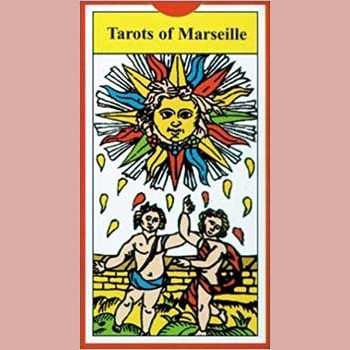
Tarot of Marseille by Claude Burdel
Tarot of Marseille by Claude Burdel- Primary Spiritual Use: Intuition
- Secondary Spiritual Use: Wisdom
Couldn't load pickup availability
The Tarot of Marseille takes you straight to the roots of tarot. This 78-card deck is a faithful, beautifully restored reproduction of the classic Marseille pattern engraved by master card maker Claude Burdel in Switzerland in 1751, the very family of cards that first drew the attention of French occultists and launched tarot's life as a tool for divination. Produced by Lo Scarabeo with renewed color and line, it preserves the integrity of the historic Marseille symbolism and its connection to tarot's veiled past, while gently sharpening the images for easier reading. For anyone drawn to traditional tarot, to the pip-card style of the Marseille, or simply to owning a piece of tarot history, this is an essential and enduring deck.
Key Features of the Tarot of Marseille
A faithful historic reproduction. The deck restores the classic 1751 Marseille pattern by Claude Burdel, keeping the integrity of its centuries-old symbolism while refreshing the color and line.
The root of divinatory tarot. The Marseille family of cards is the tradition that first drew French occultists to tarot, making this a foundational deck for anyone studying tarot's history.
Full 78-card deck and booklet. You get all 78 cards with a companion booklet of divinatory instructions, offered in several languages.
About This Deck
From the publisher, Lo Scarabeo: this is the most classic example of the Marseille tarots that first caught the attention of French occultists in the seventeenth and eighteenth centuries, beginning tarot's use as a divination tool. Originally engraved by master card maker Claude Burdel in Switzerland in 1751, this detailed reproduction unites intuitive simplicity with esoteric depth, maintaining both the integrity of the Marseille symbolism and an awareness of the veiled past of tarot. The historic images have been renewed in color and line to give new strength to their already powerful symbolism.
Claude Burdel (1727-1799) was a Swiss card maker whose Marseille deck became one of the most sought-after of its kind. The deck is published by Lo Scarabeo and distributed in North America by Llewellyn, and its companion booklet appears in several languages.
Product Details
- 78-card tarot deck in the classic Marseille pattern
- Companion booklet with divinatory instructions; multilingual edition
- Based on the 1751 deck engraved by Claude Burdel
- Publisher: Lo Scarabeo (distributed in North America by Llewellyn)
- Style: traditional Marseille, with non-scenic pip Minor Arcana
- Restored and re-colored from the historic original
- Card size: approximately 2 3/4" x 4 3/4"
- SKU: DTARMAR
The Spiritual Significance
The Marseille is, in many ways, where the story of divinatory tarot begins. Though the tarot pack was invented in northern Italy in the fifteenth century as a card game, it was the Marseille pattern, widespread across France and Switzerland by the seventeenth and eighteenth centuries, that early occultists took up and began to read for meaning. To work with a Marseille deck is to touch that lineage directly.
It reads a little differently from modern decks. The Major Arcana are richly pictorial, but the Minor Arcana are traditional pip cards, arrangements of suit symbols rather than illustrated scenes. This asks more of the reader's intuition and knowledge of number and suit, which many find deepens their practice rather than limiting it. It is a style that rewards study and rereading.
For those who love tarot's history, or who want to read in the way generations of French cartomancers did, the Tarot of Marseille offers a direct, uncluttered connection to the tradition. Held as a tool for reflection, its spare and dignified images leave ample room for meaning to arise.
How To Use the Tarot of Marseille
- When the deck is new, clear it in whatever way suits you: passing it through cleansing smoke, resting it under the moon, or simply shuffling while you set your intention for your work together.
- Spend time with the cards, especially the pip Minor Arcana. Reading Marseille-style leans on the meaning of number and suit, so familiarity rewards you.
- Choose a spread, whether a single daily card, a three-card line, or a fuller layout, and shuffle while holding your question in mind.
- Read the cards with the booklet close at hand, letting the traditional imagery and your own intuition work together.
- Close your reading with a moment of thanks or reflection, and store the cards somewhere that feels right, wrapped in cloth or kept in their box.
Pairs Well With
- Celestial Tarot Deck: a contrasting, fully illustrated deck for readers who enjoy exploring different tarot styles side by side.
- Tarot Mucha: another artistically distinctive deck, for those building a collection of beautiful tarot.
- White Sage Smudge Sticks, Set of 6: cleanse your deck and reading space with sacred smoke before you begin.
- Soul Connection Frankincense Resin: burn a little frankincense as you read to settle the mind and mark the space as sacred.
- Lapis Rune Set: add another traditional system of reflection to sit alongside your Marseille practice.
Frequently Asked Questions
What is the Tarot of Marseille?
It is one of the oldest and most influential tarot patterns, widespread in France and Switzerland in the seventeenth and eighteenth centuries. This edition is a faithful reproduction of the 1751 deck engraved by Claude Burdel, restored in color and line by Lo Scarabeo.
How is it different from a Rider-Waite-Smith deck?
The main difference is in the Minor Arcana. Where Rider-Waite-Smith decks illustrate a scene on every card, the Marseille's Minors are traditional pip cards, patterned arrangements of the suit symbols. Reading them leans more on the meanings of number and suit, and on your intuition.
Is it good for beginners?
It can be, though it reads differently from illustrated decks. Beginners drawn to tarot's history often love it, while those who rely on scene-based imagery may find the pip Minors take more study. The included booklet and a little patience go a long way.
Who was Claude Burdel?
Claude Burdel (1727-1799) was a Swiss master card maker and engraver whose 1751 Marseille deck became one of the most admired of its kind. This edition is a detailed, restored reproduction of that historic deck, published by Lo Scarabeo.
How do I cleanse or care for a tarot deck?
Many readers cleanse a new deck before first use by passing it through cleansing smoke, setting it under the moon, or knocking and reshuffling to reset its energy. Store the cards in their box or wrapped in cloth, keep them dry, and handle them with clean hands to protect the art.
Spend $50 & enjoy guilt-free shopping with our free shipping on all orders. Get your favorite items delivered right to your door at no extra cost.