



Plentiful Earth | Spiritual Store
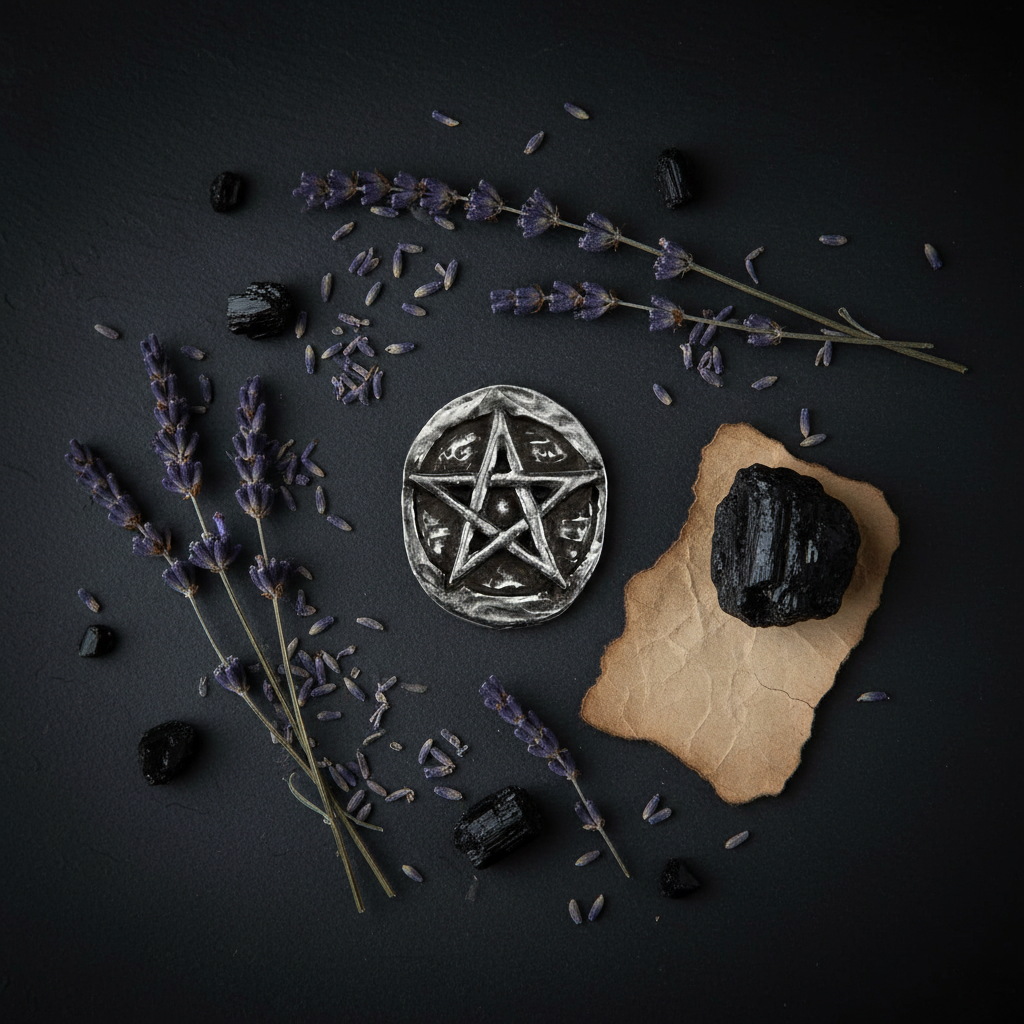
Pentagram Pewter Pocket Stone, 1" x 5/8"
Pentagram Pewter Pocket Stone, 1" x 5/8"- Primary Spiritual Use: Protection
- Secondary Spiritual Use: Grounding
- Element: Earth
- Planet: Moon
- Zodiac: Taurus, Virgo, Capricorn
- Chakra: Root
- Ruling Day: Monday
- Tradition: Wiccan/eclectic
- Intent: Protection, Grounding
Couldn't load pickup availability
Works Well With


The pentagram is the witch's signature: a five-pointed star drawn in one unbroken line, standing in modern witchcraft for the four classical elements crowned by spirit. This pewter pocket stone carries that emblem in a form sized for daily work, one inch by 5/8 inch, smooth on every edge, ready for a pocket, a palm, or a corner of the altar.
Carry it as a small, steady declaration of the craft, and a focus for the protective and elemental work the symbol has always done.
Key Features
- Pewter cast with the pentagram at the face, smooth on every edge for daily handling.
- 1" x 5/8", the working size for pocket, palm, or altar carry.
- Lead-free pewter, made in the USA.
- A tactile anchor for protection work, elemental balance, and grounding through the day.
- Sits comfortably in Wiccan, Pagan, and eclectic witchcraft practice, where the pentagram is the central emblem of the craft.
Product Details
This pocket stone is cast from lead-free pewter in the United States. The face shows a pentagram cut into the metal, so the star reads by touch as well as by sight. The reverse is plain. Dimensions are about 1 inch by 5/8 inch, light enough to forget in a pocket and heavy enough to find again. Like all pewter, it develops a soft patina over years of handling.
Spiritual Significance
The pentagram, a five-pointed star drawn as a single continuous line, is one of the oldest symbols in human use, appearing in ancient Mesopotamian, Greek, and Pythagorean contexts long before it became the emblem of modern witchcraft. The Pythagoreans treated it as a figure of mathematical harmony; medieval and Renaissance magicians used it in protective and ceremonial work; and through the twentieth-century revival of Wicca it became the single most recognizable sign of the craft.
In modern Wiccan and Pagan practice, the five points are most often read as the four classical elements, earth, air, fire, and water, crowned by the fifth point of spirit at the top. Drawn with the single point up, the pentagram represents spirit ruling over and uniting the elements, a symbol of wholeness and protection. Enclosed in a circle it becomes the pentacle, an emblem of the bound and balanced whole, used on altars as a tool in its own right. Witches reach for the pentagram in protective work, in elemental and balancing rituals, and as the daily mark of who they are.
Carried as a pewter pocket stone, the symbol becomes a portable version of all of that: a focus for protection, a reminder of the elements, and a small, steady token of the craft kept close to the hand.
How To Use
There is no single right way to carry a pentagram stone. A few practices that map to real tradition:
For protection, carry it in a pocket or a mojo bag on days you expect to meet hostile or draining energy, the way you would any warding charm, and find it with your thumb when you want to feel the boundary it stands for.
For elemental and balancing work, hold it during ritual as you call the quarters, letting the five points anchor earth, air, fire, water, and spirit in your hand.
For daily carry, slip it in your pocket on the way out the door and find it again in the scattered moments of the day. The thumb finds the star, you remember the craft you carry, and you continue.
Cleanse it however your practice favors. Pewter is non-porous, so smoke, moonlight, sound, salt, or a brief pass under running water all suit it. Many witches recharge it on the altar pentacle or under the full moon.
Pairs Well With
- Witch on Broom Pewter Pocket Stone: a sibling pocket stone for the craft, pairing cleansing and warding with the pentagram's protection.
- Goddess Pewter Pocket Stone: the divine-feminine sibling, for carrying devotion alongside protection.
- Black Obsidian Worry Stone: a protective, grounding stone to hold during the same warding work.
- Root Chakra Votive Candle: a flame for grounding and earth-element work while the stone rests in the palm.
- Parchment Paper by Espiritu: for writing the petition the pentagram seals and protects.
Frequently Asked Questions
What does the pentagram mean in witchcraft?
In modern Wiccan and Pagan practice the five points stand for the four classical elements, earth, air, fire, and water, crowned by spirit at the top. Point up, it represents spirit uniting and ruling the elements, a symbol of wholeness and protection. Enclosed in a circle it becomes the pentacle.
Is the pentagram a negative symbol?
No. Despite its treatment in popular horror, the upright pentagram is a symbol of protection, balance, and the elements, and one of the oldest harmony symbols in human use, with roots in Pythagorean and ancient Near Eastern thought long before its adoption by Wicca. It is the central positive emblem of modern witchcraft.
Why is it called a pocket stone if it is metal?
"Pocket stone" describes the form, not the material. Like worry stones and prayer beads, this pewter piece is made to be touched, held, and carried. The name is a category for small, handheld, reachable objects.
What is the difference between this and the other pewter pocket stones?
They share one form, 1 by 5/8 inch lead-free pewter, with a different symbol on each face. The Goddess reads as divine-feminine devotion, the Witch on Broom as the craft and cleansing, the Hamsa as evil-eye protection. The Pentagram is the central protective-and-elemental emblem of witchcraft itself.
Will the pewter tarnish?
Pewter develops a soft patina with handling, which many witches welcome as a sign of a working tool. To brighten it, polish gently with a soft cloth; avoid harsh silver polishes, which are too aggressive for pewter.


Spend $50 & enjoy guilt-free shopping with our free shipping on all orders. Get your favorite items delivered right to your door at no extra cost.