



Plentiful Earth | Spiritual Store
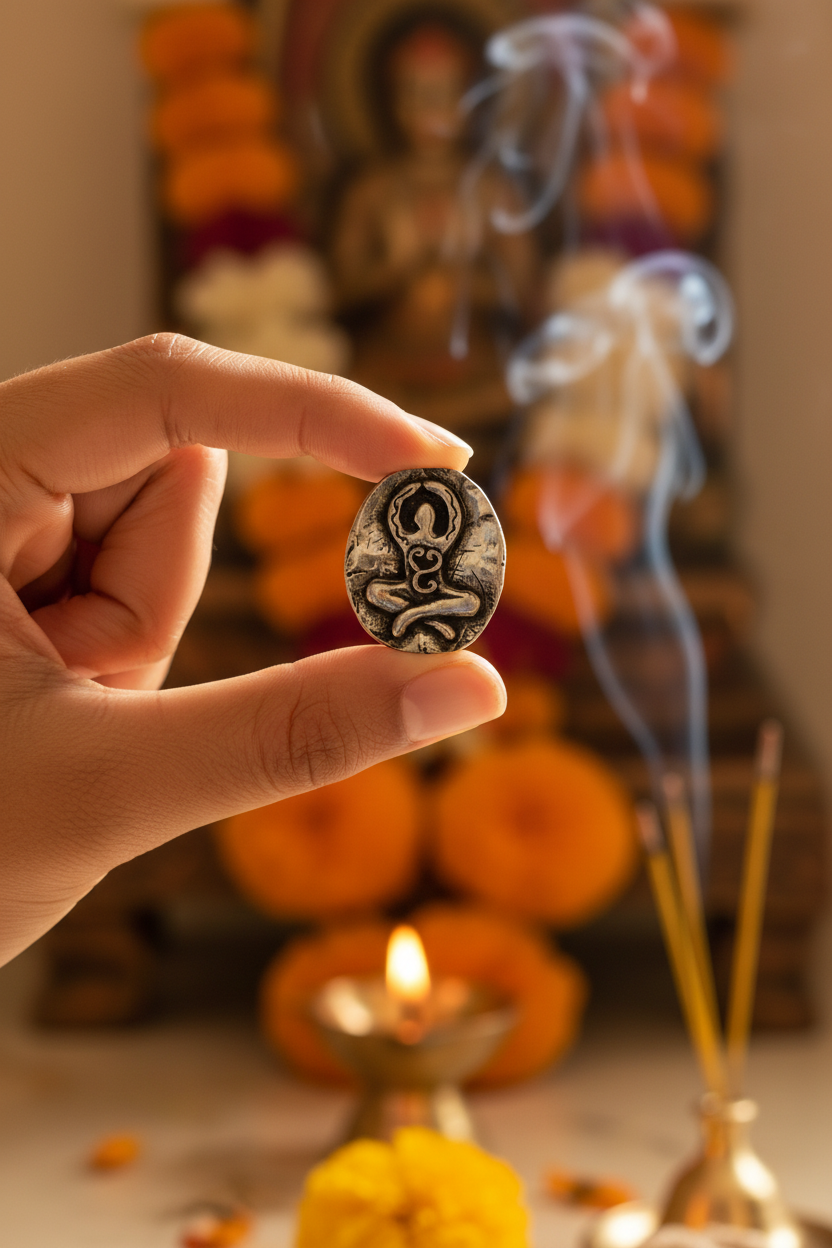
Goddess Pewter Pocket Stone, 1" x 5/8"
Goddess Pewter Pocket Stone, 1" x 5/8"- Primary Spiritual Use: Intuition
- Secondary Spiritual Use: Rebirth
- Element: Water
- Planet: Moon
- Zodiac: Cancer
- Chakra: Third Eye
- Ruling Day: Monday
- Tradition: Wiccan/eclectic
- Intent: Intuition, Rebirth
Couldn't load pickup availability
There is a long history of people carrying small images of the goddess on their person. Egyptian travelers tucked tiny Isis figures into their packs. Roman households kept goddess statues on the lararium, the household shrine by the door. Hindu pilgrims pocket-carry murti of Lakshmi or Durga. And since the 1970s, the modern Pagan and Wiccan movements have made the carrying of small goddess images a daily devotional act in their own right. This pewter pocket stone is the contemporary form of that practice: a stylized goddess figure cut into pewter, one inch by 5/8 inch, sized for a pocket, a palm, or a corner of the altar.
Key Features
- Pewter cast with a stylized goddess figure at the face, smooth on every edge for daily handling
- 1" x 5/8", the working size for pocket, palm, or altar carry
- Lead-free pewter, made in the USA
- Tactile anchor for goddess devotion, Wiccan and Pagan altar work, and intuitive practice through the day
- Sits comfortably alongside Wiccan goddess worship, broader Neopagan practice, Marian-adjacent folk devotion, and Hindu pocket-murti tradition
Product Details
This pocket stone is cast from lead-free pewter in the United States. The face shows a stylized goddess figure cut into the metal, so the silhouette reads by touch as well as by sight. The reverse is plain. Dimensions are 1 inch tall by 5/8 inch wide, and the weight is enough that you will feel it in a shirt pocket without it being heavy enough to drag. Like all pewter, it develops a soft patina over years of handling, which most carriers consider part of its character.
Spiritual Significance
The carrying of a small goddess image is one of the oldest devotional practices on the planet, and one of the most quietly persistent. Archaeological sites across what Marija Gimbutas called Old Europe, from roughly 6500 to 3500 BCE, have produced thousands of small goddess figurines, some of them sized to fit a fist. Whether or not Gimbutas's interpretation of those finds is the right one (the question is genuinely debated in academic archaeology), the artifacts themselves are real, and the human impulse to carry a feminine deity on the body clearly predates writing.
In Hindu devotional practice, pocket murti of Lakshmi, Durga, Kali, and other goddesses are blessed at home shrines and carried in purses and pockets through the day. In Catholicism, the parallel practice attaches to the Virgin Mary: Miraculous Medals, scapulars, and small medallions of Marian apparitions like Guadalupe and Lourdes work the same way for hundreds of millions of practitioners.
Within modern Pagan and Wiccan practice, the Goddess is the central feminine principle: the Triple Goddess of Maiden, Mother, and Crone (a frame popularized by Robert Graves's The White Goddess and codified into Wiccan ritual by Doreen Valiente and others), or the Moon Goddess, or a specific named goddess like Brigid, Isis, Hecate, or Aphrodite. Valiente's Charge of the Goddess, written in the 1950s and still recited at rituals today, places the Goddess "in the heart of every woman, and in the heart of every man." A pocket goddess stone is the smallest, most portable form of that devotion.
Whichever lineage you carry this goddess into, the pocket-stone form is a modern continuation of a very old practice: small, smooth, concealable, reachable, passable from hand to hand.
How To Use
There is no single right way to carry a goddess. A few practices that map to real traditions:
In Wiccan and broader Pagan practice, place the stone on your altar near a representation of the Goddess, or directly in the center, before charging it with intent during your circle work. Many practitioners pass it through the smoke of mugwort, sandalwood, or rose incense, or anoint it with a small drop of goddess-dedicated oil. Carry it afterward as a touchpoint for your devotion through the day.
For intuitive work, hold the stone in your non-dominant hand during meditation, scrying, or tarot. Some readers keep one in their reading kit as a centering object before pulling a card.
In Marian-adjacent folk devotion, the stone can stand in for or accompany a Miraculous Medal, sitting in the same pocket as a rosary or other Marian object. The pewter does not mind which goddess you address.
For daily devotional carry, slip it in your pocket on the way out the door and find it again at a stoplight, in line at the grocery, in the long minutes before a difficult conversation. The thumb finds the figure, you remember the lineage you are carrying, and you continue.
Pairs Well With
- Angel Worry Stone, Pewter Pocket Stone, a sibling pewter pocket stone for guardian-angel devotional carry
- Goddess Oil Blend by Espiritu, a dedicated anointing oil for the stone, the altar, or the wrist before circle work
- Celtic Goddess Grimoire by Annwyn Avalon, for readers who want to go deeper into a specific named goddess lineage
Frequently Asked Questions
Is this a specific named goddess?
The figure on the face is stylized rather than a portrait of a named goddess. That is by design: the stone is meant to be dedicated by the carrier to whichever goddess belongs in their tradition. Some people consecrate it to a specific deity, like Brigid, Isis, or Mary. Others carry it as a general image of the divine feminine.
What is the difference between this and the Angel, Buddha, Cross, and Hamsa pewter pocket stones?
They are all the same form factor, 1" x 5/8" lead-free pewter, with different symbols cut into the face. The Angel reads as guardian-angel devotional carry. The Buddha Coin reads as Buddhist mindfulness and the merit-keeping of phra khruang amulet practice. The Cross reads as Catholic folk devotion and Hoodoo protection work. The Hamsa reads as the Levantine and North African protective hand. The Goddess is the one that anchors to Wiccan, Pagan, and broader divine-feminine traditions most clearly.
How do I consecrate or dedicate it?
The practice varies by tradition. Wiccans typically pass the stone through the four elements (incense smoke for air, a brief pass over candle flame for fire, a touch of salt water for earth and water) while reciting a dedication. Marian practitioners often have a priest bless devotional objects after Mass. Hindu practitioners may dedicate the stone at a home shrine with a small puja. There is no wrong way; the dedication is between you and the goddess you address.
Will it tarnish?
Pewter develops a soft gray patina over years of handling, which most carriers consider part of its character. If you want to keep the surface bright, an occasional polish with a soft cloth is enough. Do not use silver polish, which is too harsh for pewter.
Is the pewter safe to handle?
Yes. The stone is cast in lead-free pewter, so daily skin contact is fine.


Spend $50 & enjoy guilt-free shopping with our free shipping on all orders. Get your favorite items delivered right to your door at no extra cost.