



Plentiful Earth | Spiritual Store
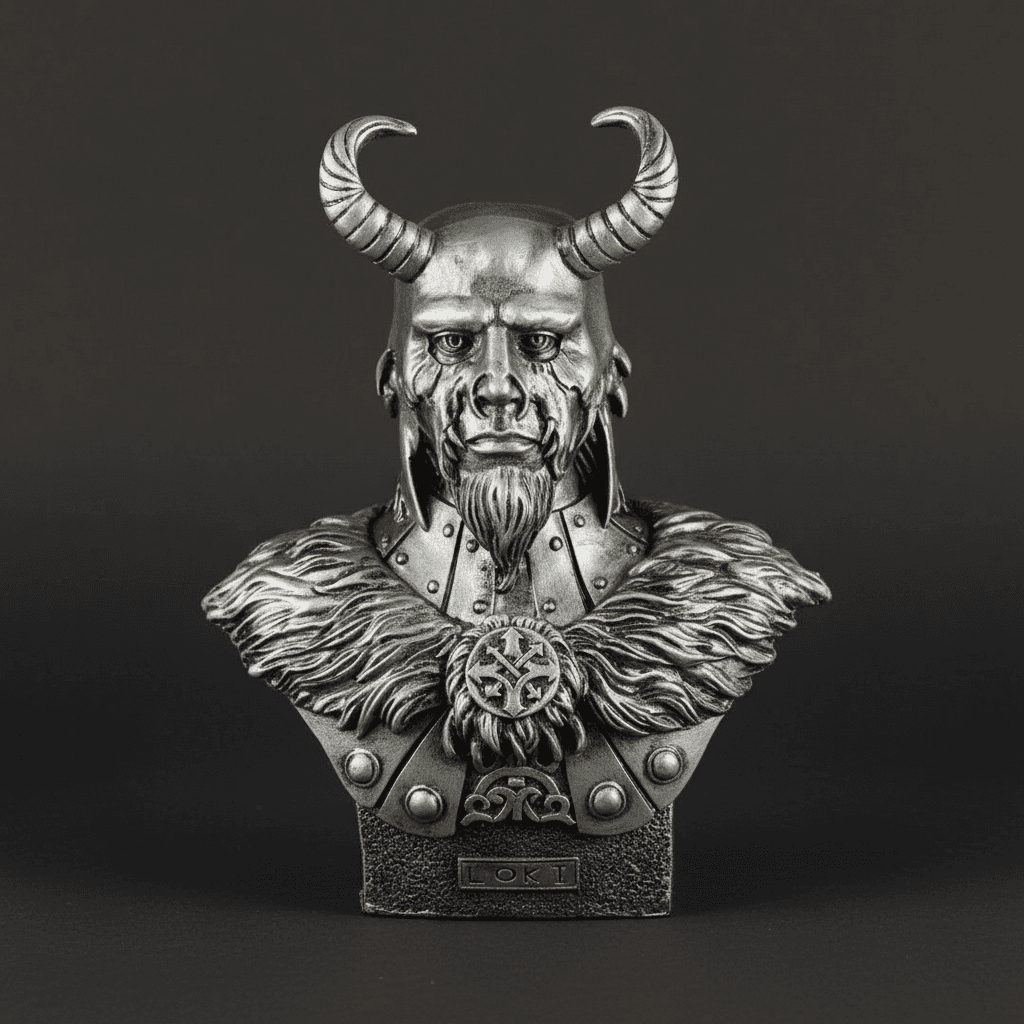
Loki Bust, 11 Inch Cold-Cast Resin, Norse Trickster God
Loki Bust, 11 Inch Cold-Cast Resin, Norse Trickster God- Primary Spiritual Use: Transformation
- Secondary Spiritual Use: New Opportunities
- Element: Fire
- Planet: Mercury
- Zodiac: Gemini
- Chakra: Throat
- Ruling Day: Wednesday
- Tradition: Norse/Germanic
- Intent: Transformation, New Opportunities, Creativity
Couldn't load pickup availability
Loki is the most slippery and fascinating figure in all of Norse myth, the trickster, the shape-shifter, the cunning agent of change who is by turns the gods' helper and their undoing. Blood-brother to Odin and frequent companion of Thor, he is the one who causes the trouble and, more often than not, the one who talks his way out of it, the spark of chaos that keeps the old order from hardening into stone.
This 11-inch bust gives that restless, transformative energy a place on the altar or desk, a focal point for change, cunning, and the courage to upend what no longer serves.
Key Features
The Norse trickster and shape-shifter. Loki in a commanding bust, helmed and keen-eyed.
Cold-cast resin, antiqued silver-gray. Roughly 11 x 7 x 4 inches, finely detailed.
A focal point for change. A modern devotional sculpture for transformation and cunning, not an archaeological reproduction.
Product Details
- Dimensions: about 11 x 7 x 4 inches
- Material: cold-cast resin
- Finish: antiqued silver-gray tone
- Form: bust of Loki in a horned helm
- Use: deity statue, altar focal point, transformation and change work
- SKU: SL452
- Sold by Plentiful Earth
The Spiritual Significance
Loki is the great ambivalent figure of Norse myth, neither simply villain nor friend. A shape-shifter who takes the form of salmon, fly, and mare, a schemer whose tricks both endanger the gods and repeatedly save them, he is the catalyst who forces change wherever the world has grown too settled. He is also the father of fateful children and, in the end, the one who turns against the gods at Ragnarok, the twilight that clears the way for a new world to rise.
On a modern altar, Loki is worked with for transformation, for cunning and clever problem-solving, for breaking stuck patterns, and for the courage to face and integrate the shadow. His is not a tame, comfortable energy; people drawn to him tend to value honesty, wit, and the kind of change that is uncomfortable before it is freeing. Approach him with open eyes and a sense of humor, and meet his complexity rather than flattening him into a luck charm.
How To Use
- Place the bust on an altar or workspace where you are inviting change or doing shadow work.
- Set a clear intention for transformation, then light a candle or incense to mark the start of your work.
- Sit with the image and name honestly what needs to shift, including the parts you would rather not look at.
- If you make offerings, those associated with Loki tend to be sweet or spirited: pastries, candy, or a measure of whisky, along with good humor and honesty.
- Dust the bust gently with a soft dry cloth and keep it out of prolonged direct sunlight.
Pairs Well With
- Loki Statue, 10 Inches a full figure of Loki with his monstrous children.
- Odin Bust, 11 Inches the Allfather, Loki's blood-brother.
- Thor Bust, 14 Inches the thunder god, Loki's frequent companion and foil.
- Thor's Hammer Plaque, 12 Inches Mjolnir, the great protective symbol of the North.
- White Sage Smudge Sticks to cleanse the space and the statue.
History & Occult Background
Loki appears throughout the Poetic and Prose Eddas, the main sources for Norse mythology, as a central and contradictory character. Interestingly, there is little evidence that he was worshipped with temples or place-names in the ancient North as Thor, Odin, and Freyr were, which makes him primarily a mythic figure rather than a documented cult deity. In modern Heathenry his place is genuinely debated: some honor him warmly, identifying as Lokeans, while some traditions set him aside. It is also worth noting that the horned helmet seen on figures like this is a nineteenth-century Romantic invention rather than authentic Norse dress, an artistic convention now firmly attached to the imagery.
Frequently Asked Questions
Who is Loki?
He is the Norse trickster god, a shape-shifter and cunning schemer who is both helper and adversary to the gods. He is the agent of change in the myths and, ultimately, a key figure in Ragnarok.
Is Loki evil?
No, though he is far from safe or simple. He is genuinely ambivalent, by turns harmful and helpful, and is best understood as a force of necessary change and disruption rather than a straightforward villain.
Was Loki worshipped historically?
There is little evidence of an organized ancient cult of Loki, unlike Thor or Odin. He is mainly a mythological figure, though many modern practitioners honor him today.
What offerings suit him?
Sweet and spirited things are commonly offered: pastries, candy, or whisky, along with honesty and a sense of humor. There is no single fixed tradition, so practice varies.
How do I care for the bust?
Dust it with a soft dry cloth and keep it out of prolonged direct sunlight to protect the finish. Avoid soaking the resin.

Spend $50 & enjoy guilt-free shopping with our free shipping on all orders. Get your favorite items delivered right to your door at no extra cost.