



Plentiful Earth | Spiritual Store
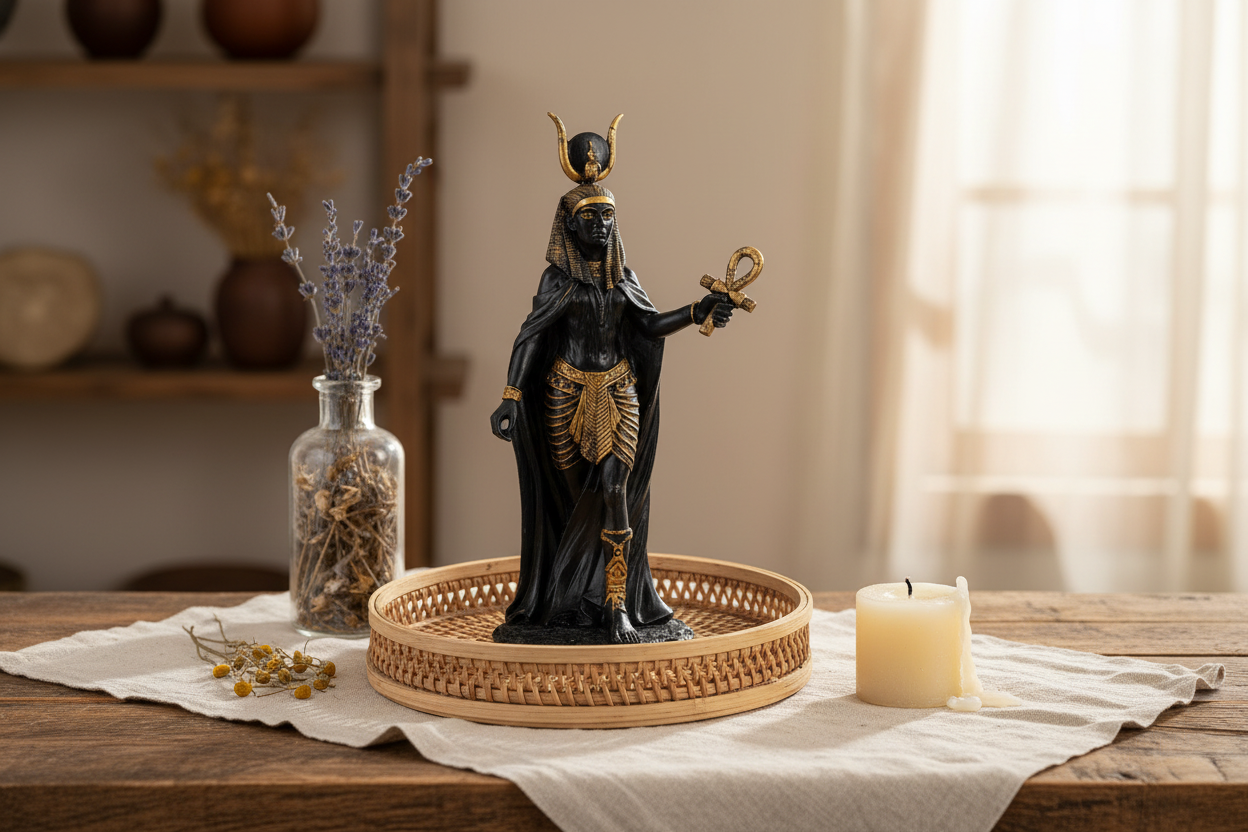
Hathor Egyptian Goddess Statue, 11 Inches
Hathor Egyptian Goddess Statue, 11 Inches- Primary Spiritual Use: Love
- Secondary Spiritual Use: Happiness
- Element: Water
- Planet: Venus
- Zodiac: Taurus, Libra
- Chakra: Heart
- Ruling Day: Friday
- Tradition: Egyptian revival
- Intent: Love, Happiness
Couldn't load pickup availability
Hathor is one of ancient Egypt's most beloved goddesses, the lady of love, music, dance, and joy, the divine mother who nourishes and the sky-cow who carries the sun. She was worshipped for thousands of years as a goddess of beauty and pleasure and as a tender protector, welcoming the dead into the next life and gladdening the living in this one.
This 11-inch statue shows her crowned and holding the ankh, the Egyptian symbol of life, a regal focal point for devotion, love work, and the cultivation of joy.
Key Features
Crowned and holding the ankh. Shown with an ornate crown and a golden ankh, the symbol of life, in her hand.
Eleven inches of presence. A striking, regal altar figure in cold-cast resin.
A devotional focal point. A modern devotional sculpture for love, joy, and beauty work in Kemetic or eclectic practice.
Product Details
- Height: about 11 inches
- Material: cold-cast resin
- Finish: detailed, with a golden ankh and ornate crown
- Form: crowned figure holding an ankh
- Use: deity statue, altar focal point, love and joy work
- SKU: SH971
- Sold by Plentiful Earth
The Spiritual Significance
Hathor's domains are among the warmest in the Egyptian pantheon: love, beauty, music, dance, joy, motherhood, and the sky. She was the lady of Dendera, where her great temple still stands, and she was so widely loved that her worship reached every level of Egyptian society. As a sky goddess she was often shown as a cow or crowned with cow horns cradling the sun disc, and as a mother she nourished both gods and pharaohs. She also met the dead kindly, welcoming them into the afterlife, which made her a goddess of both pleasure and passage.
On a modern altar, Hathor is honored for love and self-love, for joy and celebration, for music, dance, and creativity, and for beauty in its fullest sense. Practitioners call on her to soften a heavy heart, to bless love and pleasure, and to bring more delight into daily life. Because the Egyptians worshipped her with music and dance, taking up a rattle, a song, or a joyful movement is itself a fitting devotion.
How To Use
- Place her on an altar or a beauty or vanity space where her joyful presence can preside.
- Welcome her by cleaning the statue, holding it, and speaking her name and your hopes; a first offering of flowers, beer, or music is traditional.
- For love and joy work, light a candle before her and ask for her blessing on a relationship, your own self-love, or a season that needs more delight.
- Honor her with music and dance; play a song, shake a rattle or sistrum, or simply move, since these were her favored devotions.
- Keep offerings fresh, dust the statue gently, and refresh flowers or perishable gifts rather than letting them wilt.
Pairs Well With
- Egyptian Goddess Isis Statue, 13 Inch Isis and Hathor were syncretized in later Egyptian religion and pair naturally on an altar.
- Bastet Cat Goddess Statue, 8 Inches another goddess of joy and music for the devotional shelf.
- Solid Brass Ankh, 3.5" x 6.5" the symbol of life Hathor holds, echoed on the altar.
- Frankincense Incense Sticks a sacred Egyptian offering scent for her altar.
- Ancient Egyptian Magic by Eleanor L. Harris a practical guide to Egyptian devotion and ritual.
History & Occult Background
Hathor is one of the oldest attested Egyptian deities, worshipped from the early dynasties and honored for millennia at her great temple complex at Dendera. Her name means roughly house of Horus, and she was closely tied to kingship as a divine mother. The Greeks identified her with Aphrodite for her domains of love and beauty. She appears as the Seven Hathors who attend a birth and pronounce a child's fate, and she was worshipped joyously with music, dance, and the rattling sistrum. In later religion her attributes overlapped with those of Isis, who sometimes wears Hathor's cow-horn-and-sun-disc crown. She entered modern practice through Egyptomania and the goddess revival, where she is loved as a goddess of joy, beauty, and the open heart.
Frequently Asked Questions
Who is Hathor?
She is the Egyptian goddess of love, music, dance, joy, beauty, and motherhood, and a sky goddess linked to the sun. She was one of the most widely beloved deities in Egypt and a tender welcomer of the dead.
What is her crown?
Hathor is classically crowned with cow horns cradling a sun disc, reflecting her sky and solar associations and her form as the celestial cow. This statue shows her crowned and holding the ankh, the symbol of life.
What offerings does she like?
Music and dance above all, along with flowers, mirrors, beer, honey, and incense. Because the Egyptians worshipped her joyfully, a song or a moment of delight is itself a devotion she welcomes.
Is this an archaeological reproduction?
No. It is a modern devotional sculpture drawing on Egyptian iconography, not a museum replica. Treat it as contemporary devotional art that points back to her ancient tradition.
How do I care for the statue?
Dust it with a soft dry cloth and keep it out of prolonged direct sunlight to protect the finish and gold detail. Avoid soaking the resin; a barely damp cloth is enough for occasional cleaning.


Spend $50 & enjoy guilt-free shopping with our free shipping on all orders. Get your favorite items delivered right to your door at no extra cost.