



Plentiful Earth | Spiritual Store
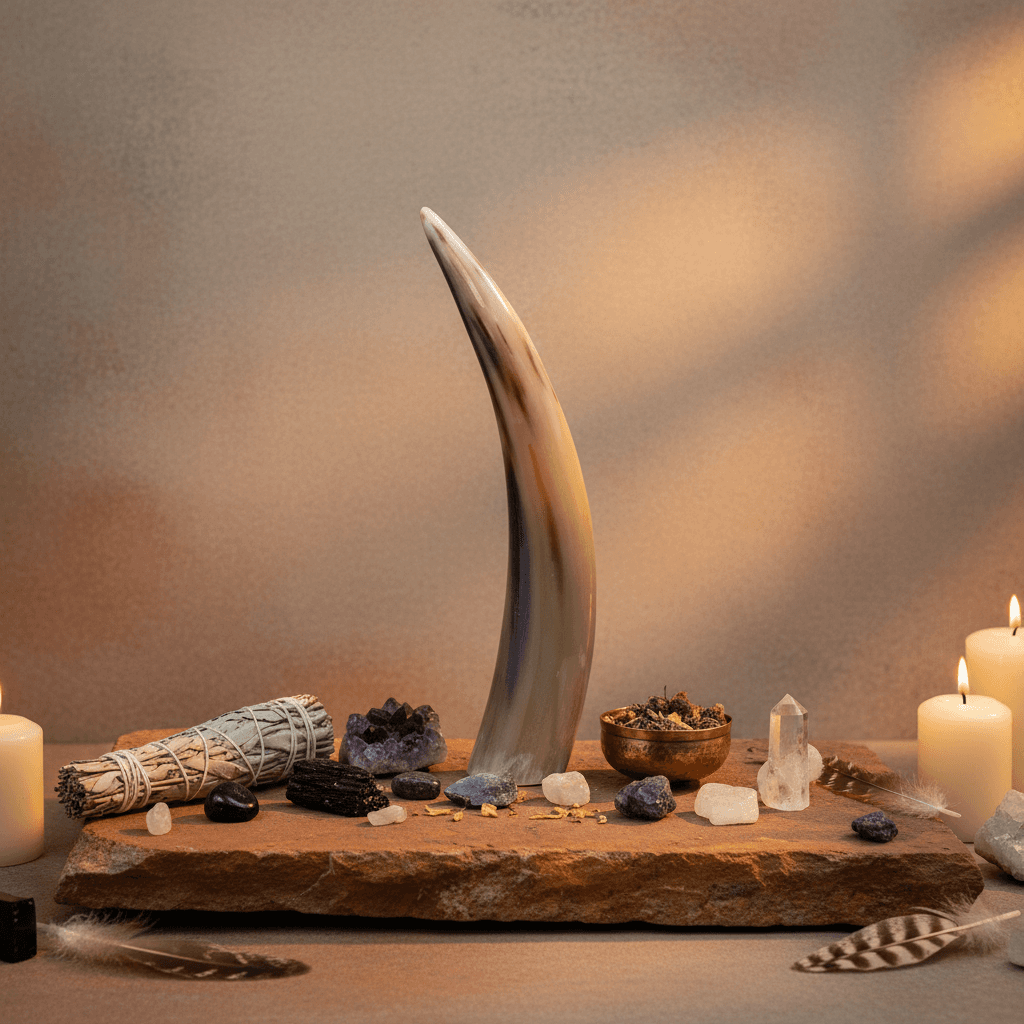
Polished Cattle Horn Altar Decor, 12 Inches
Polished Cattle Horn Altar Decor, 12 Inches- Primary Spiritual Use: Strength
- Secondary Spiritual Use: Power
- Element: Earth
- Planet: Mars
- Zodiac: Aries, Scorpio
- Chakra: Root
- Ruling Day: Tuesday
- Tradition: Folk talisman
- Intent: Strength, Power
Couldn't load pickup availability
Something older than scripture runs through the memory of a horn. Long before the first altar was built or the first circle cast, the horn was already a symbol, of power held at the boundary, of life force directed outward, of the primal capacity to guard what is sacred. Every culture that lived alongside cattle, bison, or wild ox understood this instinctively. You don't look at a horn and wonder what it means. You know.
This 12-inch polished cattle horn end brings that ancient knowing into your practice in a form that is both striking and deeply functional. Smooth to the touch, curved with the organic elegance that only grows from something real, it carries the weight of genuine material, not resin, not approximation, but actual horn. Place it on your altar and you'll feel it immediately: a steadiness, a presence, something that reminds the room it is guarded.
Horns have been used across folk magic, ceremonial traditions, and animistic practices worldwide as tools for warding, as ritual vessels, as directional anchors in sacred space, and as offerings to deities associated with the hunt, the earth, and masculine or primal power. The 12-inch length makes this piece substantial enough to serve as a true altar centerpiece, something that holds attention and holds energy in equal measure.
If you've been searching for an object that doesn't look borrowed from someone else's practice, that doesn't need to be explained at every turn, that simply is what it is, this horn is ready to be yours.
Key Features
Genuine polished cattle horn, naturally unique. Because this is a real horn and not a synthetic replica, no two pieces are identical in coloration, curve, or surface patterning. The warm tones running through the polished surface, ivory, amber, deep brown, shift in different lighting conditions, making this a living piece rather than a static decoration. That variability is the point: you receive the horn that was meant for you.
A substantial 12-inch length that anchors your altar. At a full foot, this horn commands presence without overwhelming a working altar. It's large enough to serve as a directional marker at the north or east quarter, substantial enough to function as a deity offering vessel on a devotional shrine, and proportioned well for display alongside other altar tools. Size matters in ritual work, and this one earns its place.
Polished to a smooth finish while retaining the form's natural power. The polish removes roughness and brings out the horn's natural luster without erasing the organic contours that give it character. This means the horn is easy to hold, safe to handle during ritual, and visually striking on the altar, while still reading, unmistakably, as the real thing.
Product Details
- Length: Approximately 12 inches
- Material: Natural polished cattle horn
- Finish: Smooth, polished
- Form: Horn end (tip/point end included)
- Color: Natural; varies by piece; tones of ivory, amber, brown, and cream
- Note: Each piece is unique; color, curve, and patterning will vary
The Spiritual Significance
In Hoodoo rootwork and Southern folk magic traditions, animal parts, including horn, are used in the construction of mojo bags, gris-gris, and protective workings. You can incorporate this cattle horn into a protection working by placing it at the threshold of your home, pointed outward toward the door, to create a ward against unwanted visitors and negative influences entering your space. The horn's pointed form directs energy outward, working as an active barrier rather than a passive one.
In earth-honoring and animistic practices, the horn is strongly associated with the elemental forces of earth and with deities of the land, the hunt, and the horned divine, figures like Cernunnos in Celtic traditions, or the broader archetype of the Horned God honored in many Wiccan and eclectic paths. You can work with this horn as a devotional offering on an altar dedicated to a horned deity, placing it as a focal point during ritual and calling in the deity's protective presence, grounding energy, and connection to wild, untamed nature.
How To Use
Working with a polished cattle horn is about establishing relationship, not performing a formula. Here are several approaches to bring this piece into your practice:
- Cleanse it first. Before working with any new ritual tool, clear it of any residual energy from its journey to you. Pass it through the smoke of frankincense or white sage, set it under moonlight overnight, or bury it briefly in a bowl of salt. Trust your intuition about which method suits the moment.
- Place it on your altar as a directional anchor. In many Western esoteric and Wiccan traditions, the north is associated with earth energy: stability, groundedness, physical protection. Setting the horn at the northern point of your altar, with the tip pointing outward, marks that direction and calls in the earth's protective qualities during ritual.
- Use it as a warding tool at thresholds. Point the horn outward and place it near a doorway, windowsill, or any entry point in your home that feels energetically vulnerable. This is a practice rooted in folk magic traditions across multiple cultures; the pointed form is understood to deflect, redirect, or push back unwanted energy.
- Incorporate it into devotional work. If your practice includes a relationship with a horned deity or animal spirits associated with cattle or oxen, this horn makes a meaningful offering piece. Place it on a dedicated shrine, anoint it with a small amount of consecrated oil, and speak your intention aloud.
- Hold it during grounding meditation. The weight and solidity of genuine horn makes it an effective grounding anchor during meditation. Hold it in both hands or rest it across your lap and feel its density drawing your awareness downward, into your body, into the earth. Let it do that work quietly.
Follow your instincts. Ritual tools reveal their best uses over time.
Pairs Well With
- Black Tourmaline Heart, 3 Inches: Black tourmaline is one of the premier protective stones in crystal work, and pairing it with this horn creates a layered protection setup on any altar: the stone absorbs and neutralizes negative energy while the horn actively wards and deflects.
- White Sage Smudge Kit: Before placing this horn in its permanent altar position, a thorough smudging ritual helps establish clean energetic ground; this kit includes everything you need for a proper cleansing ceremony.
- Tourmaline Pentagram & Moon Palm Stone: For practitioners working with protective magic who also want something portable, this carved palm stone pairs beautifully with the altar horn, extending the protective working into your daily life away from home.
- 4" Sage & Frankincense Smudge Stick: Frankincense has deep roots in purification and consecration rituals across multiple traditions; burning this smudge stick while you work with your horn adds a layer of sacred smoke that amplifies protective and devotional intentions alike.
- Protection Travel Altar Set: A natural companion for practitioners who want the energetic work of their home altar to travel with them; the black salt and black obsidian in this kit echo the warding and grounding energies the horn brings to your permanent space.
History & Occult Background
The horn as a spiritual symbol predates written history. Archaeological evidence of horn use in ritual contexts stretches back to Paleolithic Europe, where cave paintings and burial sites suggest that the horns of aurochs, the wild ancestor of domestic cattle, held sacred significance long before cattle were domesticated. The sheer physical power of the horn, its obvious function as a weapon of defense, and its emergence from the head, the seat of life, breath, and cognition, made it an object of reverence across cultures independently of one another.
In ancient Mediterranean traditions, cattle and their horns were central to religious practice. The sacred bull appears in Egyptian religion as the Apis bull, considered an earthly manifestation of Ptah and later Osiris. Horns appear as a divine adornment in depictions of Hathor, Isis, and other Egyptian deities, framing the solar disc as a crown and signaling divine power. Across the Mediterranean, cattle sacrifice was one of the highest ritual acts, and the horns of sacrificed animals were often preserved, gilded, or placed in temples as lasting offerings.
In Celtic Europe, the Horned God figure, most famously preserved in the image of Cernunnos from the Gundestrup Cauldron, represents a deity whose very identity is expressed through the stag antlers emerging from his head. While cattle horn differs from antler, the underlying symbolism of horned divinity permeates Iron Age Celtic religion: the horn marks the meeting point between the human and the divine, between the domestic and the wild, between civilization and the natural forces that encircle it. Contemporary Wicca draws heavily on this archetype in its conception of the Horned God as a counterpart to the Goddess.
In folk magic traditions across Africa, the African diaspora, and into the American South, animal horns have served practical magical purposes: as containers for curios, roots, and conjure in mojo work; as protective talismans placed above doors; and as ritual tools passed down within families practicing Hoodoo or regional folk magic. The horn's natural hollow cavity lends itself to use as a vessel, a container for powders, herbs, and charged materials, while its pointed form is understood as a projecting force that sends protective energy outward. This use is distinct from ceremonial or Wiccan approaches and should be honored as such.
Frequently Asked Questions
What is a polished cattle horn used for in spiritual practice? A polished cattle horn is used in spiritual practice as a protective altar tool, a warding object for thresholds, a vessel for folk magic workings, and a devotional piece on shrines to horned deities or earth-associated spirits. Its historical uses span animistic, folk magic, Wiccan, and ceremonial traditions across cultures, making it one of the older and more cross-traditional ritual tools available.
Is this horn appropriate for Wiccan practice? Yes. The horn is strongly associated with the Horned God archetype that features prominently in Wiccan theology, particularly in Gardnerian and Alexandrian traditions as well as eclectic Wicca. Many Wiccan practitioners keep a horn on the altar as a symbol of the God, particularly during the darker half of the year or during workings connected to earth, protection, and masculine divine energy. It is not a required tool in Wicca, but it carries meaningful symbolism for practitioners who work with the Horned God.
How do I cleanse and consecrate this horn before using it? You can cleanse the horn by passing it through frankincense or sage smoke, setting it on the earth overnight, placing it under the light of a full or new moon, or using a brief burial in sea salt. To consecrate it, formally dedicate it to a spiritual purpose, hold it in both hands, speak your intention aloud, and invite any spirits, deities, or energies you work with to bless the tool. Some practitioners anoint it lightly with a protection or consecration oil as part of this process.
Can beginners work with a cattle horn, or is this for advanced practitioners? Beginners are entirely welcome here. A cattle horn doesn't require specialized knowledge to work with; if you're drawn to it, that draw is worth following. Start simply: place it on your altar, cleanse it regularly, and let the relationship develop over time. The meaning you bring to it, and the practices you build around it, will deepen naturally as your craft grows.
Will my horn look exactly like the one pictured? Because these are genuine natural horns, every piece varies in coloration, curve, and surface patterning. The tones run from ivory and cream through amber to deep brown, and the curvature of each piece is unique. Dimensions are approximately 12 inches but may vary slightly. Treat this variability as part of the horn's character; you will receive the piece that was meant for your altar.
How do I care for a polished cattle horn altar piece? Natural horn can be sensitive to prolonged exposure to heat, direct sunlight, and moisture. Keep it out of direct sun when not in use to prevent fading or brittleness over time. If the surface becomes dry, a small amount of beeswax or natural oil rubbed in gently can restore its luster. Wipe clean with a dry or barely damp cloth; avoid soaking it or submerging it in water.


Spend $50 & enjoy guilt-free shopping with our free shipping on all orders. Get your favorite items delivered right to your door at no extra cost.