



Plentiful Earth | Spiritual Store
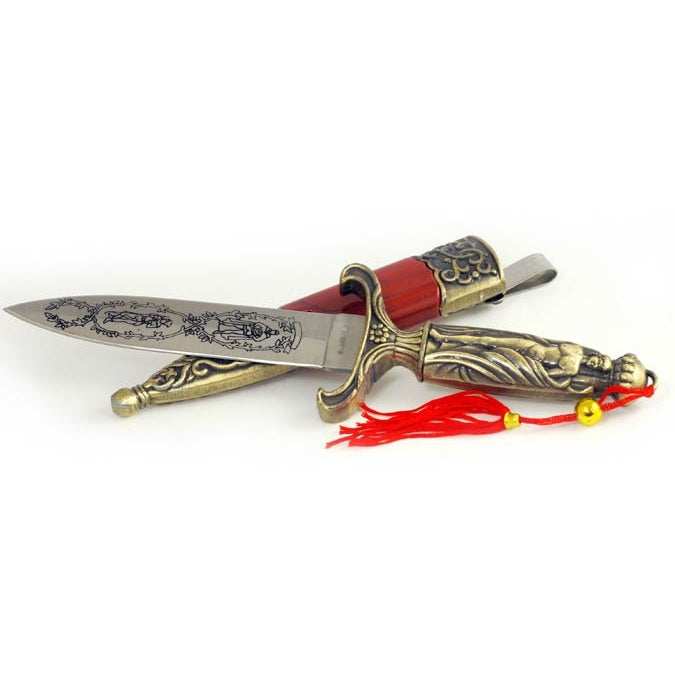
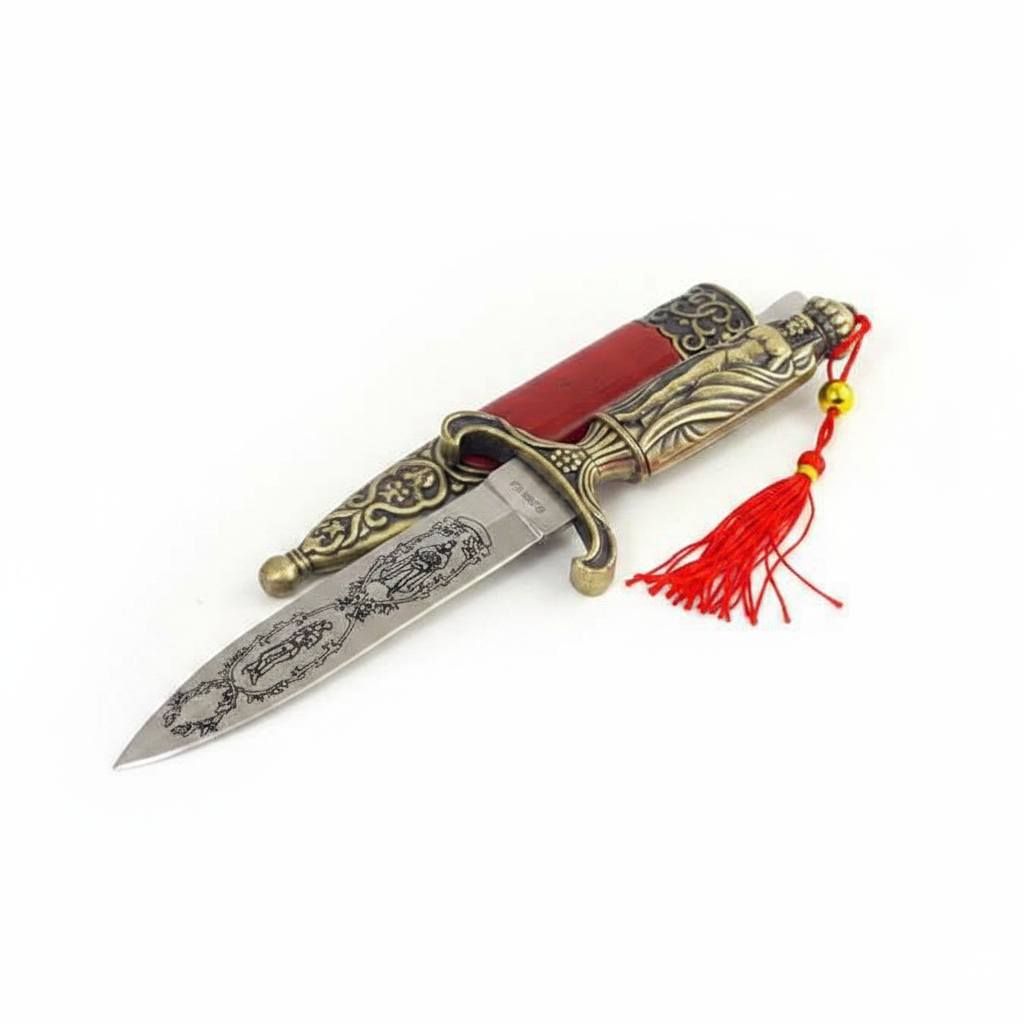
Ornate Greek Athame, 4 Inch Stainless Steel Blade with Sheath
Ornate Greek Athame, 4 Inch Stainless Steel Blade with Sheath- Primary Spiritual Use: Intention
- Secondary Spiritual Use: Power
- Size: 8 in overall, 4 in blade
- Material: Stainless steel blade, sheath with plastic center
- Shipping Weight: 0.5 lb
- Element: Fire
- Planet: Mars
- Zodiac: Aries, Scorpio
- Chakra: Solar Plexus
- Ruling Day: Tuesday
- Tradition: Wiccan
- Intent: Intention, Power, Protection
Couldn't load pickup availability
Works Well With


Every witch eventually reaches for something to hold the boundary between intention and the world. The athame is that something. Not a weapon — never a weapon — but a conductor. A wand with an edge. A tool designed specifically to direct will, define sacred space, and cut through energetic clutter with the kind of precision that a candle flame or an open palm simply can't replicate.
This Ornate Greek Athame brings classical beauty into that function. The handle, shaped around a sculpted masculine figure and finished with brass-toned hardware, draws on the aesthetic heritage of ancient Mediterranean ritual culture — where sacred implements were made to be beautiful as well as purposeful. The stainless steel blade is double-edged and sharp enough to serve its ceremonial role, while a protective sheath keeps it safe and ready between workings.
Whether you're casting a circle, calling quarters, consecrating a new tool, or carving a symbol into a candle before a spell, this athame will serve you. It's a workhorse dressed in finery — exactly what a ritual knife should be.
Key Features
Sculpted Greek-style handle for focused ceremonial energy. The ornate figure on the handle isn't just decorative — holding a ritual tool with this kind of intentional craftsmanship helps anchor your focus and signals to your subconscious that something sacred is happening. Form and function reinforce each other here.
Stainless steel double-edged blade, 4 inches. The blade is the working end of the athame, and this one is well-suited to all the tasks that matter: drawing circles in the air, directing energy during ritual, and carving sigils or words of power into candle wax. Stainless steel is easy to cleanse and maintain.
Includes a protective sheath for safe storage. An athame stored properly between rituals holds its energetic charge more consistently. The fitted sheath keeps the blade safe, your fingers safe, and the tool ready whenever your practice calls for it.
Product Details
- Overall length: 8 inches
- Blade length: 4 inches
- Blade material: Stainless steel, double-edged
- Handle: Ornate sculpted figure with brass-toned hardware
- Sheath: Included (plastic-centered construction)
- Price: $23.95 USD
- Note: This item cannot be shipped to Massachusetts or California. California Prop 65 warning: This product can expose you to chemicals known to the State of California to cause cancer or other reproductive harm.
The Spiritual Significance
In Wicca and Wiccan-influenced witchcraft, the athame is one of the four classical elemental tools of the altar, traditionally associated with the element of Fire (in Gardnerian and Alexandrian practice) or Air (in many eclectic and ceremonial traditions). You can use this athame to cast and close your circle — tracing the boundary in the air as you call the quarters and invite the elements, then reversing that motion to seal and release when your work is complete. The double-edged blade is understood in many traditions to represent the dual nature of power: the capacity to both protect and transform.
You can also use this athame as a consecration tool when bringing new ritual objects into your practice. In ceremonial magic, a charged athame is used to direct accumulated energy into a new tool or talisman, essentially "waking it up" and linking it to your will. Hold the blade above the object, visualize a stream of focused white or golden light traveling from your center, down your arm, through the handle, and out through the tip of the blade — sealing the object with intention and purpose. This is one of the most practical and immediately useful applications for any athame, beginner or experienced.
How To Use
Before working with a new athame, take time to cleanse and consecrate it. You might pass it through incense smoke — frankincense or dragon's blood work well — or leave it on your altar overnight under the light of the full moon. Salt water is effective for energetic cleansing but should be used cautiously with metal tools; if you go this route, rinse and dry the blade thoroughly afterward.
Once cleansed, hold the athame in both hands and spend a few moments breathing intentionally, visualizing your energy flowing into it and claiming it as your own. Some practitioners speak aloud, naming the tool and stating its purpose. Others work in silence. Follow what feels right for your tradition and your path.
In circle casting, the athame is typically held in the dominant hand, pointing outward. Walk deosil (clockwise, in most Northern Hemisphere traditions) to open the circle, tracing the boundary in the air with your blade. When the circle is complete, seal it with a final point in the direction you started. To close, walk widdershins (counterclockwise) with the same gesture.
For candle work, you might use the tip of the blade to carve names, sigils, runes, or symbols of intention into the wax before lighting. The athame transfers your will into the candle, focusing the working before it even begins to burn.
Store your athame in its sheath on your altar, or wrapped in cloth — black or a color associated with your practice. Many witches keep their athame separated from kitchen knives and mundane sharp objects as a matter of practice. Your athame's purpose is singular, and treating it that way matters.
Trust your instincts about how this tool wants to work with you. No two practitioners use an athame in exactly the same way. The tradition is a map, not a cage.
Pairs Well With
- White Sage Kit Smudge — Use the included white sage to cleanse your athame before its first ritual and before any significant working. The smudge kit contains everything you need: sage, an abalone shell, a feather, and a stand.
- Black Destroyer Oil — This potent anointing oil was made specifically for consecration and protection. Rub a small amount along the flat of the blade when consecrating the athame or when working protection spells, charging the tool with additional banishing force.
- Black Witch Candle, 8 Inches — A black taper or pillar candle is a natural companion to the athame in circle work and protection rituals. Use your athame to carve your intention into the wax before lighting, then let the candle carry the working forward.
- Cast Iron Cauldron with Lid, 8 Inches — The cauldron and the athame are two of the most foundational altar tools in Wiccan practice — feminine and masculine, receptive and directive. Together, they balance the altar and the working.
- Van-Van Oil — A classic Hoodoo formulation used to open roads, clear obstacles, and draw good luck. Use it to anoint the athame handle before workings where you need clarity and right action to flow freely.
History & Occult Background
The word "athame" most likely derives from a term found in versions of the Key of Solomon, one of the foundational grimoires of Western ceremonial magic, where various knives and swords were prescribed as tools for circle casting and commanding spirits. The exact etymology is debated — some scholars trace it to French or Latin roots related to cutting — but the concept of a dedicated ritual blade appears across many European magical traditions from the medieval period onward.
The athame as most modern practitioners know it was codified primarily through Gardnerian Wicca, the tradition founded by Gerald Gardner in mid-20th century Britain. In Gardner's system, the athame is the witch's primary magical tool — the one most closely identified with the practitioner themselves — and represents the element of Fire, the masculine principle, and directed will. Doreen Valiente, who worked closely with Gardner and is considered one of the founders of modern Wicca, wrote about the athame as central to the working witch's toolkit in her influential books. It is the tool used to cast the circle, to direct energy, and to trace the symbols of the craft.
In many traditions that postdate Gardnerian Wicca — including much of contemporary eclectic witchcraft and ceremonial-influenced practice — the athame is reassigned to the element of Air, associating it with the mind, communication, and the power of thought. This variation in attribution isn't inconsistency so much as the natural evolution of a living tradition: different lineages make different choices, and both have internal logic. If you're working within a specific tradition, follow its attribution. If you're working eclectic, choose the system that resonates and use it consistently.
This particular athame draws its visual aesthetic from classical Greco-Roman motifs — the sculpted figure, the architectural hardware. While the athame itself is a modern Wiccan tool rather than an ancient Greek one (the ancient Greeks had their own ritual implements, but nothing that maps directly onto the contemporary athame), the aesthetic creates a meaningful connection to classical antiquity and to the gods, philosophers, and magical practitioners of that world for those who work within a Hellenic or broader Western magical framework.
Frequently Asked Questions
Is an athame supposed to be sharp? Should I actually cut things with it? In most Wiccan traditions, the athame is not used to cut physical materials — that function belongs to the white-handled knife, or bolline. The athame's cutting is symbolic and energetic: it cuts through planes, defines boundaries, and directs will. That said, this athame does have a functional stainless steel blade, so handle it with appropriate care and keep it in its sheath when not in use.
I'm new to witchcraft. Is an athame something beginners should have? Absolutely. There's no rule that says you need years of experience before acquiring foundational altar tools. Many practitioners receive an athame early in their path and grow into a deeper understanding of how to use it over time. If you're drawn to it, that's enough reason to start working with one.
How do I consecrate this athame for the first time? The most common approach is a simple three-step process: cleanse (smoke, moonlight, or salt — see the How to Use section above for details), claim (hold it, breathe with it, state your intention), and use it (the act of working with a tool in ritual is itself a form of consecration). Some practitioners perform a formal dedicatory ritual; others prefer a more intuitive approach. Both are valid.
Can I use this athame to represent a specific deity or tradition? Yes — many practitioners associate their athame with a patron deity, tradition, or magical path. The Greek aesthetic of this particular piece makes it a natural fit for practitioners working within a Hellenic polytheist framework, or those drawn to classical mythology. You might dedicate it to Hecate, the Greek goddess of magic and crossroads, or to Hermes as a messenger between worlds. Work with the symbolism that speaks to your path.
What's the difference between an athame and a wand? Both direct energy, but in different ways and — depending on your tradition — from different elemental sources. The wand is typically associated with Fire or Air and works through invitation and attraction, drawing energy toward you or toward a goal. The athame, by contrast, is associated with Air or Fire and works through direction and definition — cutting, casting, commanding. Think of the wand as a call and the athame as an instruction.
Do I need to keep this athame separate from kitchen knives and regular tools? Many practitioners do keep their ritual tools separate from mundane ones as a matter of intention — the idea being that a tool used only for sacred work holds its charge more consistently. This isn't a hard rule, but it's a meaningful practice. If you work with a dedicated altar or sacred space, storing the athame there makes sense.
Can this athame be used outdoors? Yes. If anything, outdoor ritual often benefits from a tool this substantial — it's easier to trace a large circle in open air with a proper blade than with a wand. Just be mindful of local laws regarding carrying blades in public spaces.
Spend $50 & enjoy guilt-free shopping with our free shipping on all orders. Get your favorite items delivered right to your door at no extra cost.