



Plentiful Earth | Spiritual Store
Moss Agate Worry Stone, 1.5"
Moss Agate Worry Stone, 1.5"- Primary Spiritual Use: Grounding
- Secondary Spiritual Use: New Opportunities
- Element: Earth
- Planet: Mercury
- Zodiac: Virgo
- Chakra: Heart
- Ruling Day: Wednesday
- Tradition: Wiccan/eclectic
- Intent: Grounding, New Opportunities, Abundance
Couldn't load pickup availability
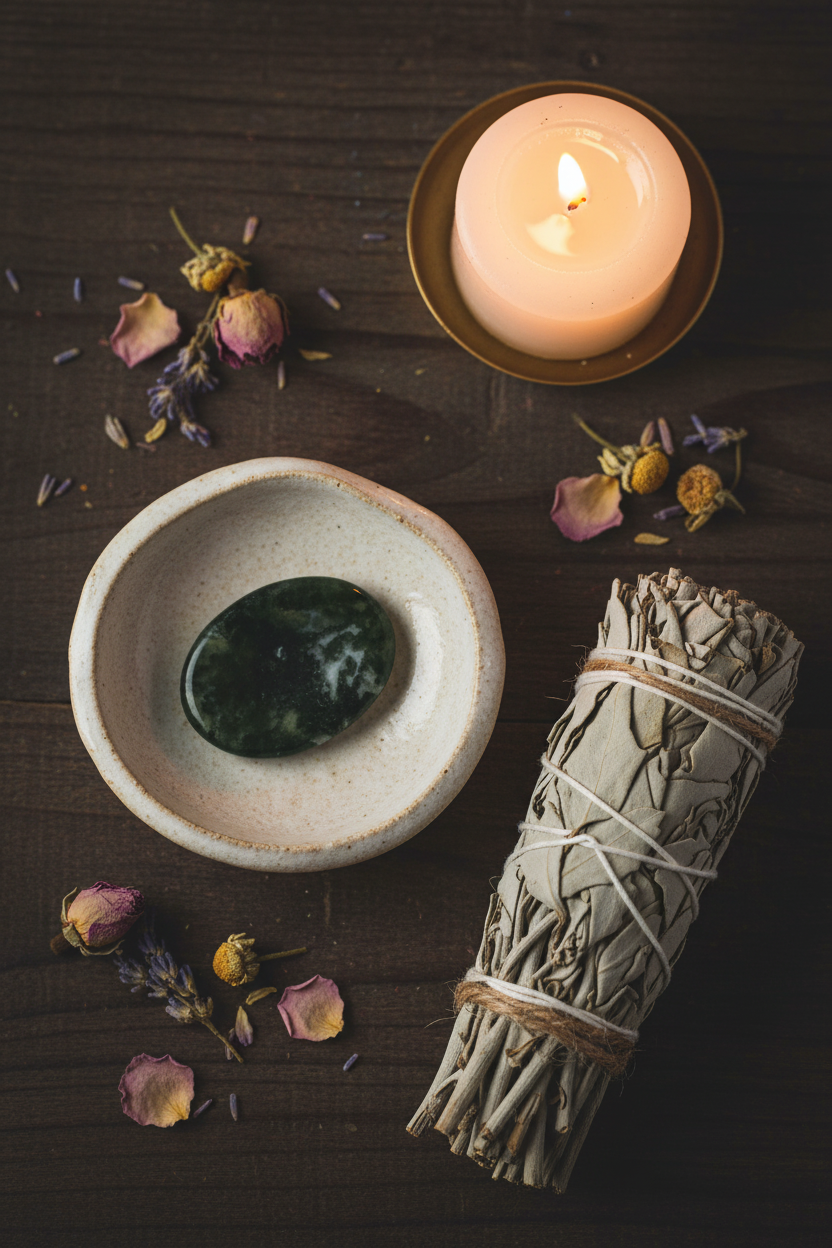
Moss agate looks like it has plants frozen inside it. The branching green patterns that give the stone its name are not moss at all; they are dendritic mineral inclusions, chlorite or manganese or iron oxides locked into translucent chalcedony in shapes that imitate living vegetation.
The resemblance is so strong that medieval English folk magic made it the gardener's stone. This is the pocket-sized version of a very old tradition: about 1.5 inches, polished smooth, sized for thumb work.
Key Features of This Moss Agate Worry Stone
Polished natural moss agate. Smooth on every face for sustained thumb work, with the dendritic patterns visible through the stone.
About 1.5 inches. Sizes and inclusion patterns vary, as with all natural stone.
The gardener's stone. Carried by farmers and gardeners in English folk magic for planting, growing, and the long work of tending.
Product Details
- Polished natural moss agate, approximately 1 to 1.75 inches
- Material: chalcedony with dendritic inclusions of chlorite, manganese, or iron oxides
- Durable: Mohs 6.5 to 7, and water-, salt-, and sun-safe, unlike calcite or selenite
- Natural stone: every piece is patterned differently
- SKU: GWMA
The Spiritual Significance
Moss agate has one of the most legible folk traditions of any stone, because the moss-like patterns made the connection obvious to anyone who picked one up. Cunningham seats it under Mercury and the element of Earth, naming gardening, riches, happiness, and long life among its powers, which places it on Wednesday. In medieval English folk magic it was the gardener's stone, carried by those who worked the ground, and the old lapidaries record it being tied to the horns of plowing oxen at the start of the season.
The name goes back further. Greek lapidary tradition called all agate achates, after the river in Sicily where the Greeks first quarried it, and Theophrastus described it around 300 BCE. Modern practice keeps moss agate for new beginnings, particularly the kind that grow slowly: a garden, a business, a self. Hall places it at the heart. The worry-stone form is older than any of it; smooth palm-held stones turn up across a great many folk traditions, for the plain reason that a thumb on a smooth surface settles a person.
How To Use This Moss Agate Worry Stone
- Cleanse it however suits you; moss agate is hard and tolerates smoke, water, salt, sun, sound, or a night in a planter.
- Carry it in a pocket and find it with your thumb when you need it: at a stoplight, in a queue, before a difficult conversation.
- Hold it over seeds before planting, or keep it on the windowsill above the kitchen herbs.
- Set it on a written intention for something you are growing slowly, and check it daily.
- Expect it to pick up marks. A carried stone should look carried.
Pairs Well With
- Pink Calcite Worry Stone: the sibling stone for heart work, where this one carries earth.
- Selenite Worry Stone: the sibling stone for the lunar register.
- Green Aventurine Worry Stone: another green stone shaped for the thumb.
- The Witch of the Forest's Guide to Folklore Magick: a green-witch reading for the tradition behind it.
- White Sage Smudge Stick: the arrival cleanse.
Frequently Asked Questions
Is that actually moss inside the stone?
No. The branching patterns are dendritic mineral inclusions, chlorite, manganese, and iron oxides, that crystallized into branching forms while the chalcedony was forming. The resemblance fooled lapidaries for centuries, which is much of why the plant-magic tradition attached to it.
Why is it called the gardener's stone?
Because English folk magic gave it to the people who worked the ground: carried for planting, growing, and harvest, and by some accounts tied to the horns of plowing oxen at the start of the season. The visual connection made it immediate.
What are its correspondences?
Cunningham seats moss agate under Mercury and the element Earth, naming gardening, riches, happiness, and long life, which puts it on Wednesday. Hall places it at the heart.
How do I cleanse it?
However you like. Moss agate is hard, quartz-family stone and tolerates smoke, moonlight, sun, running water, salt, sound, or burial in a planter.
Will it scratch or chip?
It is hard enough for daily pocket carry alongside keys and change. It can chip if dropped on tile, since chalcedony fractures conchoidally, but it is far more durable than calcite or selenite.


Spend $50 & enjoy guilt-free shopping with our free shipping on all orders. Get your favorite items delivered right to your door at no extra cost.