



Plentiful Earth | Spiritual Store
Mojo Wish Bean (Vicia faba), 2 oz
Mojo Wish Bean (Vicia faba), 2 oz- Primary Spiritual Use: Money
- Secondary Spiritual Use: Luck
- Element: Earth
- Planet: Jupiter
- Zodiac: Sagittarius, Pisces
- Chakra: Root
- Ruling Day: Thursday
- Tradition: Hoodoo
- Intent: Luck, Money, Abundance
Couldn't load pickup availability
The fava bean has been carried for luck across the Mediterranean for at least two thousand years. Romans threw them behind the back to honor ancestral spirits. Italians have carried them in pockets and purses as money-drawers for centuries. Italian-American immigrants brought the fava-bean tradition into New Orleans and the wider American South, where it joined the older West African and Caribbean roots of hoodoo to become one of the lucky beans of the conjure-supply tradition. This is that bean.
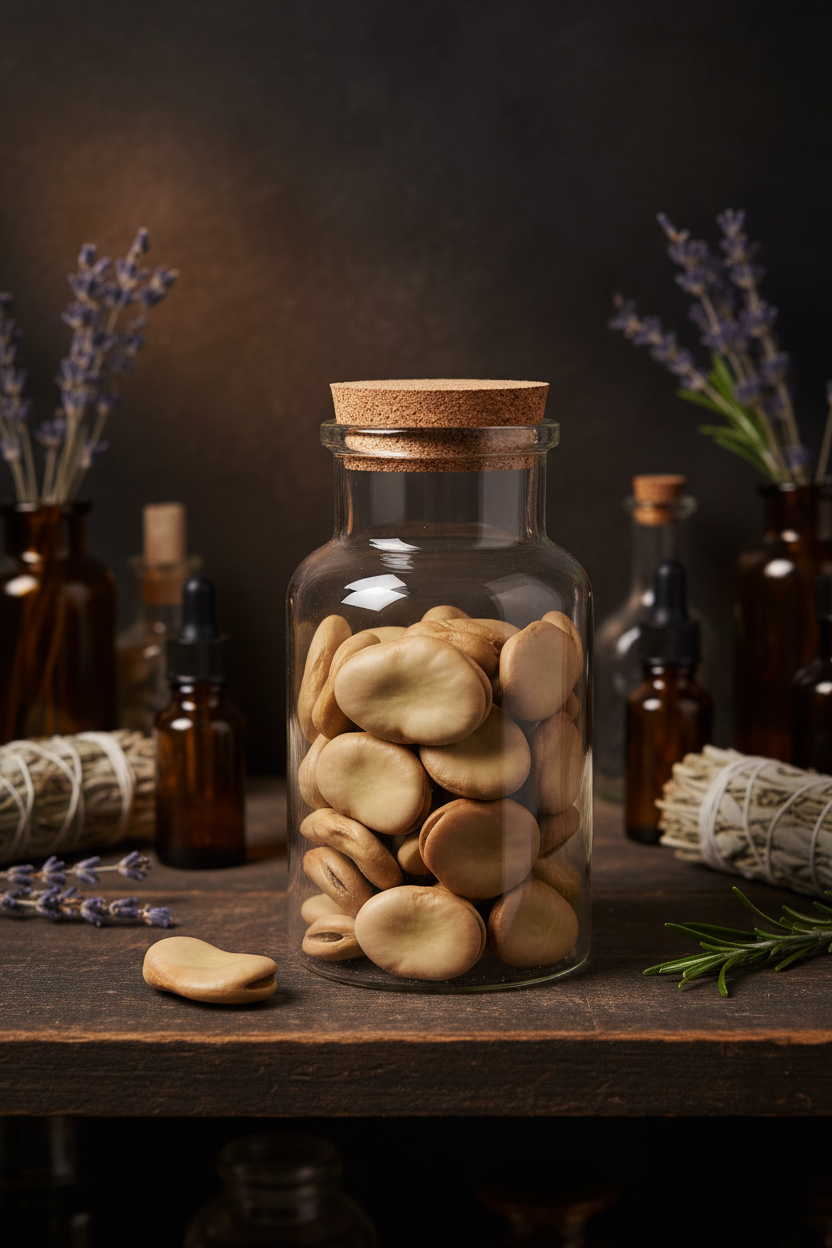
Mojo wish bean (Vicia faba) is the single-species version of the wishing bean tradition: 2 oz of dried fava beans, supplied loose for practitioners who want to work specifically with this bean's particular tradition. Where a general wishing bean blend covers any wish, this is the bean to reach for when you want the fava bean's long history of luck and prosperity working on your behalf.
Key Features of Mojo Wish Bean (Vicia faba)
Single-species fava bean, the Italian-American lucky bean. Where a wishing bean blend covers many intentions, this is the bean species that carries the Italian and Italian-American lucky-bean tradition specifically. Pull one when you want the fava bean's particular history doing the work.
Two ounces of dried beans, supplied loose. Enough beans for many separate workings, a small dedicated mojo bag, a community share among working partners, or for the St. Joseph's Day altar where blessed fava beans are traditionally distributed.
The hoodoo crossover bean. Carried into American conjure-supply tradition through Italian immigrant communities (especially in New Orleans). Practitioners now use the fava bean across hoodoo prosperity work, mojo bags, and altar work, with the same lucky-bean associations the tradition has always carried.
Product Details
- Weight: 2 ounces
- Contents: dried Vicia faba (broad bean / fava bean) seeds
- Form: loose dried beans
- Color: pale tan to brown, large flat kidney-shape
- Use: hoodoo prosperity work, Italian and Italian-American lucky-bean tradition, mojo bags, ancestor altar offerings, St. Joseph's Day altars
- Source: prepared by Plentiful Earth as part of the in-house ritual-supply line
- Note: not for eating; for ritual and altar use only
Ingredients
Dried Vicia faba (broad bean / fava bean) seeds. Nothing else. The beans are supplied as a ritual material for folk-magic and altar work; not for ingestion.
The Spiritual Significance
The fava bean carries one of the longest documented lucky-bean traditions in Mediterranean folk practice. In ancient Rome, dried favas were thrown behind the back during the Lemuria festival to honor and placate the dead. In Italian folk magic, a fava bean carried in a pocket or purse is a money-drawer; in some traditions the bean is kept until the wish is granted, then released back to the earth. The St. Joseph's Day tradition on March 19 hands out blessed dried fava beans across Italian and Italian-American Catholic communities, marking the day the saint was credited with relieving a famine in Sicily.
When Italian immigrants brought their folk-magic traditions to New Orleans and the wider American South, the fava bean entered the hoodoo conjure-supply tradition. Today the bean is used across folk-magic lineages for prosperity, ancestor work, and any working that asks for the fava's particular history of luck. Single-species supplies like this 2 oz allow practitioners to work with the specific tradition rather than a generalized wishing bean blend.
How To Use Mojo Wish Bean (Vicia faba)
- Cleanse the bean according to your tradition: smoke, moonlight, salt, or a moment of focused intention. Some practitioners skip cleansing because they want the bean's own history unaltered.
- Hold a single bean in both hands and name your working. The fava bean's traditional uses are prosperity, luck, money-drawing, and ancestor connection; speak your working in the bean's tradition for the deepest alignment.
- Carry the bean. Italian tradition is in the pocket or purse; hoodoo tradition is in the mojo bag with other working materials. Both work; choose what fits your practice.
- Tend the bean. Some practitioners speak to the bean daily; others simply trust it to do its work. Either is in tradition.
- Close the working when the wish lands. Italian tradition is to return the bean to the earth (bury or release outdoors); hoodoo tradition allows for crossroads or moving water. Walk away without looking back.
The 2 oz supply holds enough beans for many separate workings. Many practitioners maintain a small dedicated jar of favas on the altar for ongoing draws.
Pairs Well With
- Traditional Mojo Wishing Beans: the sealed tube of a curated wishing bean blend. Where this Vicia faba supply gives you one bean species for focused tradition work, the blend tube gives you many bean species for flexible wishing across any intention. Many practitioners keep both.
- Purple Velveteen Mojo Bag, 3" x 4": the classic mojo bag for carrying a fava bean and other lucky-prosperity materials. Purple is the traditional color for spiritual work and ambition; the bag holds the bean alongside a personal token and other charms to build a working mojo.
- Magnetic Sand (Lodestone Food): a traditional hoodoo material for pulling toward what you want. Sprinkle a pinch onto a fava bean or into a mojo bag with the bean to add magnetic drawing force to the prosperity working.
- Money Aromatic Jar Candle: a money-drawing candle to burn alongside a fava-bean prosperity working. The flame and the bean work together: the candle calls the energy in, the bean carries the wish forward.
- Sticks, Stones, Roots & Bones by Stephanie Rose Bird: a foundational guide to hoodoo, mojo, and conjure work with herbs and natural objects. Practitioners deepening their bean and mojo bag practice will find this an excellent companion.
Frequently Asked Questions
What's the difference between this Vicia faba bean and the Traditional Mojo Wishing Beans blend?
This is a single-species supply: 2 oz of dried Vicia faba (fava beans) for practitioners who want to work specifically with this bean's tradition. The Traditional Mojo Wishing Beans blend is a small sealed tube with a curated mix of beans for general wishing work. Choose Vicia faba for focused Italian-American or hoodoo lucky-bean work; choose the blend for flexibility across any wish.
What kind of bean is Vicia faba?
Vicia faba is the broad bean, also called the fava bean. It is an ancient Mediterranean and Middle Eastern crop, cultivated since the Neolithic period. The dried bean is large, flat, and kidney-shaped, pale tan to light brown in color. Distinct from the more common pinto, kidney, or navy beans, fava beans have a particular history as a folk-magic lucky bean.
What's the St. Joseph's Day tradition?
St. Joseph's Day on March 19 is celebrated across Italian and Italian-American Catholic communities. The story holds that St. Joseph was credited with relieving a famine in medieval Sicily during which fava beans were the surviving crop. Today blessed fava beans are distributed at St. Joseph's Day altars; recipients keep one as a year-round prosperity charm. The folk-magic and Catholic devotional traditions overlap here.
Can I plant these beans?
The beans are supplied for ritual use rather than for gardening. They may or may not still be viable for planting depending on age, drying conditions, and handling. For garden-quality seeds, source from a seed supplier. For the working tradition's purposes, the bean's ritual function is what matters and viability is not relevant.
How should I store the beans?
Sealed and dry, in a cool dark spot. Fava beans keep well for years stored this way. Avoid humidity, which can introduce mold; avoid bright light, which fades the bean and dries it past usefulness. A glass jar or sealed bag works well.
Are these safe to handle?
Yes, completely. The beans are safe to carry, place on altars, sew into mojo bags, and handle freely. They are supplied for ritual use rather than for eating; people with a family history of fava bean sensitivity (favism, related to G6PD deficiency) should know that this is only relevant to eating the beans, not to handling them.


Spend $50 & enjoy guilt-free shopping with our free shipping on all orders. Get your favorite items delivered right to your door at no extra cost.