



Plentiful Earth | Spiritual Store
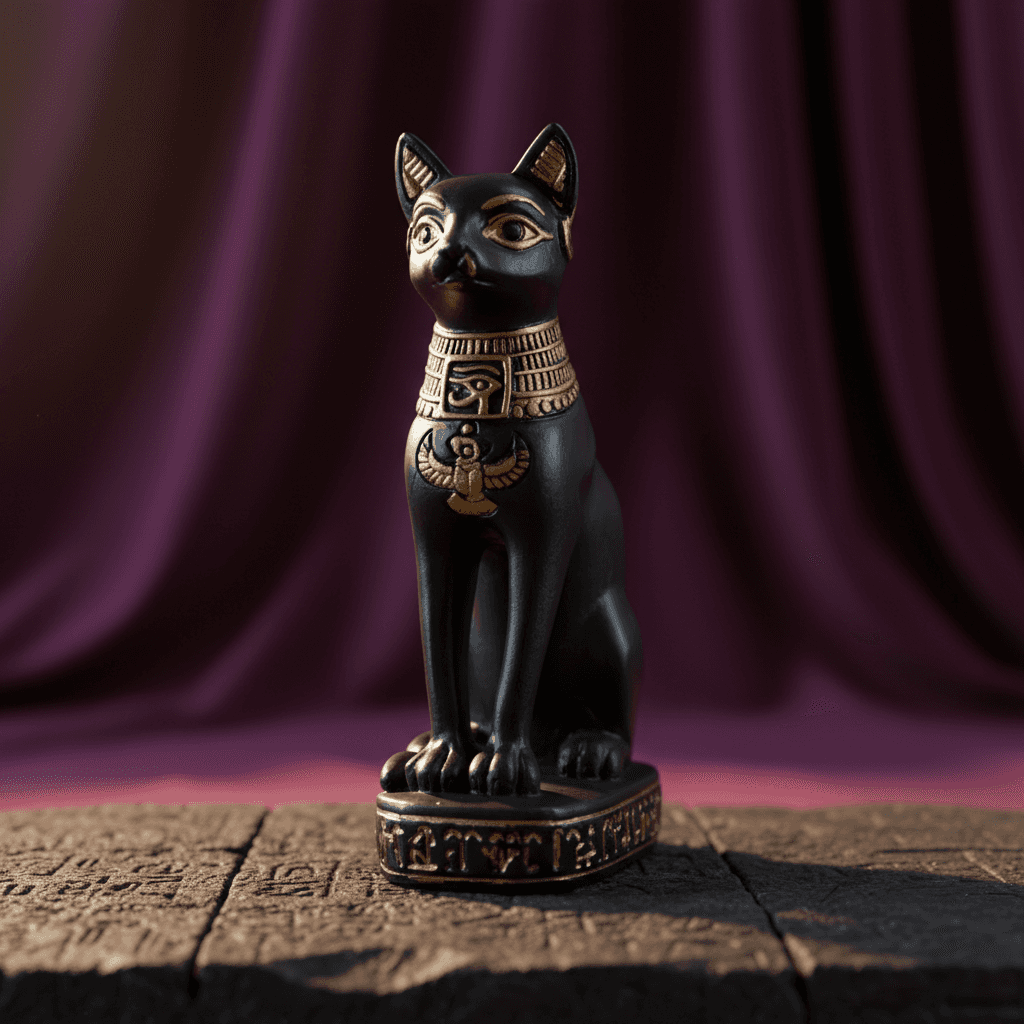
Petite Bastet Statue, 3 Inch, Egyptian Cat Goddess Figurine
Petite Bastet Statue, 3 Inch, Egyptian Cat Goddess FigurineOrders over $50 ship free in the U.S.Other rates are calculated at checkout.
Couldn't load pickup availability
- Primary Spiritual Use: Protection
- Secondary Spiritual Use: Healing
- Size: 3 in
- Material: Resin
- Element: Fire
- Planet: Mars
- Zodiac: Aries
- Chakra: Root
- Ruling Day: Tuesday
- Tradition: Egyptian revival
- Intent: Protection, Healing
Long before cats were beloved companions, they were sacred. In ancient Egypt, the cat was not merely an animal but a living embodiment of divine protection: swift, watchful, graceful in both nurturing and fierce defense. Bastet, the cat goddess of ancient Egypt, held dominion over home, family, fertility, and the protective fire that keeps darkness at bay. She was one of the most widely venerated deities of the Egyptian pantheon, her cult centered at Bubastis in the Nile Delta, and her image, a seated cat or a woman with a cat's head, appeared on amulets, stelae, and temple walls across millennia of continuous worship.
This 3" resin Bastet statue brings that presence to your altar or sacred space in a form that is both compact and finely realized. The satin black finish with gold highlights captures the particular quality of Bastet's iconography: the sleek, dignified cat whose beauty carries an unmistakable undercurrent of power. At three inches tall, she is altar-sized in the best sense, substantial enough to anchor a devotional space without overwhelming it, small enough to travel with you or sit quietly on a shelf where only you know what she means.
Whether you are working within a Kemetic reconstructionist practice, an eclectic Pagan path that includes Egyptian deities, or simply feel the pull of Bastet's particular combination of warmth and fierce protection, this statue can serve as the physical focal point of your relationship with her. A deity image is not magic by itself; it is an invitation. The presence you are looking for is already there.
Key Features
Satin black finish with gold highlights: iconographically appropriate and visually precise. Black and gold are the colors most associated with the Egyptian divine in both ancient art and modern devotional practice. Black was the color of the fertile Nile soil, of renewal, and of the underworld's regenerative darkness; gold was the color of the gods' skin in Egyptian cosmology. A Bastet statue rendered in these colors is not merely elegant; it speaks the visual language of the tradition she comes from.
3" height: true altar scale. This size is deliberately practical. It fits naturally in front of a candle on an altar, on a windowsill beside offerings, or in a dedicated deity shrine. It is large enough to hold genuine presence as a focal point, and small enough to position precisely where you need her. Devotional images earn their place through use, and this one is sized to be used every day rather than displayed behind glass.
Resin construction: durable and detail-holding. The resin material holds the fine detail that gives this statue its character, the ear shape, the seated posture, the proportions that make it unmistakably Bastet rather than a generic cat figure. Resin is also more resilient on an active altar than fragile materials, standing up to incense smoke, occasional oil anointing, and the general life of a working sacred space.
Product Details
- Height: 3"
- Material: Resin
- Finish: Satin black with gold highlights
- Form: Seated cat (Bastet in her cat form)
- Use: Deity statue, altar focal point, sacred space decor
The Spiritual Significance
In Kemetic practice, which seeks to honor the deities of ancient Egypt in ways informed by historical scholarship and reconstructed tradition, a deity statue (called a cult image in academic Egyptology) serves as a physical locus for the deity's presence. You can use this Bastet statue as the center of a dedicated shrine or altar, making daily offerings of water, food, flowers, or incense as a consistent devotional practice. Kemetic practitioners typically offer food or drink in the morning, allowing the deity to receive the spiritual essence of the offering before the practitioner consumes the physical form. This practice of consistent, respectful offering is one of the most direct forms of relationship-building with Bastet in the reconstructed Egyptian tradition.
You can also invoke Bastet's protective aspect in eclectic Pagan and Wiccan practice when working protection spells for the home, for children, or for vulnerable loved ones. Light a candle before the statue, call Bastet's name and attributes aloud, and ask specifically for her protection of the person or place you are concerned about. Bastet's protective energy in the Egyptian tradition was oriented toward the household and those within it; she was a guardian against disease, evil spirits, and harm to the family. Calling on her for this purpose honors the actual tradition she comes from rather than importing her into a context that would not have recognized her.
How To Use
As a devotional altar focal point: Place the statue at the center of a dedicated altar space. Before her, you might arrange a small offering bowl with water or milk (traditional Bastet offerings in ancient Egypt), a flower, or a piece of incense. Face her toward you, or toward the east (the direction of sunrise in Egyptian cosmology). Begin each day by acknowledging her presence, even briefly, rather than only approaching the altar when you need something.
Anointing for consecration: Before placing the statue in its permanent position, you might choose to lightly anoint it with a small amount of olive oil or an oil associated with Bastet (frankincense, myrrh, and kyphi are all historically attested sacred scents in ancient Egyptian practice). Hold the statue in both hands, state aloud that you are inviting Bastet's presence into this image, and place it in its designated spot with intention. This consecration is not required, but it marks the beginning of your relationship with the statue as a sacred object rather than a decorative one.
As a protection focal point: When you need to call on Bastet's protective power specifically, light incense before the statue (frankincense is a particularly appropriate choice given its long association with the Egyptian divine), speak your request clearly and with respect, and leave an offering afterward as thanks. Do not only approach Bastet when you need her; cultivate the relationship through consistent attention so that the request lands in a context of genuine connection.
For moon-phase working: Bastet was associated with the moon in some periods of Egyptian history, particularly in her solar and lunar duality aspects. You might choose to make a special offering at the full moon, clean the statue and refresh the altar, and spend time in quiet reflection or prayer. The new moon is a good time for setting new intentions under her protection.
Caring for the statue: Dust regularly with a soft cloth. If you anoint it, use oil sparingly and wipe away excess to preserve the finish. Incense smoke over time will give the statue a subtle patina; many practitioners consider this part of the object's living relationship with the altar rather than something to be removed.
Let your own experience of Bastet guide how you work with this image over time. A relationship with a deity is something that develops through consistency and attention, not through following a single prescribed method.
Pairs Well With
2¾" Bastet Ball Stand (for 50mm balls): Place a crystal ball in the Bastet stand alongside this statue to build a complete Bastet-centered altar space; the two pieces work together to create a layered devotional arrangement honoring both Bastet's feline form and her lunar associations.
Frankincense Incense Sticks, 16 pack: Burn frankincense before the statue during devotional practice or ritual; frankincense was among the most sacred substances in ancient Egyptian religious use and its scent creates an immediate olfactory link to the tradition Bastet comes from.
Crystal Balls Collection: Bastet's lunar associations make a crystal ball a natural complement on her altar; use one for scrying or simply as an offering of beauty and reflective light to the goddess.
Florida Water Cologne, 7.5 oz.: Lightly sprinkle Florida Water around your altar space to cleanse it before devotional work; its traditional cleansing and purification properties prepare the space for sacred presence.
Black Tourmaline Crystals Collection: Place black tourmaline at the corners of your altar to reinforce Bastet's protective energy with crystal protection; black tourmaline's grounding and shielding properties complement Bastet's role as a guardian of the home.
History & Occult Background
Bastet (also spelled Bast) was one of the most widely venerated deities of ancient Egypt, with a primary cult center at Bubastis (modern Tell Basta) in the eastern Nile Delta. Her worship is attested from the Old Kingdom period (approximately 2700 to 2200 BCE) onward, and her major festival at Bubastis was described by the Greek historian Herodotus in the 5th century BCE as among the most joyous and well-attended in Egypt, drawing enormous crowds by boat along the Nile. The Greeks identified her with their own goddess Artemis due to shared associations with the moon and protective hunting; Herodotus explicitly makes this equation.
In her earliest representations Bastet was depicted as a lioness or lion-headed woman, reflecting her fierce solar and protective aspects. Over time, particularly in the New Kingdom and later periods, she became increasingly associated with the domesticated cat rather than the lion, and her character shifted toward emphasizing the nurturing, playful, and protective qualities of the cat alongside her role as a guardian against evil and disease. She was considered a protector of the pharaoh and of households, a guardian against evil spirits and serpents (including the serpent Apophis, the enemy of the sun god Ra), and a goddess of fertility, music, dance, and the home. Cats in Egypt were treated with great reverence in part because of their association with Bastet; killing a cat, even accidentally, was punishable by death. When cats died they were often mummified and offered at Bastet's temple at Bubastis, and hundreds of thousands of cat mummies have been found at Egyptian archaeological sites.
Bastet's prominence in modern Western occult and Pagan practice developed largely in the 19th and early 20th centuries, as European fascination with ancient Egypt (Egyptomania) introduced Egyptian deities into Hermetic, Theosophical, and later Wiccan contexts. Bastet was adopted into the broader eclectic Pagan tradition where she sits comfortably alongside deities from many cultures as a goddess of protection, cats, home, and the moon. More rigorously, the modern Kemetic revivalist movements, particularly Kemetic Orthodoxy (the House of Netjer) founded by Tamara Siuda in the late 1980s, work to honor Bastet within a framework that draws directly from Egyptological scholarship and genuine historical religious practice. Both paths, eclectic and Kemetic reconstructionist, are represented among Bastet's contemporary devotees, and both deserve respect as distinct approaches to relationship with this ancient deity.
Frequently Asked Questions
Is this statue appropriate for Kemetic Orthodoxy or Kemetic reconstructionist practice? A resin statue can absolutely serve as a devotional image in Kemetic practice; the primary requirement is your intention and the consistency of your devotional relationship, not the material of the statue. In ancient Egypt, deity images were made from a wide variety of materials depending on the practitioner's means. If your practice follows a specific Kemetic lineage, consult any guidance from that community about how to properly introduce and consecrate a new cult image in your home shrine.
How do I properly welcome this statue into my space for the first time? One approach, drawing loosely on Egyptian precedent, is to perform a simple "opening of the mouth" style ritual: hold the statue before a lit candle, state Bastet's name and attributes aloud, breathe gently on the statue's face as a symbolic act of awakening, and make a first offering (water, milk, or frankincense smoke are all historically appropriate). This is not a requirement, but it marks a beginning and sets an intention for the relationship.
Can I work with Bastet if I practice a different tradition, such as eclectic Wicca? Yes, with an important caveat about accuracy. Bastet is a real deity from a living-to-reconstructed religious tradition with a rich historical record. When incorporating her into eclectic practice, it is worth taking the time to understand who she actually is in her own tradition, rather than simply assigning her correspondences that feel convenient. Bastet's actual domain, protection, cats, home, fertility, music, the fierce warmth of a mother cat, is specific and interesting; working with her accurately enriches the practice more than working with a vague "cat goddess" concept would.
What offerings are traditionally appropriate for Bastet? Historically attested offerings in ancient Egyptian practice include water, wine, beer, milk, bread, meat, flowers, oils, and incense (particularly kyphi, a complex Egyptian temple incense, as well as frankincense and myrrh). In modern practice, many devotees offer what they sense she would appreciate: a dish of milk or cream, flowers (particularly red, which appears in some Bastet iconography), catnip or other cat-related items, music (she had strong associations with music and dance in ancient Egypt), and simple daily acknowledgment. Consistency matters more than elaborateness.
How do I cleanse this statue if I feel the energy needs refreshing? Pass it through frankincense smoke, wipe it gently with a cloth dampened with diluted salt water (and dry it immediately), or set it in the light of the full moon overnight. Avoid submerging resin in water for extended periods as this can affect the finish. Before cleansing, it is courteous, in Kemetic practice, to ask the goddess to step back temporarily from the image while you clean it and then invite her to return.
Does the statue represent Bastet in cat form or human form? This statue depicts Bastet in her cat form, a seated cat, rather than her more formal representation as a woman with a cat's head holding a sistrum and aegis. Both forms are authentic to the ancient tradition; the purely feline form is among her earliest representations and remains among the most widely recognized. For an altar, the seated cat form is intimate and approachable while still conveying the complete dignity of the goddess.

Spend $50 & enjoy guilt-free shopping with our free shipping on all orders. Get your favorite items delivered right to your door at no extra cost.