



Plentiful Earth | Spiritual Store
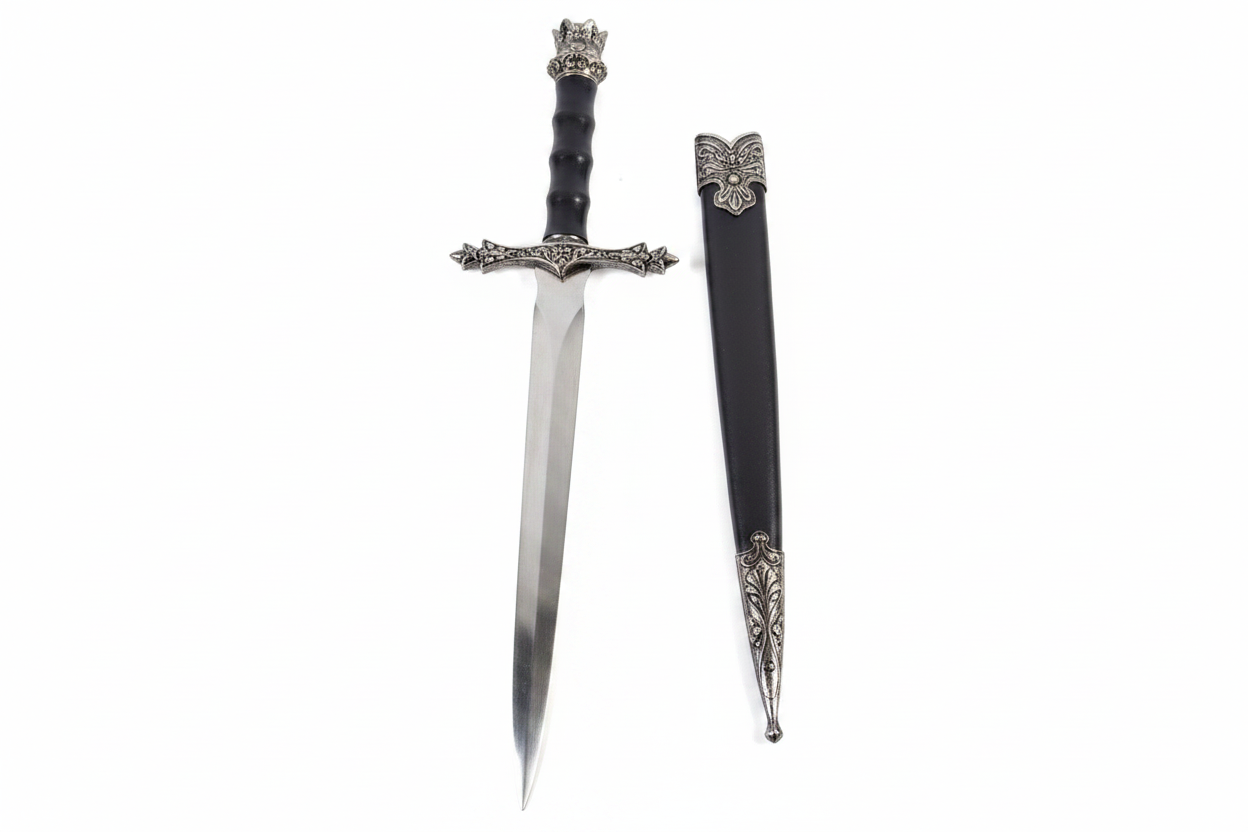
Medieval Ceremonial Sword, 12 Inches
Medieval Ceremonial Sword, 12 Inches- Primary Spiritual Use: Protection
- Secondary Spiritual Use: Banishing
- Size: 12 in
- Material: Metal blade, black plastic grip, plastic sheath
- Shipping Weight: 1.0 lb
- Element: Fire
- Planet: Mars
- Zodiac: Aries, Scorpio
- Chakra: Solar Plexus
- Ruling Day: Tuesday
- Tradition: Wiccan
- Intent: Protection, Banishing, Power
Couldn't load pickup availability
Works Well With


A Medieval Ceremonial Sword is not a weapon, and it is not meant to cut anything you can touch. In ritual practice the blade is a tool of authority and direction: you use it to draw the circle, to point and move energy with intention, and to command a working with the whole weight of your will behind the gesture. This 12 inch sword carries that presence in the hand, a longer reach and a more formal feel than the small blade most witches start with.
The sword belongs to the same family of edged ritual tools as the athame, the witch's personal knife, but it speaks in a louder voice. Where an athame is intimate and individual, a sword is the tool of the circle itself, the blade you reach for to cast a working space, to take an oath, or to stand at a threshold. Its medieval styling and stainless steel blade make it as much an altar centerpiece as a working tool.
Whether you keep it on your altar, carry it to the quarters as you cast, or hold it through a banishing, the sword asks you to mean what you do. Pick it up with intention, set it down with respect, and let its weight remind you that you are the one directing the work.
Key Features
A tool of direction, not of cutting. A ritual sword is used to point, draw, and command rather than to slice. You cast the circle with it, direct energy along the blade, and lend authority to a working. The practical cutting in a witch's kit belongs to the boline, never to the sword.
A 12 inch blade with real presence. At a foot long, this sword has more reach and gravity than a small athame, which is part of the point. The added length makes circle casting feel deliberate and ceremonial, and the medieval styling gives it a strong place at the center of an altar.
Stainless steel with Renaissance-inspired detailing. The blade is stainless steel with decorative medieval and Renaissance touches, built as a ritual and display piece rather than a functional arm. It looks the part on an altar and holds up to regular ceremonial handling.
Product Details
- Length: approximately 12 inches overall
- Blade: stainless steel with medieval and Renaissance-inspired detailing
- Type: decorative ceremonial and ritual sword, not a sharpened weapon
- Ritual use: circle casting, directing and commanding energy, banishing, and altar work
- Tradition: Wiccan and Western ceremonial blade practice
- Care and safety: a decorative ritual blade; handle with care, keep out of reach of children, and store it safely between workings
The Spiritual Significance
In Wicca and many forms of modern witchcraft, the sword is the grand tool of the cast circle. It does the same work as the athame, directing and shaping energy, but it carries the authority of the whole coven or working rather than a single practitioner. Traditionally it is used to draw the boundary of sacred space, to call and dismiss the quarters, to challenge at a threshold, and to take or witness an oath. Some lineages reserve the sword as a coven tool kept by the one leading the rite.
Western ceremonial magic uses the magic sword in a similar spirit, as an instrument of command and banishing, drawing protective circles and asserting the magician's will over the working. Witches differ on which element the blade answers to: many assign it to Air, others to Fire, and your own tradition will usually settle the question for you.
Above all the sword is a tool of intention made visible. Lifting a blade to cast a circle turns an inner act of will into a clear physical gesture, which is much of why edged tools have held a central place in ritual for so long.
How To Use
- Cleanse and dedicate it first. Before its first working, pass the blade through cleansing smoke or wipe it with a little Florida Water, then state plainly what you intend the sword to be and do in your practice.
- Cast the circle. Hold the sword out and walk or turn your space, picturing a line of energy running down the blade and out from its tip to draw the boundary of your sacred circle.
- Call and dismiss the quarters. Use the point to salute or trace your chosen symbol toward each direction as you call the elements in, and again to release them when the rite is done.
- Direct and banish. Point the blade to send energy where you intend it, or use a firm outward sweep to banish and clear unwanted influence from your space or working.
- Close with respect. When the rite ends, thank the work, wipe the blade if it needs it, and store the sword safely. Many practitioners keep their ritual blades wrapped or set apart from everyday objects.
Pairs Well With
Medieval Boline: The cutting knife the sword never is. Where the sword directs energy, the boline does the practical work of cutting cords, herbs, and materials for a spell.
Cast Iron Cauldron Smudge Pot: A core altar vessel to set beside the blade. Burn cleansing herbs in it, hold salt or water for your circle, or contain a small working flame.
Black Witch Candle, 8 Inches: A black candle for the protective and banishing rites the sword leads. Light one at the altar or the quarters as you cast and clear your space.
White Sage Kit Smudge: Pass the blade through cleansing smoke before and after ritual to clear it, a simple way to keep a working tool ready for use.
Florida Water Cologne, 7.5 oz: Wipe the blade and your altar with a little Florida Water to consecrate and refresh them, a traditional liquid counterpart to smoke cleansing.
History & Occult Background
The ritual sword reaches modern witchcraft through Western ceremonial magic. In the Solomonic grimoire tradition and the later Hermetic Order of the Golden Dawn, the magic sword was a tool of authority and defense, used to command spirits, banish hostile forces, and trace the protective circle within which the magician worked. The blade stood for the will sharpened to a point, directed outward with discipline.
When Gerald Gardner and the early Wiccan revival drew their rituals together in the mid twentieth century, they carried the sword and the athame into the new craft, where the athame became the individual witch's working knife and the sword often remained a coven tool for casting the circle. The medieval and Renaissance look of swords like this one nods to that older European pedigree, the centuries in which the blade was both a real instrument of power and a potent symbol of it. Lifting a ceremonial sword today places you in that long line of practitioners who used an edge not to wound but to mean.
Frequently Asked Questions
What is the difference between a ritual sword, an athame, and a boline? All three are witches' blades with different jobs. The sword and the athame both direct energy and cast the circle, with the sword being the larger, more ceremonial coven tool and the athame the personal one. The boline is the practical knife used for actual cutting.
What is a ceremonial sword used for? It is a ritual tool for casting and closing the circle, calling and dismissing the quarters, directing energy, and banishing unwanted influence. It is not used to physically cut anything. The sword lends weight and authority to a working rather than performing any practical task.
How do I use the sword in a ritual? Cleanse and dedicate it first, then use it to draw your circle by directing energy down the blade and out the tip. Salute the quarters with the point, sweep it outward to banish, and store it respectfully when the rite is done.
Is the blade sharp? This is a decorative ceremonial sword meant for ritual and display, not a sharpened weapon, and its work is symbolic rather than practical. Even so, treat it as you would any metal blade: handle it with care, keep it out of reach of children, and store it safely between workings.
Which element does a ritual sword represent? That depends on your tradition. Many Wiccans assign edged tools like the sword and athame to Air, while others place them with Fire. Both assignments have long-standing support, so follow whatever your own practice or lineage teaches rather than treating one as the single correct answer.
Where does the ritual sword tradition come from? The magic sword descends from Western ceremonial magic, including the Solomonic grimoires and the Golden Dawn, where it served as a tool of command and banishing. The mid-twentieth-century Wiccan revival carried it into modern witchcraft alongside the athame.


Spend $50 & enjoy guilt-free shopping with our free shipping on all orders. Get your favorite items delivered right to your door at no extra cost.