



Plentiful Earth | Spiritual Store
Kuan Yin (Guanyin) Bodhisattva Statue, 8 1/4 Inch
Kuan Yin (Guanyin) Bodhisattva Statue, 8 1/4 Inch- Primary Spiritual Use: Love
- Secondary Spiritual Use: Calming
- Material: Cold cast bronze, hand polished
- Shipping Weight: 4.0 lb
- Element: Water
- Planet: Moon
- Zodiac: Cancer
- Chakra: Heart
- Ruling Day: Monday
- Tradition: Buddhist devotional
- Intent: Peace, Calming, Connection
Couldn't load pickup availability
Works Well With


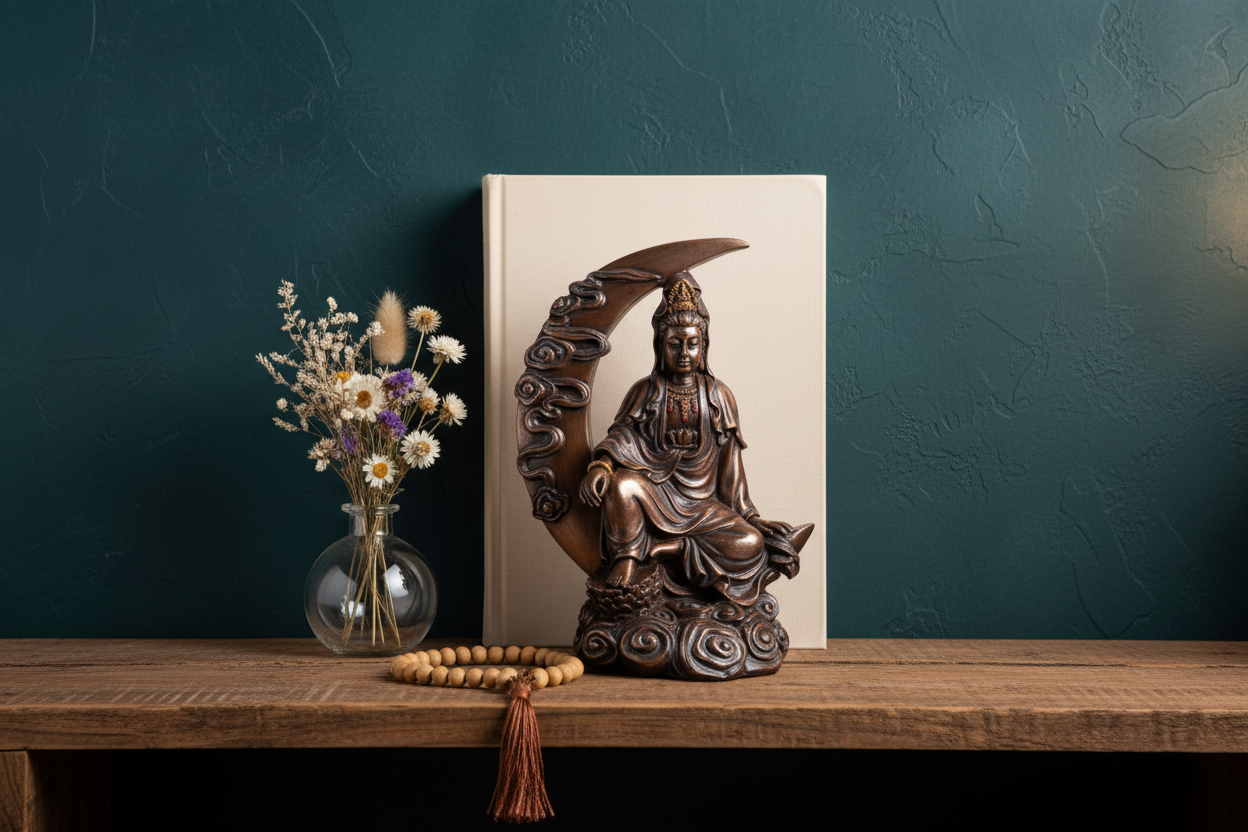
In Mahayana Buddhism, no figure draws more devotional attention than Guanyin, the bodhisattva of compassion whose name in Chinese (觀音, "Perceiver of Sounds") is a shortened form of Guanshiyin, the one who hears the cries of the world. This Kuan Yin statue, 8 1/4 inches of hand-polished cold-cast bronze, depicts her seated on a crescent moon with a bed of flowers at her feet, a contemporary devotional pose that blends traditional Buddhist iconography with the Marian crescent-moon imagery that has shaped some Western Kuan Yin sculpture since the seventeenth century. Place her on an altar, beside your meditation cushion, or wherever you want to be reminded that compassion is itself a practice. The statue makes a calm, central focal point for chanting Om Mani Padme Hum, sitting in stillness, or simply pausing.
Key Features of This Kuan Yin Statue
The compassion bodhisattva in cold-cast bronze. Hand-polished cold-cast bronze with a warm, weighty finish that reads richer than painted resin. Kuan Yin's robes flow in classical lines; her face holds the soft, downward gaze that traditional Chinese Buddhist iconography uses to convey karuna (compassion) and the willingness to perceive suffering.
Crescent moon with bed of flowers. The crescent-moon seat is not strictly traditional Chinese Buddhist iconography; it's a modern devotional pose that draws on cross-cultural Marian-Buddhist visual syncretism. The flowers beneath her feet read as a lotus reference, the traditional throne of bodhisattvas in Buddhist art.
Eight inches of altar presence. At 8 1/4 inches tall, she fits comfortably on a personal altar without dominating a shelf. The size works for daily devotional practice where she's a presence rather than a centerpiece, or for placement on a larger altar as part of a Buddhist or eclectic spiritual setup.
Product Details
- Height: 8 1/4 inches
- Material: cold-cast bronze (resin with bronze powder, hand-polished)
- Finish: warm bronze tone
- Pose: seated on a crescent moon, flowers at her feet
- Style: contemporary devotional sculpture, blends traditional Buddhist iconography with cross-cultural Marian-influenced moon imagery
The Spiritual Significance
Kuan Yin (Guanyin, 觀音) is the East Asian form of Avalokiteśvara, the bodhisattva of compassion in Mahayana Buddhism. In the Indian Buddhist tradition Avalokiteśvara was male; over centuries of transmission into China, the figure gradually feminized, and by the Song dynasty Guanyin was depicted predominantly as a compassionate mother figure. She remains masculine in Tibetan Buddhism as Chenrezig, of whom the Dalai Lama is considered an emanation. Other names: Kannon (Japanese), Gwan-eum (Korean), Quan Âm (Vietnamese).
In Buddhist doctrine she is the bodhisattva who has vowed to remain in the world until all beings are liberated. The Lotus Sutra dedicates its twenty-fifth chapter to her, describing her ability to manifest in whatever form serves those who call her name. Her central mantra in Vajrayana tradition is Om Mani Padme Hum, one of the most widely recited Buddhist mantras in the world.
In folk devotion she is invoked for protection of children (Songzi Guanyin, the child-giving form), safe travel, family harmony, and peace. She is venerated across Chan/Zen, Pure Land, Tendai, Tibetan, and folk Buddhist traditions across East Asia.
How To Use This Kuan Yin Statue
- Place her where you sit. Practitioners in many Buddhist lineages keep Guanyin near the meditation cushion or the household altar where daily devotional practice happens. The crescent-moon base is stable on flat surfaces; the bronze finish reads well in candlelight.
- Light incense as the formal greeting. Sandalwood, jasmine, or any traditional Buddhist incense works; the act of offering matters more than the specific scent. Bow once, breathe, and let her presence settle the room before you begin your sit.
- Chant Om Mani Padme Hum if it resonates. The six-syllable mantra of Avalokiteśvara is the most widespread in world Buddhist practice. Modern Western practitioners sometimes use it as a sitting mantra without formal initiation; in Tibetan tradition it carries deeper layered meanings, each syllable connecting to a perfection of practice.
- Make offerings on devotional days or whenever called. Fresh fruit, water, flowers, or a bowl of rice are traditional. Refresh perishable offerings; never let them rot on the altar.
- Care for the finish. Dust the cold-cast bronze with a soft dry cloth. Avoid commercial metal polishes; they're formulated for solid bronze and will damage the surface coating on a cold-cast piece.
Pairs Well With
- Compassion Reiki Charged Pillar Candle: A direct match for Kuan Yin's central attribute; burn it in front of the statue during a sit or during a working dedicated to opening compassion in your own practice.
- Buddha Stick 15 Pack: Incense for a Buddhist altar; light a stick to greet Kuan Yin before meditation or as part of a daily offering rhythm.
- Buddha Coin Pewter Pocket Stone: A small Buddhist-themed companion to carry out of the altar room when you want a tangible reminder of the practice during the day.
- White Selenite Generator: Selenite cleansing pairs naturally with devotional practice; the white color also resonates with Bai Yi Guanyin, the White-Robed form of Kuan Yin most familiar in Chinese Buddhist iconography.
- Off-White Crystal Singing Bowl, 10 Inches: A sustaining sound for chanting Om Mani Padme Hum or for marking the opening and closing of a sit; the off-white finish complements the warm bronze of the statue.
Frequently Asked Questions
Is this an archaeological reproduction of a specific historical Kuan Yin statue?
No. It's a contemporary devotional sculpture that blends classical Chinese Buddhist Guanyin iconography (her gaze, her robes, the lotus reference at her feet) with the crescent-moon imagery that entered Kuan Yin art through Marian-Buddhist syncretism. Treat it as a modern work pointing back to a tradition.
Do I need to be Buddhist to work with Kuan Yin?
No. Many practitioners outside any formal Buddhist lineage keep her on the altar as an emblem of compassion, and many of those traditions consider her presence helpful regardless of the practitioner's religious affiliation. Approach her with respect for the lineage she comes from; the relationship grows from there.
What does the crescent moon mean in her iconography?
The crescent-moon seat is mostly a modern syncretic touch. Traditional Chinese Buddhist Kuan Yin sits on a lotus or stands on waves or clouds. The moon entered Kuan Yin sculpture partly through Madonna imagery in post-seventeenth-century cross-cultural art and remains a recognizable contemporary motif.
How is Kuan Yin different from Avalokiteśvara, Chenrezig, and Kannon?
Same bodhisattva, different cultural transmissions. Avalokiteśvara is the Sanskrit/Indian original (masculine). Kuan Yin / Guanyin is the Chinese form (feminized over centuries). Kannon is Japanese, Gwan-eum is Korean, Quan Âm is Vietnamese, and Chenrezig is the Tibetan name (still masculine; the Dalai Lama is considered his emanation).
What offerings traditionally go on a Kuan Yin altar?
Fresh water, flowers (especially lotus or white blossoms), fruit, rice, and incense (sandalwood, jasmine, or any Buddhist incense). Buddhist offerings emphasize freshness and intention over expense or quantity. Refresh perishable offerings daily; remove anything wilted respectfully.
How fragile is the statue?
Cold-cast bronze is more durable than painted resin but less than solid metal. The finish can scratch if mishandled; the silhouette holds detail well. Wipe with a soft dry cloth and avoid metal polish or wet cleaning, which can dull the coating.


Spend $50 & enjoy guilt-free shopping with our free shipping on all orders. Get your favorite items delivered right to your door at no extra cost.