



Plentiful Earth | Spiritual Store
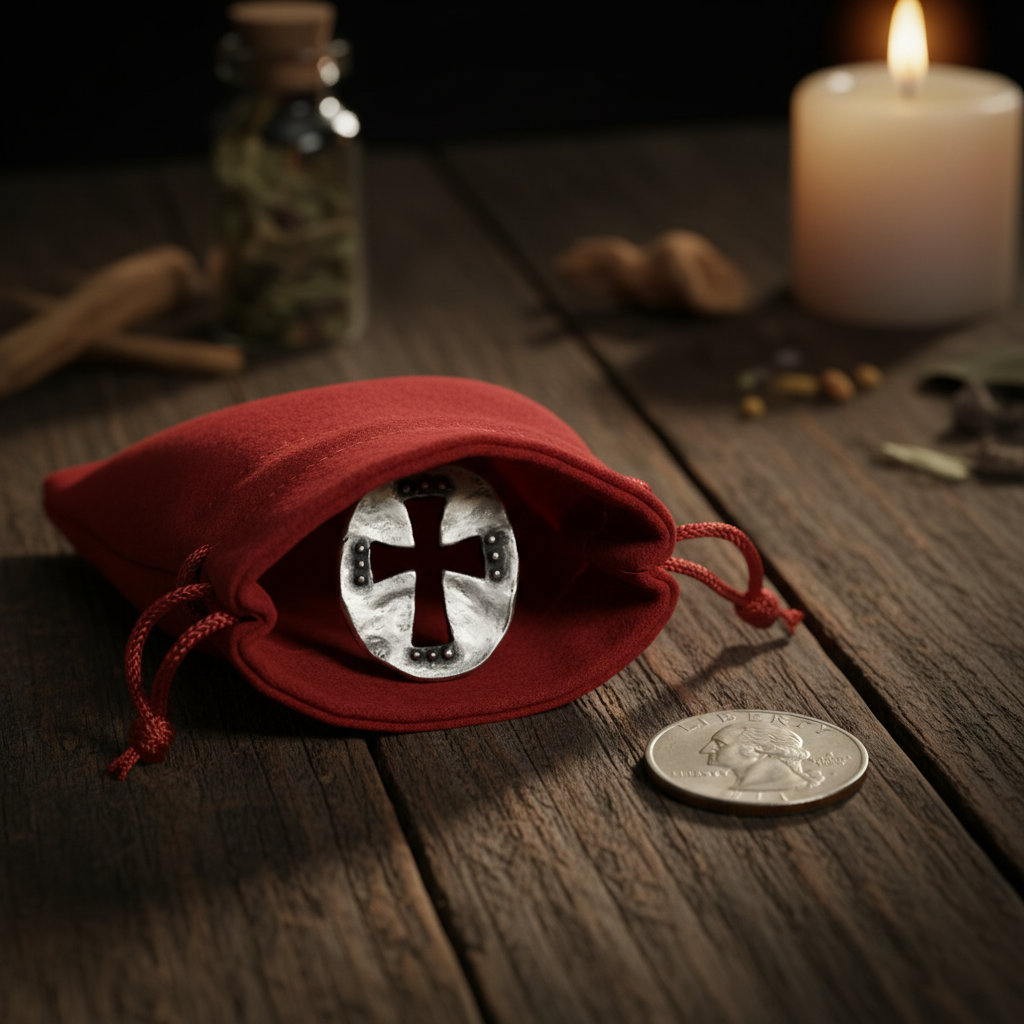
Cross Pewter Pocket Stone, 1" x 5/8"
Cross Pewter Pocket Stone, 1" x 5/8"- Primary Spiritual Use: Protection
- Secondary Spiritual Use: Connection
Couldn't load pickup availability
The cross is one of the oldest carrying-symbols a human hand can hold. Before it was pewter, it was wood worn smooth on a leather cord, palm folded and saved from one Easter to the next, iron tucked into a mojo bag at the back door. The shape itself, two lines meeting at a center point, gets read as protection, as devotion, as the place where heaven and earth touch, depending on the tradition holding it. This pewter pocket stone gives you a small, smooth version to carry. One inch by 5/8 inch, sized for a pocket, a palm, a coin purse, or a corner of the altar.
Key Features
- Pewter cast with a cut-out cross at the face, smooth on every edge for daily handling
- 1" x 5/8", the working size for pocket, palm, or mojo bag carry
- Lead-free pewter, made in the USA
- Tactile anchor for prayer, protection rituals, and grounding moments through the day
- Sits comfortably alongside Catholic folk practice, American Hoodoo, Mexican curandera tradition, and the older equal-armed crosses of pre-Christian Europe
Product Details
This pocket stone is cast from lead-free pewter in the United States. The face shows a Latin cross cut clean through the metal, so the symbol reads by touch as well as by sight. The reverse is plain. Dimensions are 1 inch tall by 5/8 inch wide, and the weight is enough that you will feel it in a shirt pocket without it being heavy enough to drag. Like all pewter, it develops a soft patina over years of handling, which most carriers consider part of its character.
Spiritual Significance
The cross predates Christianity by a wide margin. Equal-armed crosses turn up on Bronze Age artifacts across Europe, in Mesoamerican codices, and on Native North American ceremonial objects, often read as the four cardinal directions or as the meeting of celestial and earthly planes. With Christianity, the Latin cross, with its lengthened lower arm, became the central devotional symbol of the faith, and a parallel practice of carrying small crosses on the body developed alongside more formal devotional objects like rosaries and scapulars.
In folk Catholic practice across Mexico, the American South, southern Italy, and the Philippines, small crosses are carried as protective talismans, blessed in churches, and used in the sign of the cross over food, doorways, and the body. The Spanish practice of santiguar, blessing oneself or a child with a small cross, traveled through colonial Catholicism and is alive in curandera traditions today.
In American Hoodoo, a separate tradition with African roots and complicated Christian overlays, crosses appear in uncrossing work, in protection mojo bags, and at the four corners of an altar. The crossroads itself, where two roads meet at a right angle, holds its own weight in the tradition.
Whichever lineage you carry this cross into, the pocket-stone form is a modern continuation of a very old practice: small, smooth, concealable, reachable, passable from hand to hand.
How To Use
There is no single right way to carry a cross. A few practices that map to real traditions:
In Catholic and Christian folk practice, slip it in your pocket each morning and reach for it when you want to pray, especially in places or moments where a more visible devotional object is not appropriate. Some practitioners make the sign of the cross over the stone before pocketing it. Others have a small home blessing said over it by a priest or family elder.
In protection work, set it on your altar with the cross-side up and circle it with whatever cleansing agents your tradition uses, such as Florida Water, holy water, blessed salt, or a passing of incense smoke. Carry it afterward.
In Hoodoo uncrossing work, the stone can serve as a focal point during the working, paired with the appropriate herbs and oils for the specific tradition you practice. Some workers keep it in a flannel mojo bag with petition paper.
For grounding through the day, slip it in your pocket on the way out the door and find it again at a stoplight, in line at the grocery, in the long minutes before a difficult conversation. The thumb finds the cut-out, you reconnect with whatever tradition you are carrying, and you continue.
Pairs Well With
- Angel Worry Stone, Pewter Pocket Stone, a sibling pewter pocket stone for guardian-angel devotional carry
- Florida Water Cologne, 7.5 oz, the Murray & Lanman classic used across Catholic espiritismo and Hoodoo for cleansing and blessing the stone before carry
- 7 Archangels Pillar Candle, for altar work that calls on the named archangels of Catholic and Jewish-rooted angelology
Frequently Asked Questions
Is this a Christian object?
The Latin cross on its face reads most directly as Christian, and many people carry it for that reason. The shape itself has older and broader meanings and is welcome in folk magic traditions, protection workings, and personal devotion outside of any single faith. Carry it for the tradition that is yours.
What is the difference between this and the Angel, Buddha, Hamsa, and Goddess pewter pocket stones?
They are all the same form factor, 1" x 5/8" lead-free pewter, with different symbols cut into the face. The Angel reads as guardian-angel devotional carry. The Buddha Coin reads as Buddhist mindfulness and the merit-keeping of phra khruang amulet practice. The Hamsa reads as the Levantine and North African protective hand, with strong evil-eye associations. The Goddess reads as divine-feminine devotion. The Cross is the one that anchors to Christian and Christian-adjacent folk traditions most clearly.
Can I get it blessed?
Yes. Many Catholic parishes will bless a small devotional object at the end of Mass if you ask the priest afterward. Folk practitioners in Hoodoo and curandera traditions bless objects in their own ways. The pewter itself does not care which blessing you use.
Will it tarnish?
Pewter develops a soft gray patina over years of handling, which most carriers consider part of its character. If you want to keep the surface bright, an occasional polish with a soft cloth is enough. Do not use silver polish, which is too harsh for pewter.
Is the pewter safe to handle?
Yes. The stone is cast in lead-free pewter, so daily skin contact is fine.


Spend $50 & enjoy guilt-free shopping with our free shipping on all orders. Get your favorite items delivered right to your door at no extra cost.