



Plentiful Earth | Spiritual Store
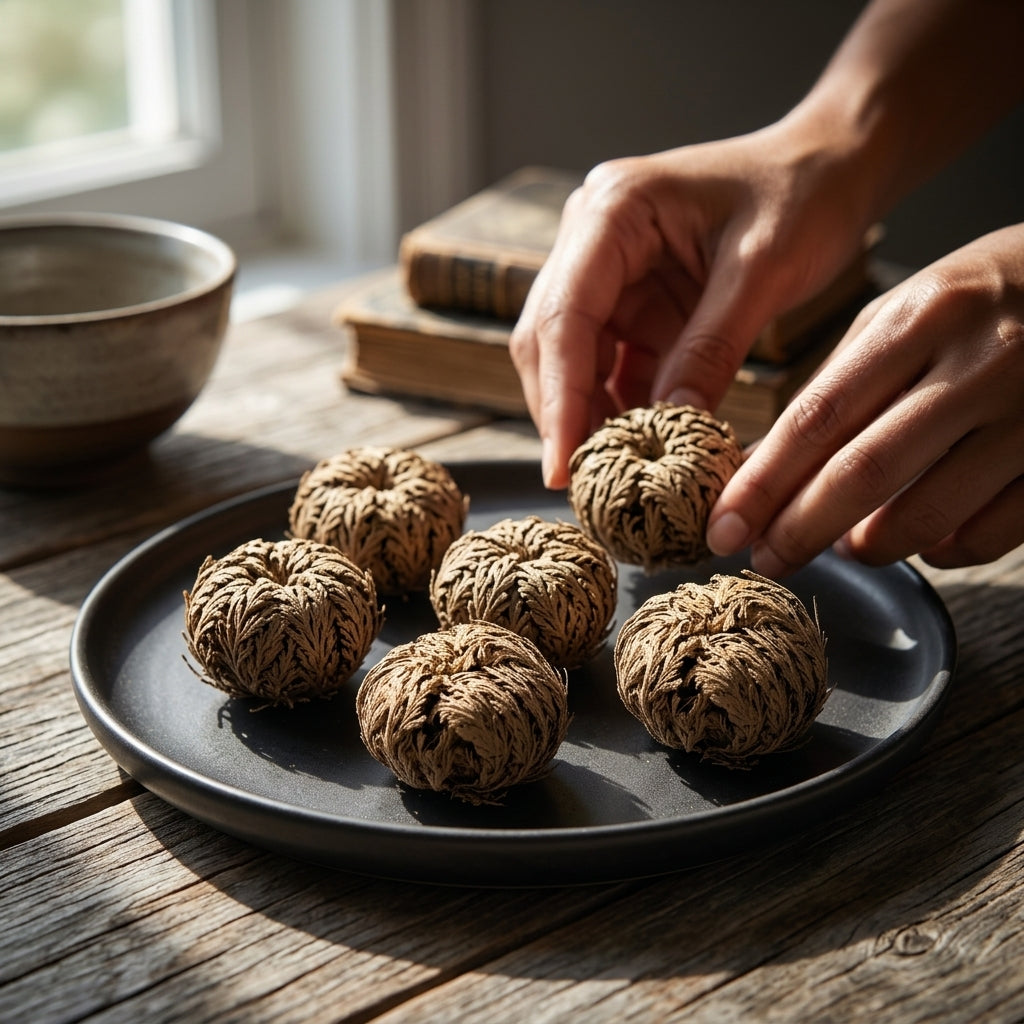
Jericho Flowers (Selaginella lepidophylla), 6 Pack
Jericho Flowers (Selaginella lepidophylla), 6 Pack- Primary Spiritual Use: Intention
- Secondary Spiritual Use: Rebirth
- Material: Dried resurrection plants (Selaginella lepidophylla), 6 pack
- Shipping Weight: 2.0 lb
- Element: Water
- Planet: Venus
- Zodiac: Taurus, Libra
- Chakra: Heart
- Ruling Day: Friday
- Tradition: Mexican folk (Rosa de Jericó)
- Intent: Rebirth, Love, Intention
Couldn't load pickup availability
Works Well With


Place it in a bowl of water. Within hours, what looked like a curled, desiccated brown ball begins to unfurl, slowly, almost imperceptibly at first, then with gathering intention, until it opens into a living, green, fully realized plant. Let the water evaporate, and it closes again. Dry and dormant, waiting. Add water, and it blooms again.
This is Selaginella lepidophylla, the plant commonly known as the Jericho Flower, the Rose of Jericho, the Resurrection Plant. It is a spikemoss native to the Chihuahuan Desert of Mexico and the southwestern United States, a lineage so ancient it predates flowering plants by millions of years. Its ability to lose most of its water content and then return fully to life when rehydrated is not a metaphor. It is documented biology, which is precisely why spiritual traditions across cultures, for centuries, have understood this plant as a living embodiment of renewal, resilience, and rebirth.
This 6-pack gives you a working supply: one plant to keep in a bowl for ongoing ritual use, others to give as gifts, use in separate workings, or hold in reserve.
Key Features of Jericho Flowers
A living ritual tool that embodies what it represents. Most spiritual ingredients are symbolic: they stand for something. Jericho Flowers are what they stand for. The cycle of dormancy, revival, re-dormancy, and revival again is not an abstraction but something you watch happen in your own bowl.
Carried across many traditions. The Jericho Flower appears in Hoodoo, in Santeria and Espiritismo, in Mexican folk Catholicism, and in eclectic practice. In Hoodoo, its revival water is used for prosperity, cleansing, and protection. Eclectic practitioners work with it for renewal and new beginnings. Few plants travel this well across paths.
Six plants: one to work with now, others to share or keep in reserve. A single Jericho Flower can be revived and returned to dormancy many times over the course of years. Six gives you plants to gift, backups for workings that call for more than one, and a working supply that is not rationed.
Product Details
- Contents: 6 dried Selaginella lepidophylla (Jericho Flower / Rose of Jericho) plants
- Species: Selaginella lepidophylla (the rootless, water-revival variety standard in spiritual practice)
- Origin: Chihuahuan Desert region
- Form: dried and dormant; revives when placed in water
- Size: approximately 2 to 4 inches in diameter when fully open
- Note: this is Selaginella lepidophylla, not Anastatica hierochuntica (the true Rose of Jericho, native to the Middle East). Both are sold as Rose of Jericho; they are different plants with different behaviors. S. lepidophylla is the rootless variety used in most spiritual practice because it revives repeatedly without soil.
- Also offered as a single plant
- SKU: HJERWB
The Spiritual Significance
Selaginella lepidophylla belongs to a lineage of spikemosses that emerged roughly 300 million years ago, older than flowering plants by a vast margin. Botanists call it poikilohydric: it has no cellular mechanism for resisting drought, so it simply surrenders to dehydration, curling inward, and waits. Trehalose compounds in its tissues prevent damage during dormancy, allowing full metabolic resumption when water returns. Spanish missionaries traveling through the Chihuahuan Desert encountered the plant and reportedly used it to illustrate spiritual rebirth, a crossroads of Indigenous knowledge and Catholic symbolism that helped carry it into the folk magic traditions of the American South and the Caribbean.
In Hoodoo rootwork, the Jericho Flower's revival water is one of its most prized products. Practitioners place the plant in a bowl of clean water and let it bloom over several days. That water is then used for prosperity work: sprinkled on a business counter to draw customers, added to floor washes, used to wash protective charms, or applied to the front door threshold. Traditional practice adds five coins to the water, the coins becoming carriers of the plant's drawing power. Hoodoo is a living tradition, and practitioners who want to go deeper should learn from its own teachers.
The plant also appears in Santeria, Espiritismo, and Brujeria, and in Santeria it carries associations with Chango. Those are initiatory traditions with their own lineages, elders, and rules about who may do what; we name the association because it is part of the plant's story, not as an instruction. What is offered here is the plant, not a place in a tradition that is not ours to grant. In Mexican folk Catholicism it is kept near the door as a blessing on the home. Folk tradition historically extended its blessing to mothers and newborns, a chapter we pass along as history; practitioners today carry the same renewing intention to thresholds of every kind.
How To Use Jericho Flowers
- Revive the plant. Place the dried, curled Jericho Flower in a shallow bowl. Add room-temperature water until the base is submerged but the whole plant is not underwater. It will begin to open within a few hours; full revival may take 12 to 24 hours.
- Set your intention as it opens. Hold your hands over the plant as it opens, speak your intention aloud, and let the plant's return to life anchor it.
- Work with the water. Change the water every 24 to 48 hours to prevent stagnation and mold, and keep the old water in a jar. This revival water can wash a threshold, be sprinkled in the corners of a room, be added to a floor wash, or rinse a protective charm.
- For Hoodoo prosperity work, add five coins to the bowl and let the plant bloom while they sit in the water. Remove them after seven days and keep them in your wallet or cash drawer.
- Return it to dormancy. Remove the plant from water and let it dry fully in a well-ventilated spot, which takes one to two weeks. Do not rush this; a plant never allowed to dry will eventually rot.
- Repeat. A well-cared-for Jericho Flower can be revived many times over years, each cycle a fresh beginning.
Pairs Well With
- Jericho Flower, Single: the same plant on its own, for a first working before you commit to the pack.
- Florida Water Cologne: add a splash to the revival bowl for a cleansing and drawing preparation.
- Dead Sea Salt, 2 Lb: combine with the charged revival water as a floor wash base.
- Purification Bath Kit: clear old ground first, then set the plant to revive.
- Love Travel Altar: a portable kit for the renewal-and-new-beginnings side of the plant's work.
Frequently Asked Questions
What is the difference between this plant and the true Rose of Jericho?
Two plants are sold under that name. Selaginella lepidophylla, what you are buying here, is native to the Chihuahuan Desert and is rootless, so it revives in a shallow bowl with no soil, repeatedly, for years. Anastatica hierochuntica is the true botanical Rose of Jericho, native to the Middle East, and it behaves differently. S. lepidophylla is the standard in folk spiritual practice because of its reliable rootless revival.
How long does revival take?
A healthy plant begins opening within a few hours and reaches full bloom within 12 to 24 hours, the fronds greening as they hydrate. Plants that have been dormant a long time may take up to 48 hours. If it fails to green up or the water sours, contact Plentiful Earth.
How do I prevent mold?
Change the water every 24 to 48 hours and never let the plant sit in stagnant water. Between cycles, let it dry completely, one to two weeks in a well-ventilated space. Mold most often comes from starting the next revival before the plant has fully dried.
How many times can it be revived?
Many times over many years. There is no fixed limit as long as the plant is allowed to dry fully between soakings and is kept clear of contaminants.
What should I do with the revival water?
In Hoodoo the water charged by a blooming Jericho Flower is considered potent. Common uses include washing the front door threshold, sprinkling the corners of a room, adding it to floor washes, rinsing charms, and anointing candle work.
Is it safe around pets?
Selaginella lepidophylla is not generally classified as toxic to cats or dogs, but as with any botanical, ingestion in quantity is not recommended. Keep the revival bowl where curious pets cannot drink from it.

Spend $50 & enjoy guilt-free shopping with our free shipping on all orders. Get your favorite items delivered right to your door at no extra cost.