



The Art of Witch by Fiona Horne
The Art of Witch by Fiona Horne- Primary Spiritual Use: Wisdom
- Secondary Spiritual Use: Intention
- Element: Air
- Planet: Mercury
- Zodiac: Gemini, Virgo
- Chakra: Third Eye
- Ruling Day: Wednesday
- Tradition: Wiccan/eclectic
- Intent: Wisdom, Intention
Couldn't load pickup availability
The Art of Witch moves beyond bells, whistles, tools and potions, and enters a new era of spiritual mastery for the modern age.
Fiona Horne bypasses the old-school rules and traditions and shows you how to learn and grow with the times. This is the guide for the structure-less, and rule book for the revolutionaries. New ways are embraced with the old; what it really means to be a modern Witch is revealed; how to practice authentic Witchcraft now to live a deeply fulfilled life is explained.
The Art of Witch is a manifesto – a code of ethics and principles – partnered with revealing real-life anecdotes explaining how to anchor the magickal theory in everyday life.
* Live your most magickal life
* Master the art of true transformation
* Perfect the craft of Witches’ resilience
* Know the Witch you are
Trust the magick inside you.
"So on the pulse point of modern witchcraft that it is frightening" --Tonya Brown,Editor, Witch Way Magazine
Key Features
A practitioner's manifesto rather than a beginner's manual. Horne writes from over thirty years of active practice and does not pitch this book at newcomers who need to be told what a cauldron is for. The essays are philosophical and personal, designed to challenge your thinking about what witchcraft is and to push you toward developing your own authentic, lived relationship with the craft.
Short chapters written in personal essay style. The book is not organized as a reference tool or a step-by-step guide. Horne writes conversationally, in short chapters that each tackle a specific dimension of modern witchcraft: authenticity, health, anger, eco-ethics, service, community. This structure makes it easy to return to individual chapters and sit with specific ideas over time, rather than reading it through once and setting it aside.
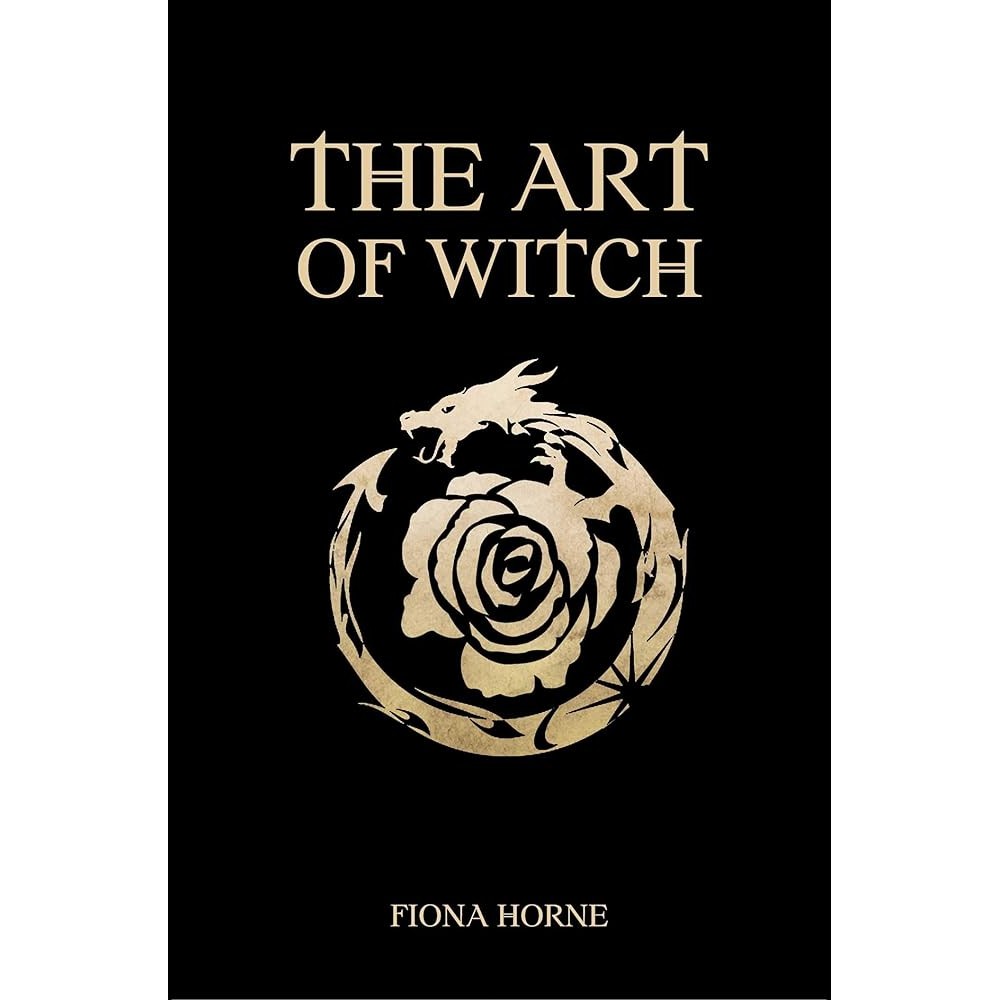
Hardcover format designed to last. The production quality reflects a book meant to be kept and returned to. The hardcover edition has the weight of something intended to sit on a shelf and age alongside your practice, not be consumed once and donated. As a physical object, it belongs in a practitioner's permanent library.
Product Details
- Format: Hardcover
- Pages: 200
- Publisher: Rockpool Publishing
- Author: Fiona Horne
- Publication date: July 1, 2019
- ISBN-13: 978-1-925682-83-0
- ISBN-10: 1-925682-83-8
- Language: English
- Author based in: New South Wales, Australia
The Spiritual Significance
The central spiritual claim of The Art of Witch is one that resonates throughout the book's structure and content: that authentic witchcraft is an art form, meaning it is something created, shaped, and expressed by the individual practitioner through their particular nature, experiences, and choices. Horne explicitly resists the idea that there is a correct form of witchcraft waiting to be learned and reproduced. The witch, in her view, is not a student reciting someone else's tradition but an artist of life, working with intention, beauty, and genuine self-knowledge to shape their experience and serve the wider world.
This perspective matters practically because it shifts the orientation of craft practice from acquisition, getting the right tools, the right correspondences, the right spells, toward development: becoming someone whose inner life is clear and powerful enough that the work they do actually means something. Horne's chapters on health, sobriety, ecological responsibility, and service situate the craft firmly in how you live rather than what you perform, which is a framework that rewards sustained engagement over time.
The Art of Witch Manifesto, presented in Part II of the book, gives readers a concrete set of principles to work with and return to, functioning almost as a dedication of practice that can be revisited and deepened across years of continuing work.
How To Use
Approach this as a book to live alongside rather than to finish. Horne's essay style means individual chapters work as standalone meditations: you might read one chapter, sit with it for a few days, journal on what it raises for you, and then move to the next. The chapters are short enough to read in a single sitting but dense enough with lived reflection that they reward slow engagement.
One approach is to read Part I, the essays, non-linearly, following what calls to you rather than reading front to back. Start with the chapter whose title speaks most directly to where you are in your practice right now, whether that's the Angry Witch, the Healthy Witch, the Eco-Witch, or What Kind of Witch Are You? The book's wisdom tends to unfold through the resonance of individual pieces rather than as a cumulative argument requiring sequential reading.
When you reach Part II, the Art of Witch Manifesto, read it slowly and consider whether you want to copy it out by hand, post it in your practice space, or use it as the basis for writing your own manifesto: a living document of your particular craft ethics and principles. Horne's manifesto is hers, born of her specific life and three decades of practice. The invitation implicit in sharing it is that you build yours.
The book pairs naturally with a journal. Many of the chapters contain ideas that want to be wrestled with in writing rather than simply read.
History & Occult Background
Fiona Horne is one of the most significant figures in the popularization of modern eclectic Wicca in the Anglophone world. Her 1998 debut, Witch: A Personal Journey, was among the first witchcraft books to reach a broad mainstream audience in both Australia and the United States, published just as the popular culture moment of the late 1990s was making witchcraft visible and desirable to a generation of young people. She brought a performer's instinct for presentation and accessibility to a genre that had previously been either academically dry or narrowly countercultural.
Over the two decades that followed, Horne continued writing while also building a genuinely unusual life: she is a commercial pilot, a world-record-holding skydiver, a professional fire dancer, and a humanitarian aid volunteer. These dimensions of her biography are not incidental to the book. The Art of Witch is explicitly shaped by her experience of living a life that demands courage, physical discipline, service, and presence, and she weaves these lessons into her articulation of what authentic witchcraft requires.
Eclectic Wicca and modern witchcraft as Horne practices them draw from the Wiccan tradition established by Gerald Gardner and Doreen Valiente in mid-20th-century Britain, but move deliberately away from prescriptive ritual structures toward a more individualized, experience-based practice. The Art of Witch is one of the clearest arguments in print for why that individualization is not a dilution of the tradition but its natural evolution.
Pairs Well With
- Witches Tarot Deck & Book by Ellen Dugan — Horne's emphasis on authentic, self-directed practice pairs well with a tarot deck designed specifically for witches who want their divination rooted in the craft. Dugan's 78-card deck includes seven spell-enhancing spreads that bridge tarot reading and magical practice, resonating with Horne's integration of the craft into every dimension of life.
- Witches' Wisdom Oracle by Meiklejohn-Free & Peters — The 48-card Witches' Wisdom Oracle draws on the lineage of healers, herbalists, and gifted oracles who have carried the craft through history. As a companion to Horne's manifesto-driven book, it offers a daily practice tool rooted in the same ethos: honoring the depth of the tradition while making it personally relevant.
- Green Witch Oracle Cards by Cheralyn Darcey — Horne's chapter on eco-witchcraft sits alongside this botanically-grounded oracle deck naturally. Working with the Green Witch Oracle as a daily practice while reading The Art of Witch creates a living relationship with the natural world that grounds Horne's philosophical material in the specific intelligence of plants.
- The Witches' Almanac 2026–2027 — Horne writes about the craft as a way of living, not a set of occasions to observe. A yearly almanac with moon phases and seasonal lore gives that daily practice a calendar of actual days to work with.
- Secret Oracle of the Green Witch — The Secret Oracle of the Green Witch's earth-centered guidance complements The Art of Witch's emphasis on the authentic, self-directed practitioner. Using it for daily draws while working through the book keeps the abstract philosophical material grounded in concrete daily guidance.
Frequently Asked Questions
Is this book appropriate for beginners? It is written for practitioners who have moved past the basics, and Horne says as much in the text. She assumes you already understand the fundamentals of the craft and are ready for a more philosophical conversation about what it means to live as a witch. A complete newcomer would benefit from starting with a more foundational text and coming back to this one once they have some practice grounding.
Does this book contain spells? Not in the traditional spell-manual sense. Horne's position is that the most powerful magic comes from who you are and how you live, rather than from specific procedures. The book contains rituals of a sort: the Art of Witch Manifesto, practices of gratitude and service, and a philosophy of engagement with the natural world. But it is not a book you will reach for when you need to know which herbs to burn for a specific intention.
Is this book relevant to practitioners of any tradition, or specifically Wicca? Horne's practice is eclectic Wicca, and that background is present throughout the book. But the philosophical arguments she makes about authenticity, service, and living a craft-rooted life apply broadly across traditions. Practitioners from other paths will find much that resonates, even where the specific language or framework differs from their own.
What is the Art of Witch Manifesto? It is a structured set of principles and ethics that Horne presents in Part II of the book, functioning as a kind of personal creed for the contemporary witch. It synthesizes the ideas explored in the essays into a more formal statement, designed to serve as a touchstone that practitioners can return to and build from.
Is this a large, illustrated book or primarily text? It is produced in hardcover with high-quality visual presentation, consistent with Rockpool's design aesthetic. It is not a dense academic text but it is also not a picture book. The balance is tilted toward Horne's writing, with the visual presentation supporting rather than replacing the prose.
How does this compare to Horne's earlier books? Horne's earlier titles, including Witch: A Personal Journey and Witch: A Magickal Year, are more introductory and structured around practical guidance, spells, and seasonal celebrations. The Art of Witch is more mature, more philosophical, and less concerned with instruction. It reflects where Horne was after three decades of practice: interested in the deeper questions of what the craft is for and how to live it with integrity.
Spend $50 & enjoy guilt-free shopping with our free shipping on all orders. Get your favorite items delivered right to your door at no extra cost.