



Plentiful Earth | Spiritual Store
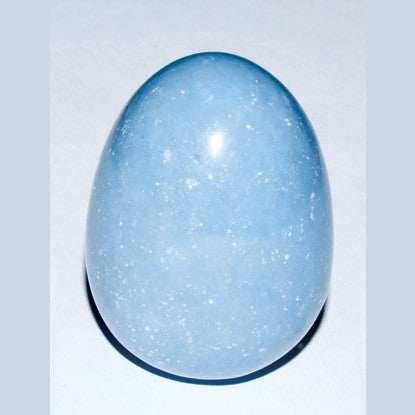
Angelite Gemstone Egg, 2 Inch
Angelite Gemstone Egg, 2 Inch- Primary Spiritual Use: Connection
- Secondary Spiritual Use: Peace
- Element: Water
- Planet: Moon
- Zodiac: Aquarius
- Chakra: Throat
- Ruling Day: Monday
- Tradition: Wiccan/eclectic
- Intent: Peace, Connection, Calming
Couldn't load pickup availability
Some stones shout; angelite murmurs. The soft blue-gray mineral the trade named for angels is anhydrite, gypsum's dehydrated sister, literally "the stone without water", and its whole working life is spent in the quiet registers: serenity, gentle speech, and the connection lines kept open. This two-inch egg puts that murmur in the palm of your hand.
The egg is the shape of things not yet hatched: potential, patience, beginnings still folded up. Carvers give serene stones this form for a reason, and angelite wears it especially well.
Key Features of This Angelite Egg
Genuine Peruvian anhydrite. The classic locality: Peru's blue anhydrite is the material that introduced the trade name "angelite" to the world in the late 1980s, and it remains the standard the name means.
The serenity-and-connection stone. Modern practice reads angelite by its sky color: calm words, a settled heart, and the quiet upstairs lines, guides, angels, the gentler correspondences, kept open.
Palm-fit egg, two inches. Smooth enough to worry, weighty enough to anchor a meditation, and shaped like everything that hasn't happened yet.
Product Details
- Mineral: anhydrite (calcium sulfate); "angelite" is the trade name
- Origin: Peru
- Size: approximately 2 inches
- Hardness: soft (about 3.5 Mohs); handle gently
- Keep it dry: anhydrite means "without water," and moisture slowly turns the stone back toward gypsum and dulls the polish. Dry cleansing only
- Sold for spiritual practice; no health claims are made for any stone
The Spiritual Significance
Angelite's mineral story is one of the best in the cabinet. Anhydrite is gypsum that gave up its water, the same chemical family that gives us selenite, and the name is the chemistry: an-hydrite, without water. Give it moisture back and it begins, slowly, to become gypsum again, which is why this is one of the few stones whose care instructions are written into its name. The blue Peruvian material reached the gem trade in the late 1980s, where its sky color earned it the name angelite; the name is modern and the trade's own, and we pass it along as the label it is, but the stone beneath it is honest anhydrite with a real locality and a real lineage.
Practice took the name's invitation. Angelite's seat in modern work is serenity and connection: the stone held when words need softening, kept by the bed when the heart runs loud, and reached for in meditation when the practitioner wants the quiet upstairs lines, guides, angels, the gentle correspondences, open and unhurried. The egg form adds its own old symbolism of potential and patient beginnings: the working that is still folded up, kept safe until its season.
How To Use This Angelite Egg
- Hold it for the quiet line. In meditation, rest the egg in your receiving palm and let the sky-colored stone set the volume: low, clear, unhurried.
- Keep it where words happen. The desk before hard conversations, the nightstand after them; angelite's post is wherever speech needs softening.
- Seat it on the patience altar. An egg holds what isn't ready yet; place it over a written intention that needs time rather than force.
- Cleanse it dry. Smoke, moonlight, or sound, never water; the stone's own name explains why.
- Handle it gently. Soft stone, soft work: store it where harder crystals won't scratch it.
Pairs Well With
- Angel Worry Stone, Pewter: the pocket companion to the altar egg; the same gentle register in carry-everywhere form.
- Calming Gemstone Set, 5 Stones: the settling pouch for the seasons the egg presides over.
- Peace Soy Votive Candle: the soft flame beside the soft stone.
- Lapis Chambered Pendulum: when the quiet line has questions, the asking tool.
- Angelite Tumbled Stones, 1 lb: the same stone loose, for grids and pockets around the egg's anchor.
Frequently Asked Questions
What is angelite, really?
Blue anhydrite, a calcium sulfate mineral and gypsum's water-free sister. "Angelite" is a trade name coined when Peruvian material reached the market in the late 1980s; we use the name the tradition uses and tell you the mineral underneath.
Why can't angelite get wet?
Because the name is literal: anhydrite means "without water," and given moisture the stone slowly rehydrates toward gypsum, dulling and softening. Dry cleansing, smoke, moonlight, sound, keeps the polish and the stone.
How is angelite related to selenite?
They are family: selenite is crystalline gypsum, and anhydrite is gypsum without its water. One held on, one let go; practitioners often work the two together as kindred calm.
Does angelite heal or treat anything?
We make no health claims for any stone. Angelite's seat is spiritual: serenity, gentle communication, and connection work. For matters of health, see a healthcare professional.
Why an egg?
The egg is the old shape of potential: the working not yet hatched, the season not yet arrived. Carvers give the form to stones whose virtue is patience, and angelite qualifies twice over.
How should I store and handle it?
Dry, gently, and away from harder stones; at 3.5 on the Mohs scale, angelite scratches easily. A cloth-lined dish on the altar suits it perfectly.


Spend $50 & enjoy guilt-free shopping with our free shipping on all orders. Get your favorite items delivered right to your door at no extra cost.