



Plentiful Earth | Spiritual Store
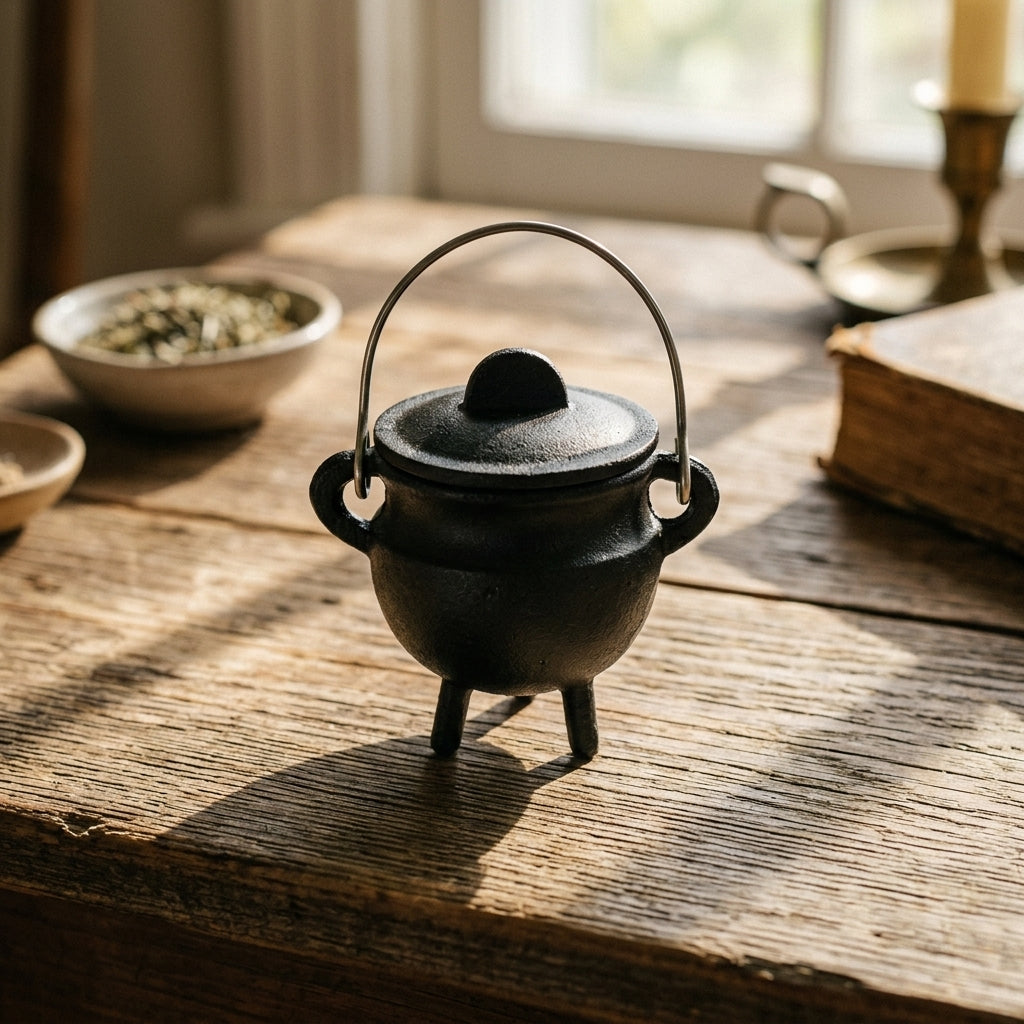
Small Plain Cast Iron Cauldron with Lid, 2¾"
Small Plain Cast Iron Cauldron with Lid, 2¾"- Primary Spiritual Use: Rebirth
- Secondary Spiritual Use: Healing
Couldn't load pickup availability
Cast iron and fire have been keeping company for a very long time. The cauldron's place in witchcraft is so deeply embedded in the cultural imagination that it has become almost a symbol before it is a tool, which can make it easy to forget that it is genuinely useful: a heat-safe, fireproof, durable vessel that can hold a burning candle, a small coal and resin incense, a written petition being reduced to ash, or a simple offering of water, salt, or herbs. A good cast iron cauldron asks very little of you and lasts essentially forever.
This plain, unadorned version at 2¾ inches arrives with a lid, making it particularly suited to workings that call for concealment: spell jars, sealed intentions, and offerings you want to hold closed until the working is complete. The plain surface is a blank canvas for your own symbols, oils, and markings if your practice calls for it. Or it is simply what it is: a well-made, compact, honest altar vessel.
Key Features
Compact size with lid for sealed workings. The 2¾ inch cauldron is a workhorse size for solo practitioners with smaller altars or those who want a dedicated vessel for a specific intention without occupying significant altar space. The included lid allows it to serve as a sealed container for working with petitions, spell components, and incense smoke.
Plain cast iron: durable, fireproof, and consecration-ready. The unadorned surface means this cauldron is fully yours to work with. No manufacturer's symbolism to interpret, no pre-set energy from decorative imagery. You bring the intention; the vessel holds it. Cast iron is fireproof, heat-resistant, and improves with use.
Genuine multipurpose altar tool. Cast iron cauldrons function as: incense burners (with a small coal or cone), candle holders (for appropriately sized pillar or taper candles), ash receivers for burning petitions or herbs, offering bowls for liquid or dry offerings, scrying vessels when filled with dark water, and sealed containers for spell work. One tool, many applications.
Product Details
- Size: 2¾ inches diameter (opening), three-legged base
- Material: Cast iron
- Includes: Lid
- Color: Black
- Weight: Heavier than it looks; cast iron is dense
- Seasoning note: Cast iron benefits from occasional oiling (food-grade or ritual oil) to prevent rust, particularly if used with water
The Spiritual Significance
In Wicca and many contemporary witchcraft traditions, the cauldron corresponds to the element of Water and the divine feminine, symbolizing the womb of the Goddess, the transformative power of the deep, and the creative potential that exists before manifestation. It is paired with the fire that burns within it: transformation requires both the vessel and the flame. In a coven setting, the cauldron is often placed at the center of the circle as a focal point for collective working; in solitary practice, it holds the center of a personal altar.
The cauldron's most direct ritual uses are practical ones: burning petition papers so their intention is released as smoke, holding the charge of a candle during focused spellwork, burning incense on charcoal for smoke-based workings and space-clearing, and containing the physical components of a working until it reaches completion. This plain cast iron version, with its lid, makes it ideal for that last function: you can place your sealed intention inside, close the lid, and leave the cauldron on your altar as the working continues in the closed dark.
In Hoodoo and folk magic traditions, cast iron cauldrons appear as altar pieces and offering vessels, particularly for ancestor work and workings involving fire as a transformational element. The cauldron's relationship to fire, transformation, and the contained unknown gives it a spiritual presence that goes well beyond its function as a fireproof bowl.
How To Use
- Consecrate before first use. Pass the cauldron through incense smoke, sprinkle with salt water, and speak your intention aloud: this is now a sacred vessel, dedicated to your work. Some practitioners anoint it with a protective or all-purpose oil.
- Burn petitions and written intentions. Write your intention, spell, or petition on paper. Place it in the cauldron and carefully light it, allowing it to burn to ash. The ash may be scattered to the wind, buried, or left in the cauldron as residue of completed work. Use a fire-safe surface and observe appropriate fire safety.
- Burn incense on charcoal. Place a small piece of charcoal disc in the cauldron, light it, and allow it to fully ash over. Add a small amount of resin incense (frankincense, myrrh, copal, or a blend) to the hot charcoal. The cauldron safely contains the coal and ash.
- Sealed intention work. Place spell components, a written petition, herbs, or small crystals inside the cauldron. Close the lid, setting your intention as you do. Leave on your altar for the duration of the working, opening when the intention has fully resolved or the moon cycle is complete.
- Scrying. Fill with dark water and allow the surface to still completely. Lower your gaze and allow images or impressions to arise in the dark, reflective surface. The cast iron's dark interior makes this a more effective scrying surface than a lighter-colored vessel.
Care: Dry thoroughly after any contact with water. Apply a thin coat of food-grade or ritual oil periodically to prevent rust. If rust does appear, scrub with steel wool, dry completely, and re-oil.
Pairs Well With
- Cast Iron Cauldron with Lid, 5 inch: The 2¾ inch is ideal for sealed workings and altar use; the 5 inch is better for larger resin burnings and coven-scale work. Many practitioners own both sizes for different purposes.
- Earth Goddess Silver Altar Bell: The bell and cauldron together represent two of the foundational feminine-attributed altar tools; use the bell to open and close ritual, the cauldron to hold and transform intention within it.
- Sgian Dubh Scottish Athame: The symbolic union of athame and cauldron is central to many Wiccan traditions: athame (Air/Fire, masculine, will) into cauldron (Water, feminine, receptivity) represents the Great Rite and the creative union of opposites.
- Dead Sea Salt, 2 Pounds: Keep a small amount of salt in the cauldron between uses as a continuous energetic neutralizer, or use salt in the cauldron for cleansing rituals that call for both salt and fire.
- Reiki Candles Collection: A small pillar or votive candle placed safely inside or in front of the cauldron during healing or intention work creates a classic altar focal point that centers both fire and vessel.
History & Occult Background
The cauldron as a sacred vessel appears across Celtic, Norse, and pre-Christian European cultures with extraordinary consistency. In Irish mythology, the Dagda's Cauldron of Plenty was one of the four treasures of the Tuatha De Danann: it never ran empty and could satisfy any hunger. The Welsh Mabinogion contains the Cauldron of Rebirth, which could restore the dead to life (though silenced; warriors revived in it could not speak). The Norse myths include the vats of Hvergelmir, the primordial spring, and the cauldrons of the Norns who weave fate. The universal pattern is consistent: the cauldron holds transformation, renewal, and the generative deep.
In the witch-trial imagery of medieval and early modern Europe, the cauldron became the defining symbol of the alleged witch's malevolence: the "witches' brew" bubbling over a fire. This cultural overlay should not obscure the fact that a cauldron is and was a practical cooking vessel: the symbolic associations arose because the cauldron was genuinely the most important domestic object in pre-modern household life. Its transformation from essential domestic tool to sacred ritual vessel follows a path similar to many other magical implements: the more fundamental an object is to survival and sustenance, the more readily it accumulates spiritual significance.
Gerald Gardner's codification of Wicca in the mid-20th century established the cauldron as one of the four primary altar tools alongside the athame, chalice, and pentacle, with the cauldron representing Water and the Goddess. This framework brought the cauldron firmly into contemporary witchcraft practice, where it remains one of the most recognizable and widely used altar objects. The cast iron material has particular resonance in folk magic traditions, where iron's protective and grounding properties amplify the vessel's function.
Frequently Asked Questions
Can I use this cauldron with open flame inside? Yes. Cast iron is fully fireproof and designed to safely contain small flames, charcoal, and burning paper or resin. Always practice fire safety: use on a heat-safe surface, keep away from flammable materials, and never leave burning materials unattended.
How is this different from the 5-inch cauldron in the shop? This version is 2¾ inches, suited to small altar use, sealed workings, and single-practitioner rituals. The 5-inch cauldron is better for larger resin or charcoal burnings and coven work. This smaller version includes a lid, which the 5-inch does not; the lid makes it more versatile for sealed-intention work.
How do I prevent rust? Dry the cauldron immediately and thoroughly after any contact with water. Apply a thin coat of oil periodically (any food-grade oil works; many practitioners also use a ritual-purpose oil). If rust appears despite care, scrub with steel wool, dry completely, and season with oil. Cast iron is extremely durable; surface rust is cosmetic and does not affect the cauldron's function.
What size charcoal disc fits in this cauldron? The 2¾ inch opening accommodates the smaller 33mm charcoal discs used for incense burning. The larger 40mm discs may fit depending on precise internal dimensions; confirm with PE or test before use.
Is the plain surface better or worse than a decorated cauldron? Neither is objectively better. A decorated cauldron (with triple moon, pentacle, or other symbols) carries pre-set symbolic meaning; a plain cauldron is a blank vessel that holds only what you bring to it. Practitioners who prefer their own symbolic framework, who consecrate their tools personally, or who do not want to be bound to a specific tradition's imagery often prefer plain. Practitioners who want the amplifying presence of a specific symbol prefer decorated. This is entirely personal.


Spend $50 & enjoy guilt-free shopping with our free shipping on all orders. Get your favorite items delivered right to your door at no extra cost.